


Revolutionizing Association Operations with AI Agents
Insights from ASAE Annual
Key Points Summary
- AI agents empower non-technical staff to build tools, workflows, and prototypes.
- Associations can shift toward enabling subject matter experts as builders.
- The effectiveness of AI depends on prompt quality—conversational, detailed prompts win.
- Rapid prototyping lets you test new experiences with minimal cost and timeline.
- AI can automate routine tasks (email replies, data syncs, report summaries).
- Cultivating a culture of experimentation and prompt reuse is essential.
*This blog post was created with the help of AI to summarize the transcript from Conor Sibley’s and Andy Steggle’s session at ASAE Annual 2025.
How AI Agents Are Transforming the Future of Associations
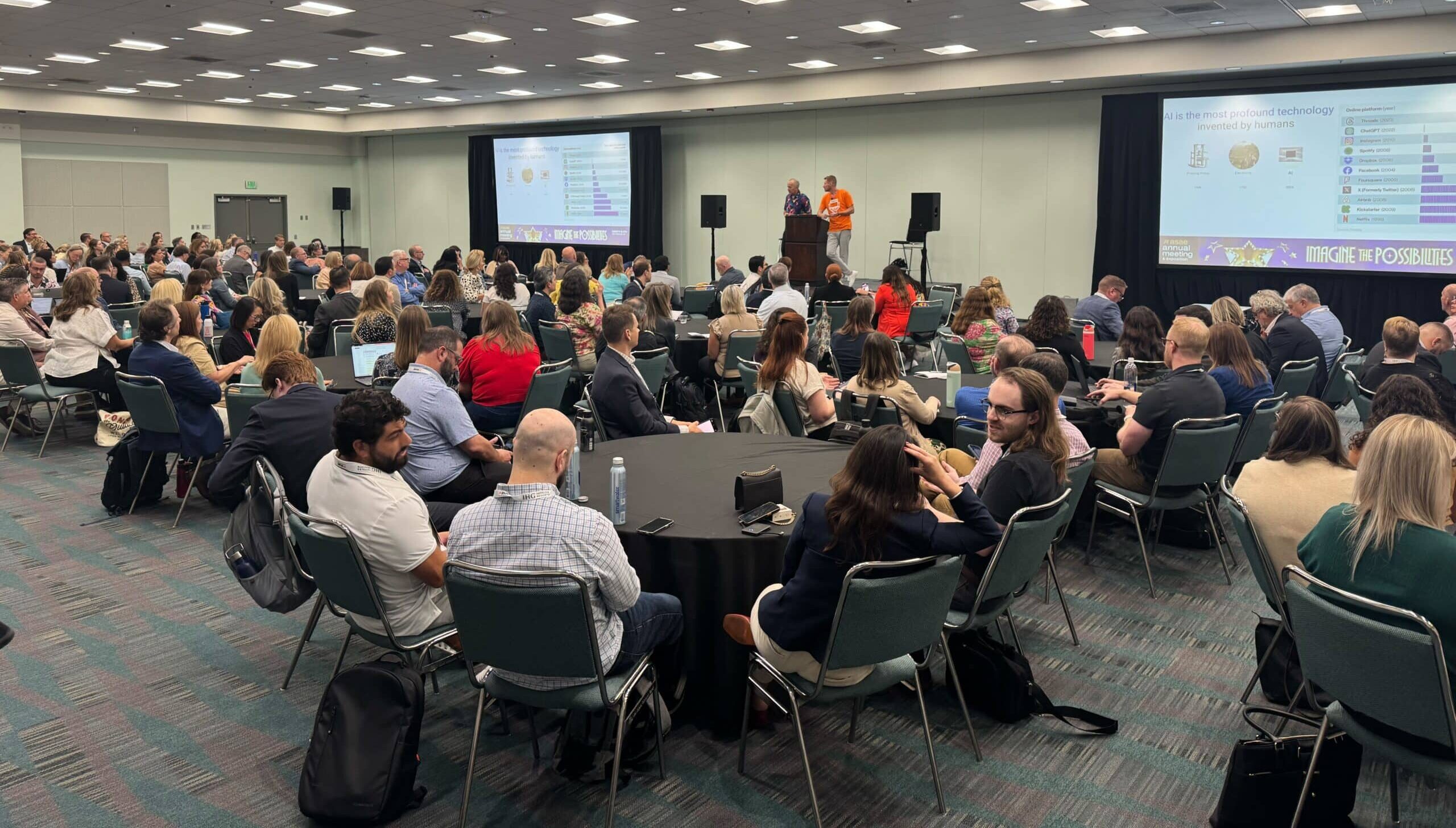
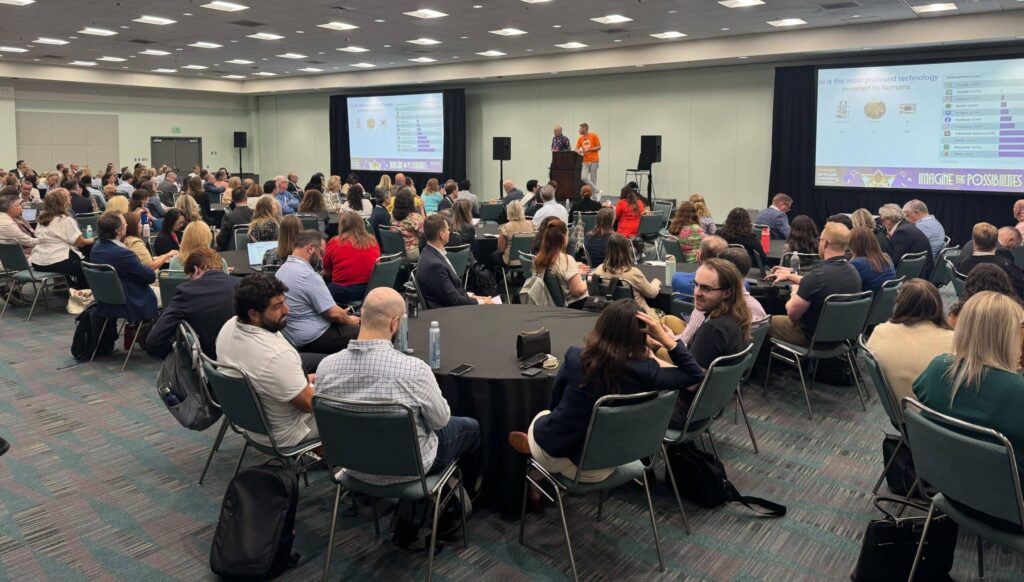
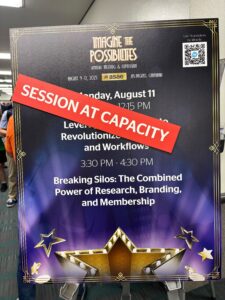 What if your team could spin up a functioning app, automate member workflows, or prototype new programs — all without a developer? That’s the promise Conor Sibley, CTO of Higher Logic, and Andy Steggles, CEO of Insight Guide, brought to life at ASAE’s 2025 annual conference in August. (There session was packed – standing room only – and we can see why!)
In the session they demonstrated how AI agents are no longer futuristic experiments but today’s tools for democratizing innovation within associations. You’ll walk away with ideas you can trial with your staff: from prompt-driven systems, to AI-powered automation, to accelerating stakeholder buy-in through rapid prototyping.
Here are six key insights association leaders, marketers, and community managers should take to heart.
1. From “Software Developers” to “Software Creators”
One of the most powerful themes: AI is enabling anyone — not just engineers — to build working software. Steggles named it perfectly:
“The goal … is to turn 100 million software developers into a billion software creators.”
In the context of an association, that means your subject matter experts (SMEs) — membership directors, education leads, volunteer managers — can become creators of the tools they need, rather than always relying on IT tickets. As Sibley put it:
“The organization of the past … was built around departments. The organization of the future is built around subject matter experts who deeply understand member problems.”
This shift aligns with how Higher Logic has designed Higher Logic Thrive: enabling non-technical teams to set up engagement workflows, content pipelines, and segmentation logic without heavy dev support.
2. Empowering Frontline Staff to Build Solutions
When your membership or community team can say, “I need a dashboard for lapsed members,” and prompt an AI to build it — that’s a game changer. The AI handles backend configuration, hosting, and data logic invisibly.
Sibley urged associations to:
“Put tools and technologies in the hands of the people at the edge … that’s how we’ll create more value, faster.”
For associations using Higher Logic Thrive, this means empowering teams to design custom journeys, automate renewal nudges, or configure dynamic communities without developer bottlenecks.
3. Prompt Crafting Is the New Skill
Both speakers emphasized that your AI results hinge on your prompts. You don’t need perfect commands — you need detailed, conversational instructions.
Steggles advised:
“Don’t try to be precise or clever. Just talk … stream of consciousness. The more detail you give, the better the output.”
His tip: record via voice-to-text, then refine into “super prompts” you can reuse for common workflows — e.g., “Generate a chapter event page,” or “Create volunteer matching tool.” Your organization can curate a shared prompt library for repeatable AI tasks.
4. Rapid Prototyping: From Idea to Demo in Minutes
One of the most compelling parts of the session: live demos of prototype tools created from a single prompt:
- A volunteer portal with scoring and application workflows
- A secure research database with user permissions
- A branded conference microsite with event details
Each was deployed live within minutes and at minimal cost.
“What used to take six months now takes an hour,” Sibley noted.
For associations, this enables quick testing of new member experiences — before asking for big budgets or IT support. It can also help make the case for a new program or pilot by showing something tangible right away.
5. Automating the Everyday, Not Just the Exceptional
AI agents aren’t just for flashy new apps — they’re powerful for the routine tasks that eat staff time. Think about:
- Auto-responding to member emails or Slack queries
- Syncing data across AMS, LMS, and community systems
- Generating meeting summaries or board reports from uploaded files
You don’t need deep technical skills to connect to existing APIs — just ask the AI to guide you through the steps. As Steggles said, “Almost every AMS already has APIs … you don’t even need to understand how it works — just ask the model to walk you through it.”
By layering these automations into your daily routines, your team can reclaim hours and reduce error.
6. Preparing the Culture and Infrastructure for AI
While the tools are exciting, the human side of adoption matters just as much. Sibley acknowledged the fears and challenges:
“Go back to your daily tasks. What frustrates you? What takes too long? That’s your first automation opportunity.”
To get started, associations should:
- Audit repetitive workflows (where staff feel stuck or bogged down)
- Encourage safe experimentation (allow sandbox time for teams)
- Document and share successful prompts and workflows
- Reinvent roles for higher-level thinking, creativity, and member insight
AI isn’t about replacing human roles — it’s about amplifying human capacity. The faster your organization adapts, the more strategic your work becomes.
Conclusion: Turning AI Potential into Association Impact
Conor Sibley’s and Andy Steggles’ ASAE session made one thing clear: the future of association operations won’t be won by bigger budgets — it’ll be won by smarter approaches. Higher Logic and Insight Guide showed that AI agents can help associations move from concept to prototype to impact — faster than ever before.
If you’re ready to accelerate automation, democratize innovation in your team, and test new member experiences with agility, this is your moment. The associations that lean into AI will not only survive—they will lead.
Related Resources

Smarter AI: The Community-Powered Search Assistant
Higher Logic is excited to release an AI Search Assistant. Learn how it can make your online community more powerful...
Read More
AI Assistants and Agents: Smart Responses, Seamless Automation
Whether you’re an AI advocate or a skeptic, this webinar provides a look at its practical application.
Read More
Webinar: Embracing AI Safely – Strategies for Associations
Watch this on-demand webinar to learn tips for embracing AI safely at your association. Higher Logic Senior Privacy Analyst Amanda...
Read More