


Why Build B2B Online Communities? Essential Guide for B2Bs

Basic online communities, in the form of discussion boards or online networking sites, have been around for over 15 years for good reason. In particular, B2B customers naturally find places to congregate and discuss brands online—77% of potential buyers check reviews, and 54% talk to existing users before making a purchase. The best place to do so is in a dedicated community.
However, today’s B2B online communities are much more than product discussion groups. Modern, branded customer communities are powerful solutions for complex organizational problems, purpose-built for engagement across the customer lifecycle.
In this guide, we’ll cover everything you need to know about these game-changing digital communities, including:
Seed your B2B community with the right content, at the right time, with our free content calendar template.
What is a B2B Customer Community?
A B2B online customer community is a digital space for business clients to find product support, share advice, network, and engage with a certain brand. Unlike support forums, which are dedicated to customer support and typically only engage users when they have a problem, online B2B communities enhance the entire customer journey.
Customer experience issues usually don’t lie just in one department, so online communities provide support across all departments. They encourage peer-led learning, empower customer advocates, and provide better overall experiences—while still improving customer support!
Key Benefits of B2B Online Communities
Future-focused companies invest in online communities because they know that communities will impact far more than just customer support or marketing. Let’s look at the top business benefits of building a customer community around your B2B brand.
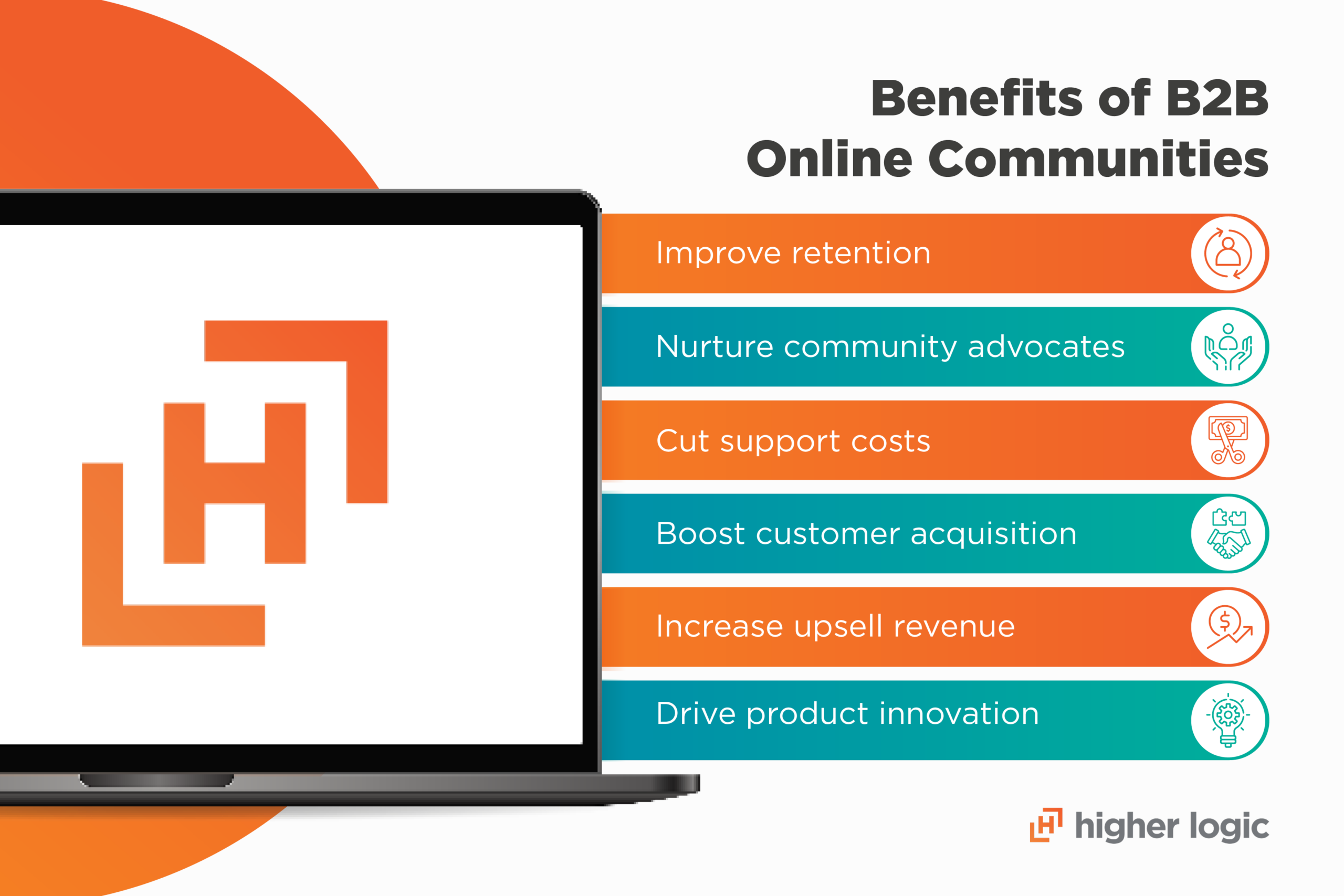
Improve Retention
Branded online communities help increase retention by engaging customers and fostering stronger relationships with your business. Participating in discussion forums, networking with peers, asking questions, submitting feedback, and perusing resources all contribute to deeper connections between customers and your brand. These opportunities increase the value they get from using your products and services, making it more likely that they’ll stick around long-term.
More importantly, communities allow your team to actively monitor customer engagement and identify churn risks before customers leave. Michael Torok, Director of Knowledge and Community Management at Delphix, explains more about how communities help companies “listen at scale” in this video:
Nurture Community Advocates
73% of B2B marketing execs say peer recommendations are the top factor that influences buying decisions, meaning you need customer advocates to help you market your business and convince prospective customers to invest. An online community is the perfect place to identify, nurture, and reward these advocates.
Think about it: customers who love your brand want to talk about it. They want to share their stories and pass on their knowledge, and a community gives them a place to do that, making this platform a core part of your customer advocacy software stack.
You can use gamification, ribbons, and badges to highlight each advocate’s unique contributions. Or, you could give them special access to advance information on business updates and product releases to keep them in the know and inspire them to continue advocating for your business. Within your community, encourage advocates to connect by spurring discussions, answering questions, and helping people find the best solutions to their problems.
Cut Support Costs
B2B online communities empower customers to find answers themselves through self-service, helping you deflect tickets and reduce support costs. Here’s how it works:
- Your company seeds the community with product documentation and expert articles.
- Struggling users can search these resources any time, ask questions in discussion forums, or find answers in videos and blogs.
- Loyal customers, AI assistants, and other community members answer their peers’ questions to solve issues quickly.
As customers ask questions and discuss with each other, they build a repository of information and resources. A single helpful piece of online content can answer dozens of customers’ questions, reducing support calls to your company and improving overall customer service.
For instance, Jama Software attributed a 28% decrease in support ticket volume to its online community. Jama’s Manager of Technical Support, Kristina King, mentioned that many of the tickets the support team does receive begin with the words, “I searched in the community, but couldn’t find the answer.” Kristina noted this implies “an untold number of tickets that are never submitted because customers are trained so well to search the community first.”
Learn more about what made Jama’s community so successful for ticket deflection.
Boost Customer Acquisition
Building a B2B community for your business can help you win new customers, too. When it comes to acquisition, online communities:
- Increase your brand’s discoverability. Communities with public sections create tons of user-generated content through discussion forums, articles, and updates—all of which gets indexed by Google. When prospects search for solutions to their problems, your community will appear in search results, increasing brand awareness and getting your business in front of new prospective customers.
- Source persuasive content for marketing and sales. Fill your prospect sections with answers to frequently asked questions, documentation on best practices, and product benefits to educate prospects on your solutions. Include customer-created content like testimonials to provide social proof, too.
- Reduce risk for prospective customers. Clear, easy access to peer-to-peer support forums, documentation, and help guides reduces the risk that may come with new purchases. Prospects can clearly see that you’ve set up an “always-on” destination to support them and ensure their success, which increases their confidence in a potential purchase.
Chris Detzel, Global Community Manager for Imperva, explains how his company uses its B2B online community to drive leads and boost acquisition with search engine optimization (SEO):
Increase Upsell Revenue
A branded online community can boost customer lifetime value by increasing upsells, cross-sells, and add-on purchases through awareness and engagement.
To increase awareness of your products, seed the community with documents on all current offers. Outline the benefits of upgrading to a higher service tier, or explain how an add-on product improves results. As customers find these documents, they’ll become more aware of your full array of offers and what additional products or services will increase the value they get from your company.
Then, empower your sales team to analyze community activity data. They can review the pages customers are visiting, the files they’re downloading, and the discussions they’re participating in. When they find a customer who’s regularly viewing product pages, they can proactively reach out by phone or email to help them choose the best product for their needs.
Drive Product Innovation
Product teams benefit from online communities, too. They can track the most common customer complaints, identify sources of confusion, and source new feature ideas. All of these areas are helpful for improving your products to make them more efficient and appealing to your market.
B2B online communities are especially useful for ideation. Check out this example where a customer suggested a feature improvement, community members upvoted it, and a member of the product team followed up with a timeline:
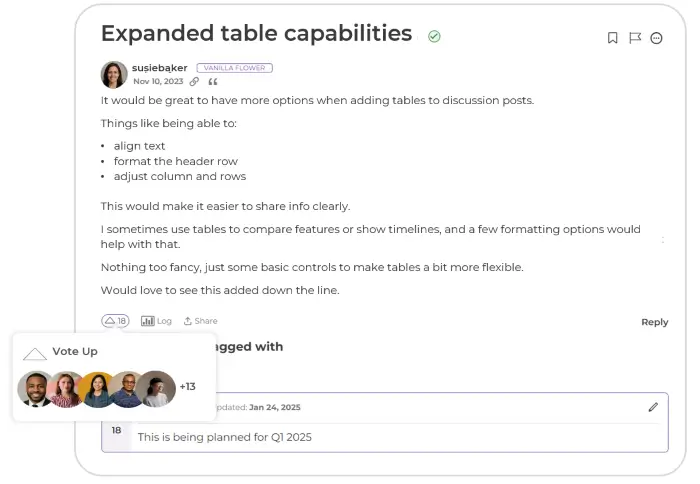
When you do make a change based on customer feedback, let the community know. People love it when their suggestions (or frustrations) are taken seriously and spur action. You may even win more loyal customers because of your attention to community needs.
How to Build a B2B Community: 5 Steps
Now that you understand the benefits, let’s dive into creating your own B2B online community. Use these steps as an initial framework.
1. Define Your Target Audience & Use Cases
Online communities are as diverse as the companies that start them and can support multiple business goals. To get started, choose what critical business needs you want to solve and who you want to target. Common use cases include:
- Customer success and retention
- Marketing, customer advocacy, and acquisition
- Customer support and case deflection
- Product feedback and development
Then, zero in on your target audience. Who are your ideal community members? How will they want to interact with your community? How can you support their needs?
Once you’ve defined a clear purpose for your community, communicate with all major stakeholders at your business. Explain how the community can help make their jobs easier and more efficient while generating additional revenue. Getting buy-in across departments can help you secure the resources you need to turn your community into a valuable business initiative.
2. Set Goals and Guidelines for Your Community
Next, set initial goals for your community and establish key community guidelines. Make sure you address:
- Moderation guidelines for community discussions
- AI usage and data privacy policies
- Whether your customer community will be gated
- Standards for appropriate community behavior
Ideally, these rules should help you create a central destination where customers can find support, advice, best practices, and opportunities to provide feedback.
3. Choose and Integrate Community Software
The platform you use to build, host, and manage your B2B community will be instrumental in its success. That’s why we recommend Higher Logic Vanilla, our community-focused software that’s backed by over 15 years of proven commitment to excellence.
With more than 3,000 customers, enterprise flexibility, and a full team of community success experts, Higher Logic is dedicated to the success of online communities. Our solution has everything you need to engage customers online, all in one streamlined platform. For instance, Michael at Delphix explains how Higher Logic Vanilla enables B2B businesses to create the ultimate customer destination:
Once you’ve chosen the best customer community platform, set up any integrations you might need to connect your other software. This might include customer advocacy software, your CRM, WordPress, and other technologies.
Ready to jumpstart your community? Get started with #1 B2B community software, Higher Logic Vanilla.
4. Create a Content Strategy
Before launch, outline the specific community engagement strategies you’ll use to inspire active participation. Aim for a mix of:
- Institutional content: Discussion posts, resources, videos, blogs, and ask me anything (AMA) sessions created by your company
- User-generated content: Posts, comments, resources, questions, testimonials, and any other community content created by customers
Both types of content are important and worth pursuing, but clearly, institutional content is more within your control. Get together with your team and brainstorm the types of content you want to post initially in your community. This might include community onboarding guides, basic technical support resources, how-to content, and company announcements. Create space for engagement and provide good examples, and community members will naturally start creating their own content.
Our community content calendar template can help you plan the institutional content that grounds your strategy. Use this resource to plot out key posts and engagement tactics, but don’t be afraid to adjust your plans once your community gets underway.
5. Launch and Track Engagement
Finally, you’ll launch your community and open its doors to current and future customers. Begin promotion with your existing customers, posting about the community on social media and sending out emails to introduce them to this new online platform. Over time, you can incorporate the community into sales conversations and drive new traffic from Google searches.
At this point, you should also prepare to track engagement with your new community by setting key performance indicators (KPIs) that help you measure its ROI. Your community platform should make tracking and analyzing these metrics easy.
What Makes B2B Communities Successful
B2B online communities create a link between customers and real people at your company. The most successful communities leverage that link to its fullest potential, engaging customers with key features like:
- Custom branding to ensure a professional look and feel that customers instantly trust.
- A simple, customer-focused user interface (UI) that speaks directly to customers’ needs and makes it easy to navigate the community.
- Active, moderated discussion boards so customers can get answers and share tips in a welcoming environment.
- Resource libraries to deflect support tickets and empower customers to find answers on their own.
- AI-powered search and suggested answers that connect customers with the information they need as fast as possible.
- Public and gated versions of the community to drive customer acquisition and provide extra value to current customers.
A vital part of a SaaS community strategy is creating a hub where customers can find everything they need, ensuring a streamlined, cohesive digital experience. Let’s look at an example of a community that does this well:
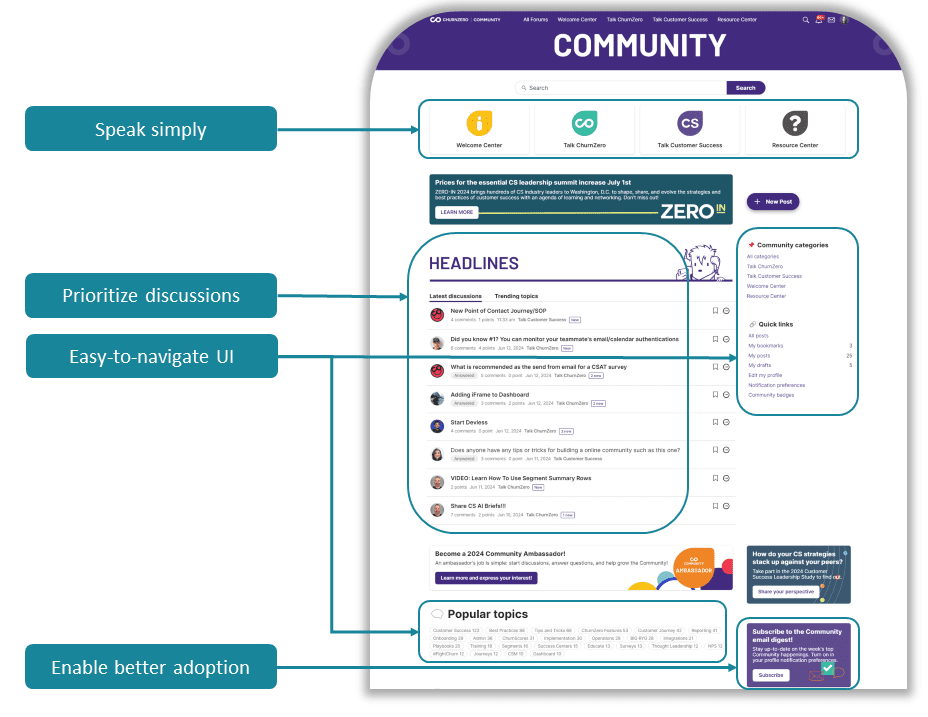
ChurnZero used Higher Logic Vanilla to naturally incorporate all of the elements we discussed above in their community’s redesign. Now, their community addresses customer needs right away in simple terms, prioritizes community discussions, uses an easy-to-navigate UI, and highlights subscription opportunities to enable adoption.
As a result of these changes, ChurnZero saw a 500% increase in discussions and a 97% faster average time to first response. They found that active community members use their platform twice as much—and are 13 times less likely to churn.
Dive deeper into ChurnZero’s story to discover the keys to B2B online community success.
Examples of Strong B2B Online Communities
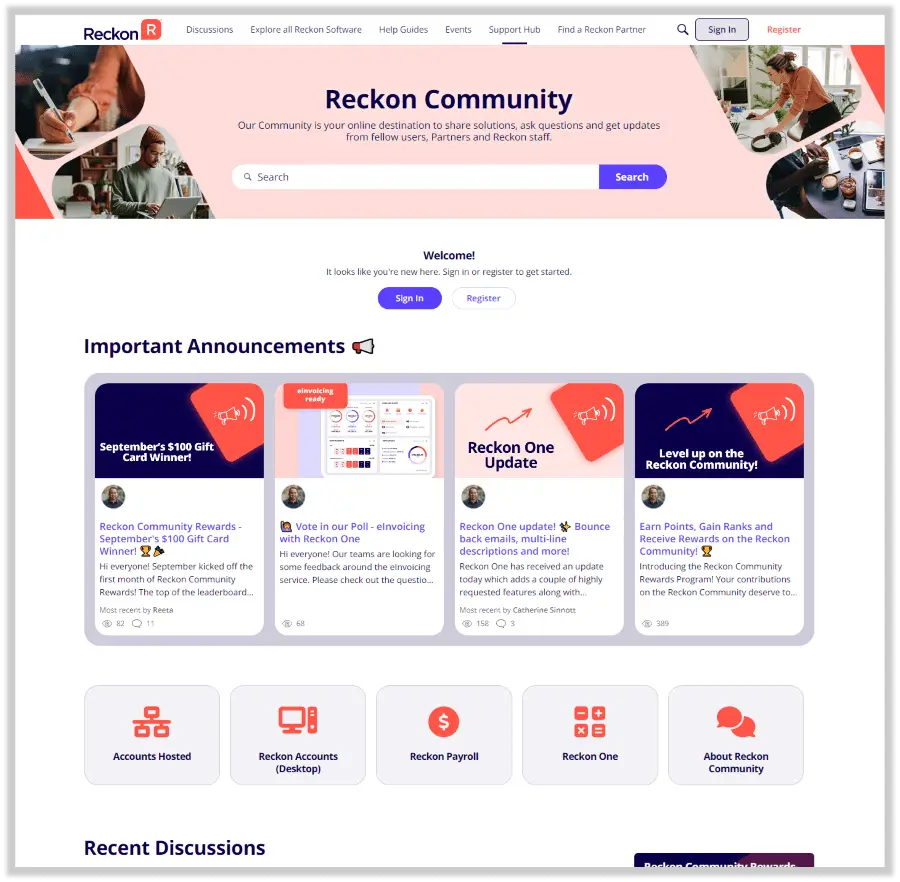
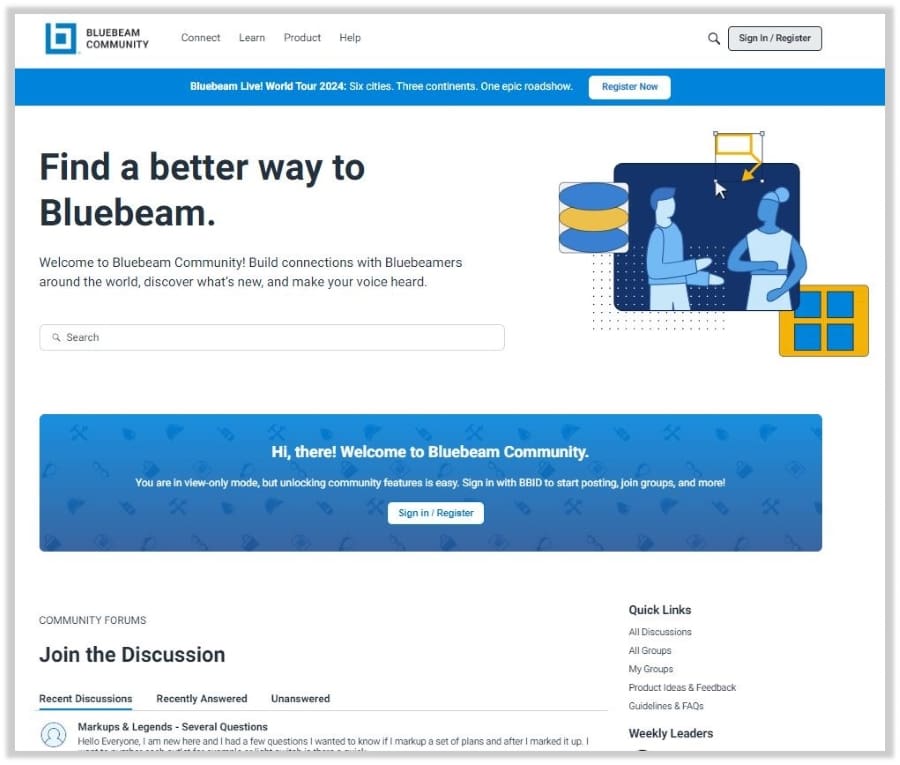
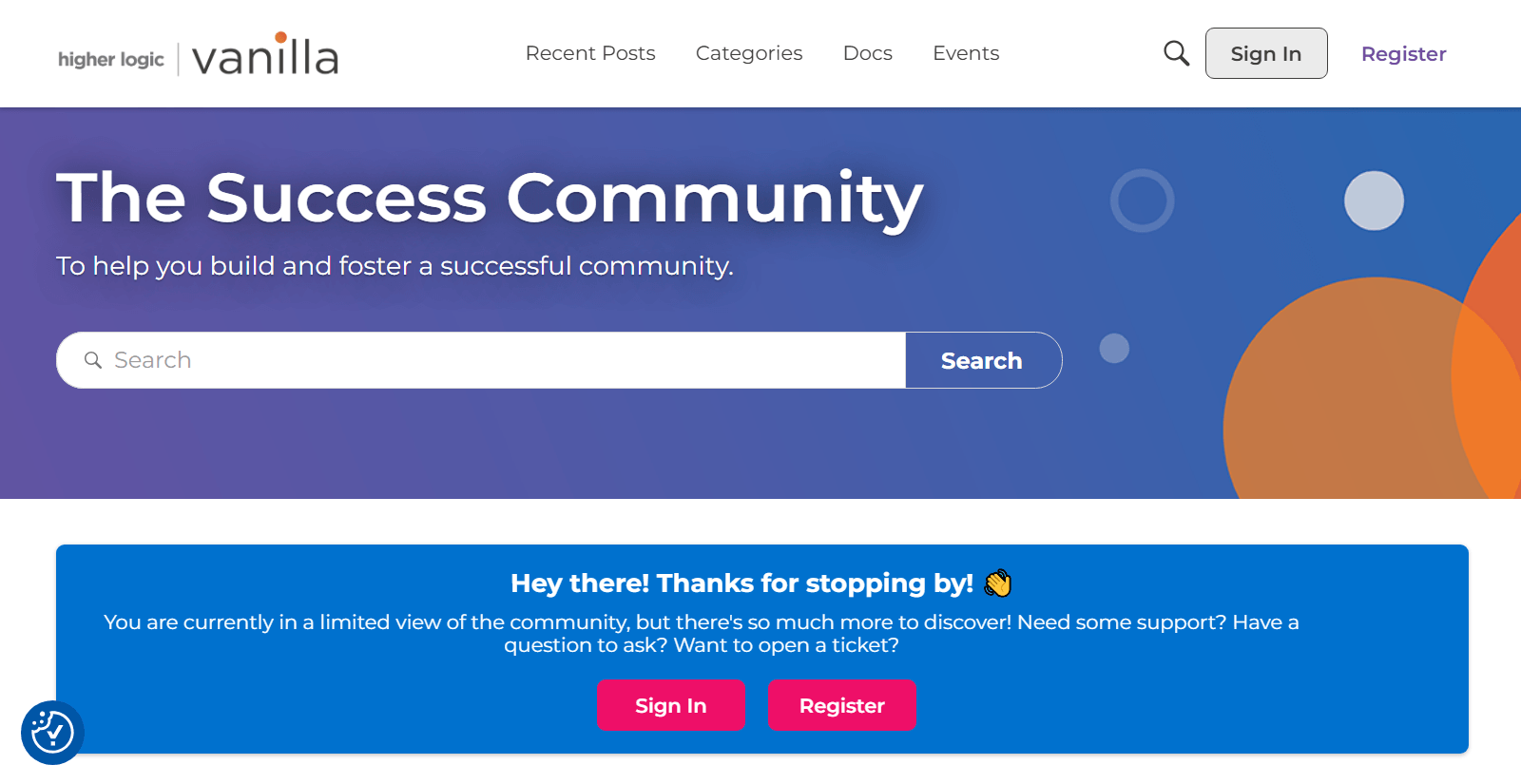
Check out more examples of successful, well-designed B2B customer communities from our customer showcase. By prioritizing discussion boards and search bars, all of these communities prioritize the user experience and center customers in their design.
Reckon Community
Bluebeam Community
Vanilla Success Community
Launching B2B Communities With Higher Logic Vanilla
Future-focused companies know that B2B online communities will impact more areas of business than just customer support—they grow your entire company. Building a customer community with Higher Logic Vanilla can create a seamless customer experience and provide rich customer data that propels product and revenue growth. If you’re ready to get started, contact our team to learn how we can help.
Looking for more information first? Check out these additional resources from our team of community experts:
Boost customer retention, drive leads, and cut support costs with Higher Logic’s B2B community software.
Discover why thousands of companies and organizations trust our platforms to deliver top-notch customer experiences.
