
Your Members Shouldn't Need to Know Where the Answer Lives
See how an AI assistant can reduce the search burden across your association’s website, communities, learning platforms, and other systems.
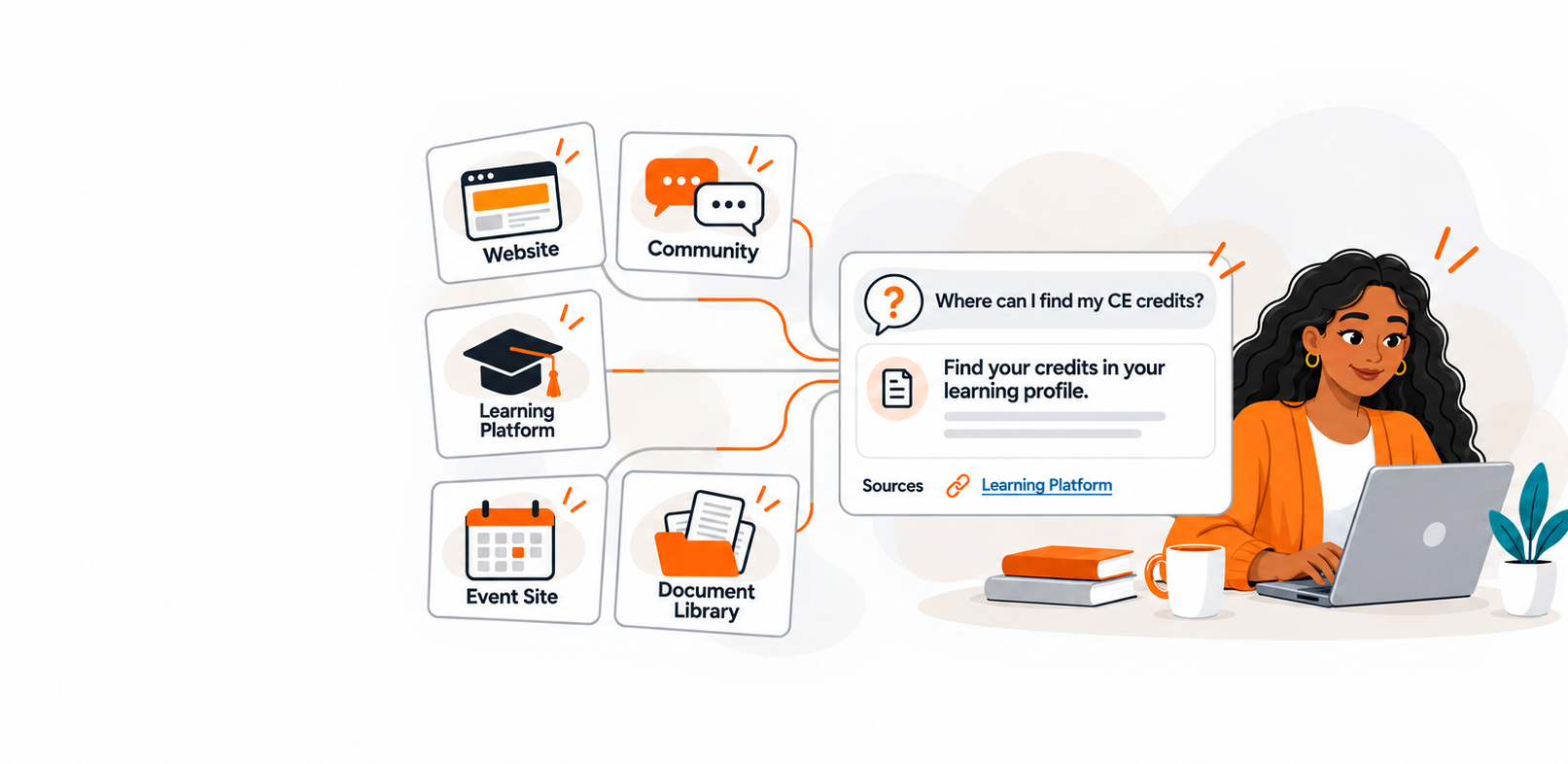
Your association probably has the answer your member needs. The harder question is whether they can find it.
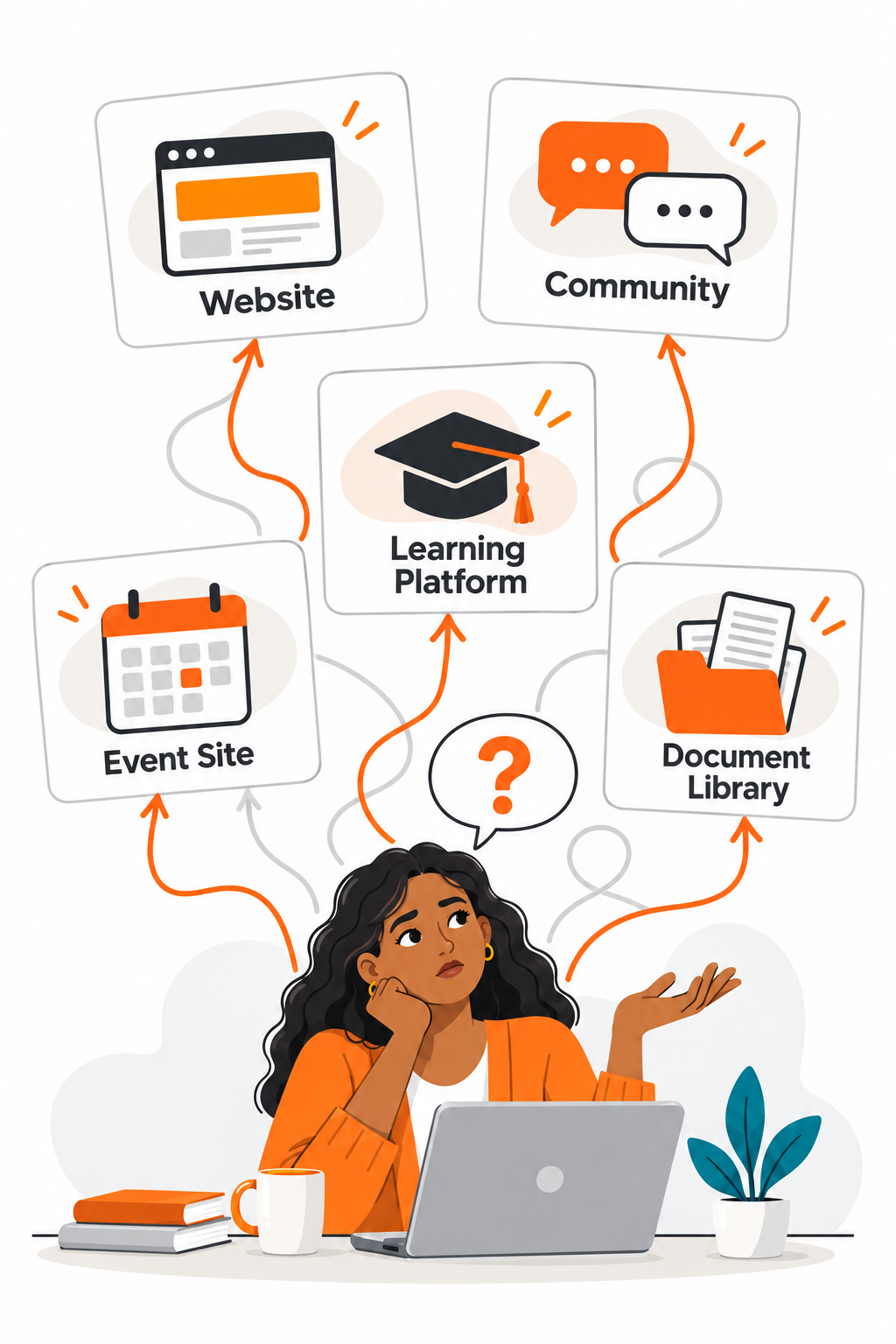
The information may live on your website, in your online community, inside your learning platform, on an event site, or in a document library. From the association’s perspective, each resource has a logical home. From the member’s perspective, there are five places to search and no obvious place to begin.
Elizabeth Engel, Higher Logic’s Membership Product Advisor, described this challenge (and the solution) on an episode of The Member Engagement Show.
Members often need to understand too much about an association’s internal operations before they can find what they need. The burden of navigating the organization’s content sprawl falls on them.
AI can help reduce that burden. But doing so requires more than placing a general-purpose chatbot on your website. Associations need an approach built around their own trusted knowledge, rules, and relationships.
Making answers easier to access is one part of a broader shift toward member intelligence: understanding what members need and helping them reach the right next step. It begins with removing a persistent source of friction—the expectation that members know where every answer lives.
The Search Burden Associations Put on Members
Associations have added specialized systems over time for good reasons. A learning platform delivers courses. An online community supports member conversations. An event site houses conference information. A document library organizes publications, research, policies, or standards.
The problem emerges when members must understand that structure to find an answer.
A member looking for continuing education information may not know whether to start with the main website, the learning platform, or an event agenda. Someone researching a professional question may not know whether the best answer appears in a formal publication or a community discussion. A prospective member may not even know the association’s terminology for the resource they need.
Even strong search tools have limits when each one searches only its own environment. Members can use the right words in the wrong place and come away believing the answer does not exist.
That experience creates unnecessary friction. It also makes the association’s expertise feel less accessible than it is. Members should be able to begin with their question, not with a decision about which system to search.
Why General-Purpose AI Isn’t Enough
When people need a quick answer, many are now turning to tools like ChatGPT, Claude, or Google. These tools can be useful starting points, but they do not automatically have the complete context an association member may need.
An association’s most valuable knowledge may include:
- Member-only publications and research
- Industry standards or technical guidance
- Regulatory and public policy information
- Community discussions and accepted answers
- Internal policies, procedures, and program details
- Learning content and conference materials
- Information connected to an individual member’s access or status
Unless a general-purpose AI tool has been deliberately connected to those sources, isn’t going to have the unique expertise that an association does. Even when related information is publicly available, a broad response may lack the depth and context a professional needs.
This is where associations already have an important advantage. They bring together trusted expertise from staff, members, volunteer leaders, researchers, and practitioners. The opportunity is to make that knowledge easier to reach while maintaining control over which information is used and who can see it.
What Associations Should Expect From an AI Assistant
An association AI assistant should not simply generate a plausible response. It should help members reach an answer they can understand, verify, and use.
That requires several safeguards.
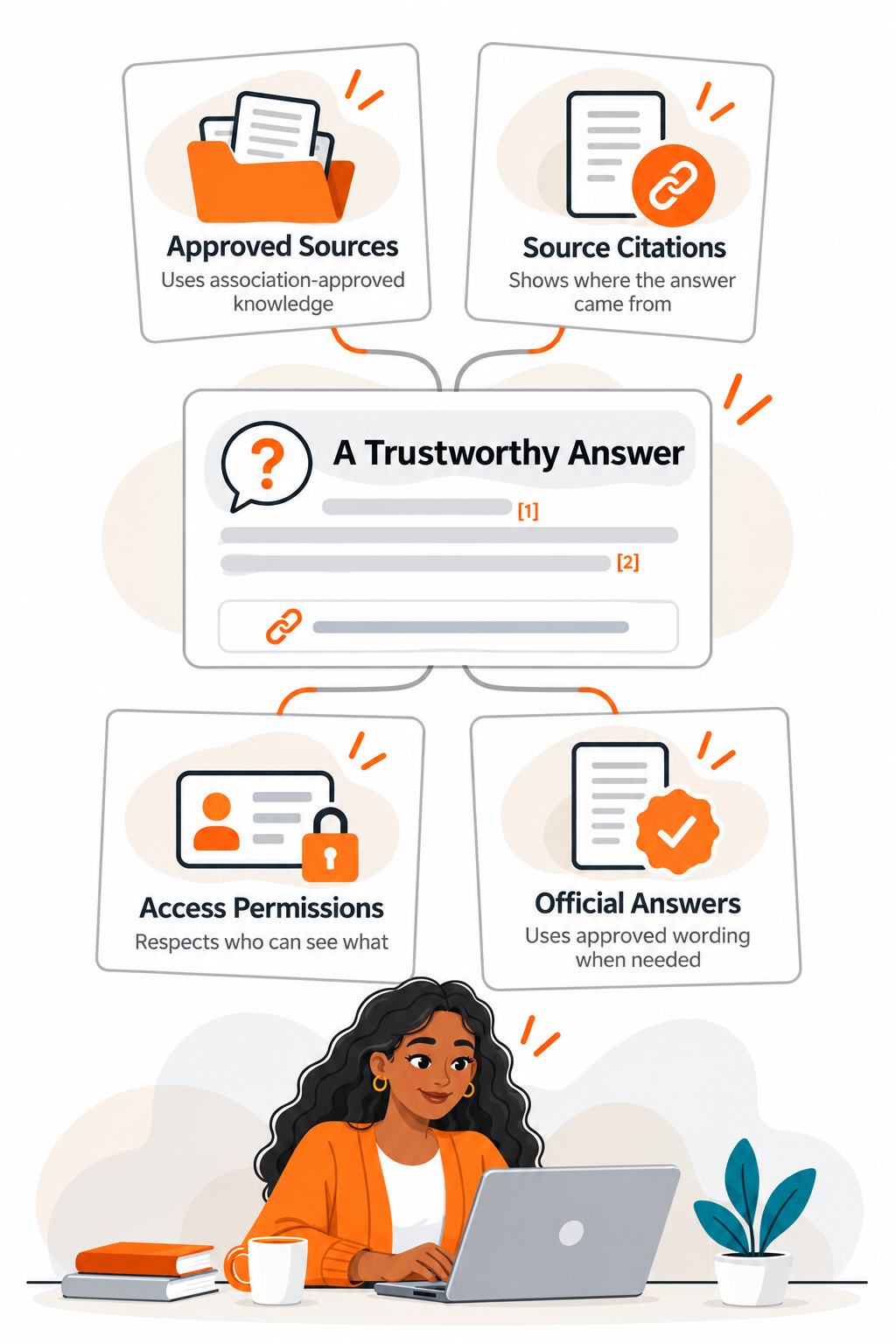
Governed Sources
The association should decide what the assistant is allowed to reference. Approved sources might include selected website content, community discussions, publications, learning resources, policies, and manually entered information.
This keeps the assistant grounded in the association’s knowledge instead of asking it to assemble an answer from the open internet.
Source Citations
Members should be able to see where an answer came from. A source-linked response lets them review the original material, explore the topic further, and confirm that the information is appropriate for their situation.
This is especially important when the answer involves professional standards, regulations, policies, or other guidance where wording and context matter.
Access Permissions
Not every member should receive the same answer or see the same source material. A board member may have access to documents that a general member does not. A staff member may need internal operational information that should never appear in a member-facing answer.
An AI assistant should follow existing roles, security groups, and access rules. It needs to understand not only what information exists, but also who is allowed to see it.
Approved Answers
Some questions require an exact response rather than an AI-generated summary. Conference dates, office locations, renewal instructions, public policy positions, and carefully worded guidance may fall into this category.
Associations should be able to create official answers for those questions and account for the different ways members might ask them. “Where are you located?” and “What is your office address?” should lead to the same current, approved information.
A Clear Human Handoff
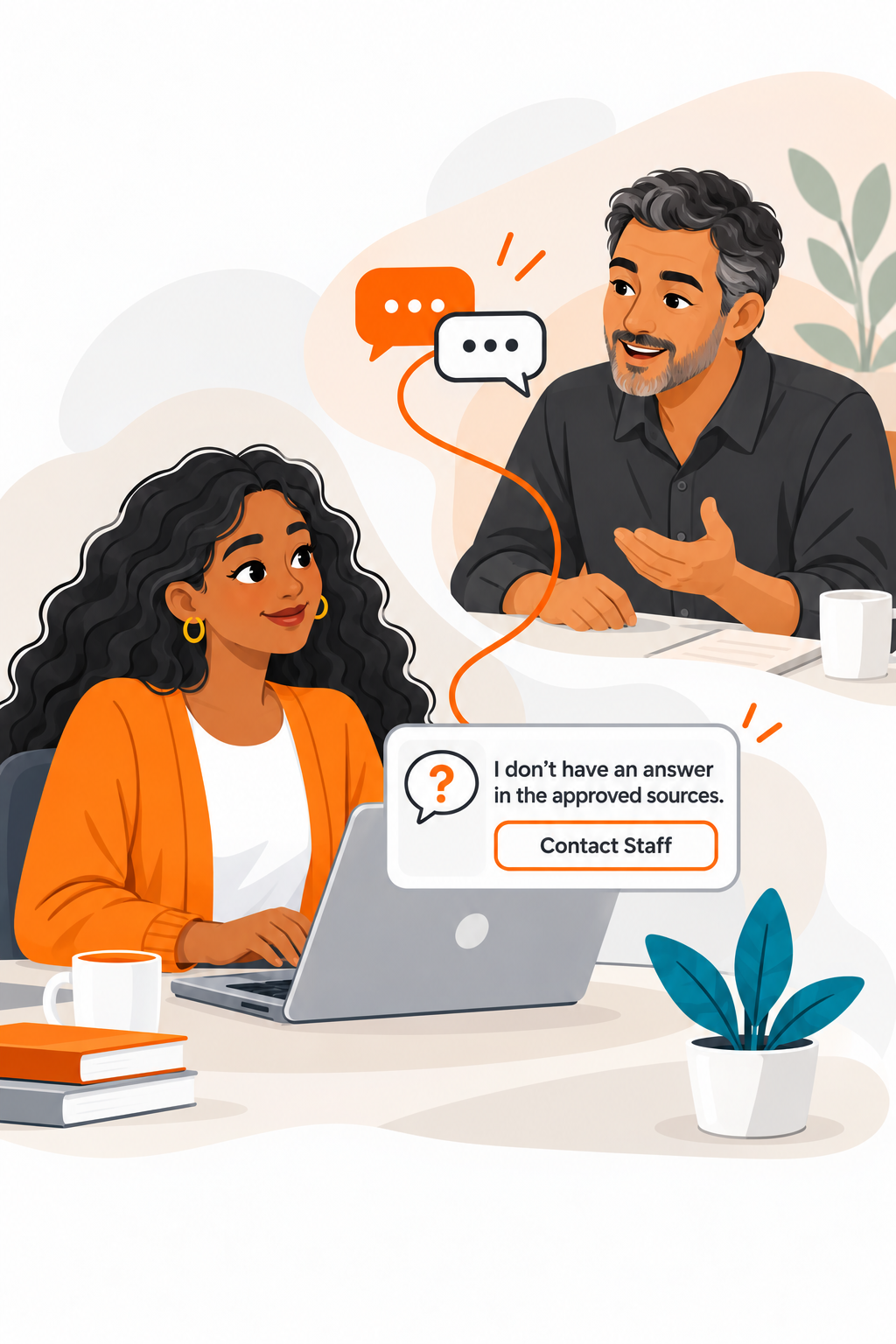
An AI assistant also needs permission to say it does not know. If the approved knowledge does not contain an answer, the assistant should direct the member to staff or help them ask the community.
That handoff should be built in. A useful AI Assistant recognizes when retrieval should end and a human conversation should begin.
Higher Logic AI Assistant is designed around these principles. Associations govern its knowledge sources, answers include citations, and role-based access helps ensure members see only what their permissions allow. When an answer is unavailable, it can point the member toward a real person or the community.
Your AI Assistant Is Only as Good as Its Knowledge Base
Making content easier to find does not automatically make the content better.
If an association gives its AI assistant outdated policies, duplicate documents, conflicting instructions, or incomplete procedures, those weaknesses will affect the answers members receive. Information that was once buried may become much easier to surface.
Before expanding access, associations should make intentional decisions about their sources of truth:
- Which content is current and approved?
- Who owns each source and keeps it updated?
- Are old versions clearly archived or removed?
- Which resources should be available to the public, members, volunteer leaders, or staff?
- Which questions require an official answer?
- Are important policies and procedures documented?
- What should happen when the assistant cannot answer confidently?
This does not mean every piece of content must be perfect before an association gets started, but it’s important to remember that content governance is part of the work. Someone needs responsibility for what the assistant knows, how that knowledge is organized, and when it should be reviewed.
The questions your members ask can help you with that maintenance. If people repeatedly ask about a topic the assistant cannot answer, that is a useful signal. It may reveal a missing resource, unclear wording, outdated documentation, or a gap the association should address.
Start With Questions Staff Already Answer
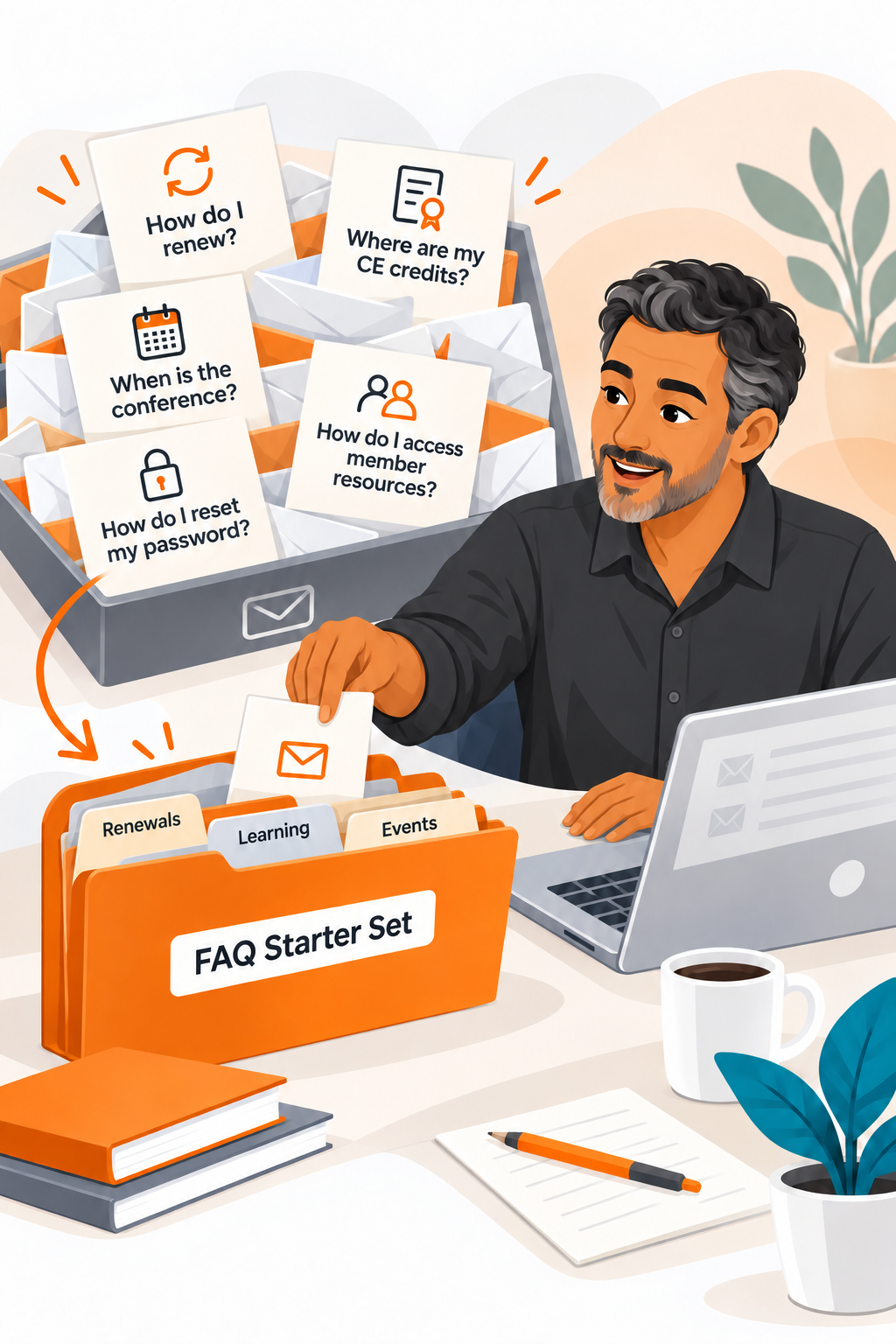
A practical signpost for what your AI Assistant needs to be equipped to answer is often sitting in the inboxes of your membership, education, events, and community staff.
Ask your team to identify the questions they answer repeatedly. Common examples might include:
- How do I reset my password?
- When does my membership expire?
- How do I renew?
- Where can I find my continuing education credits?
- When and where is the annual conference?
- How do I access a member-only resource?
- Who should I contact about a policy or technical question?
Then look at what happens today. Where does the answer live? Is it current? Does staff provide the same response each time? Does the answer change based on membership type, role, or access level? When does the question require human judgment?
Choose a focused set of high-volume, low-complexity questions for your phase. Add the approved source material, define any required responses, and establish the right handoff when an answer falls outside that scope.
This FAQ-first approach gives members faster access to everyday information without asking the association to solve every knowledge challenge at once. It also gives staff a manageable way to test, learn, and improve the experience.
Let AI Handle Retrieval—And People Handle Relationships
Members do not care which department owns a document or which system stores the answer. They care about getting trustworthy help when they need it.
AI can reduce the work of locating and retrieving information. It can answer routine questions, point members to approved resources, and recognize when a person needs to step in. That creates more room for staff to focus on the work that requires context, empathy, judgment, and a genuine relationship.
A password reset question should not consume the same staff attention as a member who is navigating a career challenge, trying to understand a complicated policy, or deciding how to become more involved. Both questions deserve a good experience, but they do not require the same kind of support.
The goal is not to put distance between members and staff. It is to remove the avoidable searching and repetitive retrieval that can get in the way of more meaningful help.
Your association already has knowledge worth finding. An AI assistant can help members reach it without requiring them to know where it lives—and help your team be present when the answer needs more than technology.
Help Members Find Answers—and Staff Make Time for Connection
Higher Logic AI Assistant helps members find answers grounded in your association’s approved knowledge, with source citations and access controls. When an answer needs a person, it points members toward human help—giving your team more room for meaningful conversations.