
3 Types of Online Learning: Professional Development Trends for 2026

Executive Summary: Members now expect continuous, visible learning journeys tied to career outcomes, making modern online learning essential for associations. Moving beyond one-off courses, associations should build ecosystems that blend micro self-paced modules, cohort-based group learning, and blended, credentialed pathways with personalization. Success hinges on learning management system (LMS) capabilities (dashboards, pathways, badges, community integration, accessibility, analytics) and measuring progression, credentials, engagement, and retention. This guide details how to design Individual, Group, and Blended formats, key metrics, a launch checklist, and quick wins.
The Professional Development Landscape
Professional development is the top reason members join their association according to the 2025 Association Member Experience Report. And online learning options have become mission-critical. So how do associations lean in and provide the types of online learning members love?
- Members expect continuous, visible learning journeys that connect to career outcomes.
- Learners look for multi-format, stackable professional development that fits into their day-to-day.
- 80% of members say being able to self-track completed continuing education and see the next step is either extremely or very important.
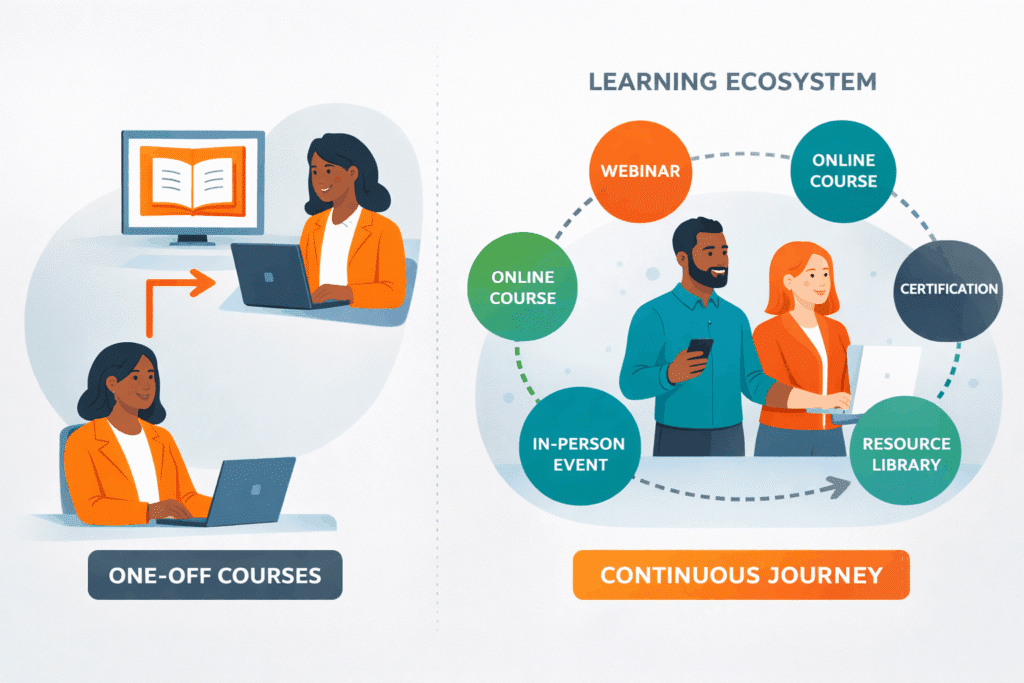
One-off courses aren’t enough; instead, associations should design learning ecosystems that combine micro-modules, cohort experiences, credentials, community, and data-driven recommendations.
Below, we outline three key categories of online learning (Individual, Group, Blended). In each category, we share examples of modernized formats that align with what members expect from continuing education in 2026.
Learn more about what members want in the year ahead by downloading the 2025 Association Member Experience Report.
1) Individual Online Learning: Self-Paced, Micro, and Competency Focused
What this looks like today
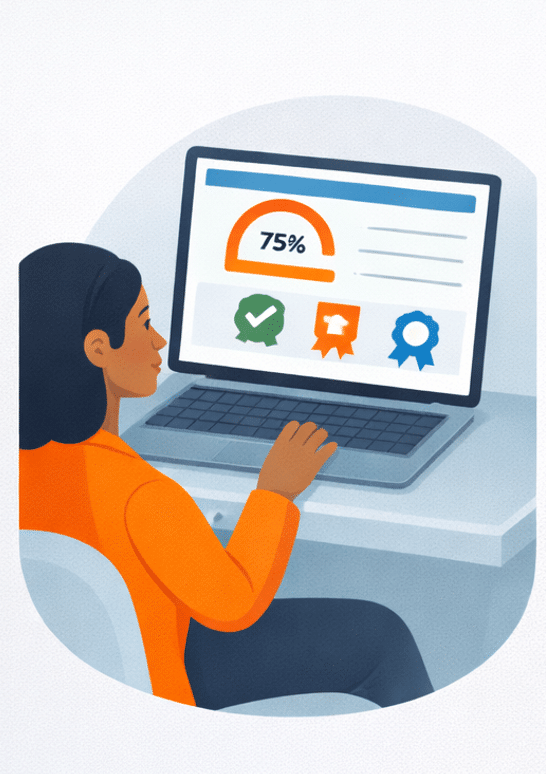
Individual learning remains a core online learning format, but emphasis has shifted to microlearning, competency outcomes, and short on-demand modules that fit busy schedules. Members want continuing education that provides clear evidence of skill acquisition and a visible path to mastery. Key components include having access to transcripts, badges, and certificates.
How to build it
- Micro-modules: Offer 5-20 minute focused activities plus optional deeper modules for advanced learners.
- Competency design: Define what learners will be able to do after each module. Competency-based education (CBE) focuses on demonstrated skills rather than time spent, and it allows learners to progress as they demonstrate competence.
- Certificates and badges: Build pathways that group courses into certificates or credentials and award digital badges at milestones. Your LMS should support pathway and cohort capabilities so learners can see progress toward certificates.
- Mobile and accessible by design: Prioritize mobile-first delivery, captions, screen-reader compatibility, and consider multilingual support. Accessibility expectations and language options are increasingly important.
Pro tip: Allow learners to retake assessments when useful, surface next-step recommendations based on behavior, and show progress on a personal dashboard.
2) Group Online Learning: Cohort Programs, Live Workshops, and Social Learning
What this looks like today
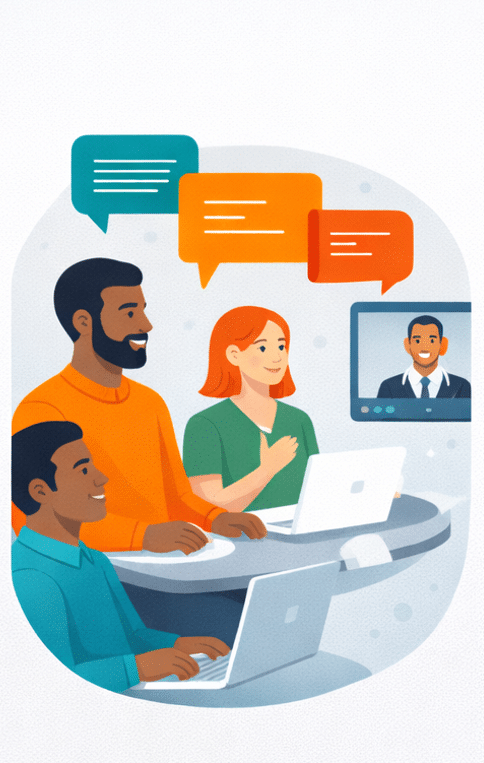
When it comes to group learning trends, live webinars and workshops continue to matter, but cohort-based learning and community-facilitated interaction are the real differentiators. Cohorts combine the structure and social accountability of synchronous sessions with ongoing peer learning in an online community.
How to build it
- Live plus small group work: Use webinars with breakouts, hands-on activities, and practical assignments.
- Cohort communities: Pair live sessions with a private cohort community for questions, resources, and accountability between sessions. Mentorship and peer review add practical skill transfer.
- Integrated experience: Strong LMS and community integration matters. When course activity, discussion, and member profiles are connected and single sign-on is in place, instructors and mentors can intervene with context and learners can carry conversations forward asynchronously.
Pro tip: Require short pre-work so everyone arrives prepared and use the community to assign peer-accountability tasks between live meetings.

3) Blended Online Learning: Learning Ecosystems and Continuous Paths
What this looks like today
Blended learning now means more than combining written resources and a webinar. It is about assembling continuous learning paths where micro-modules, cohort touchpoints, mentorship, and competency assessments lead to recognized credentials. Members want their association to act as a career co-pilot: when they engage in your continuing education, they want you to give them a way to track progress, understand next steps, and visibly share their achievements.
How to build it
- Learning paths: Map sequences that combine self-paced modules with scheduled cohort sessions and competency checks.
- Milestones and credentials: Award digital badges and certificates at meaningful milestones and display them on learner transcripts and dashboards.
- Personalized guidance: Use member data, such as past courses, community behavior, and job role, to recommend next modules. Personalization increases engagement and lifetime value. Research shows members who get personalized experiences are far more engaged and more likely to remain members.
Pro tip: Design an end-to-end pilot: one certificate program that includes micro-modules, three live cohort sessions, a mentor check, and a final competency assessment. Measure outcomes and iterate.
Must-Have LMS and Tech Capabilities
When addressing professional development and online learning trends, the technology you choose plays a crucial role. Learning management systems (LMS) are designed to give your members the educational experience they want, while minimizing exhaustive manual work by your team.
When you update or select an LMS, confirm it supports modern member expectations:
- Learner dashboard and transcript that show progress, certificates, and learning history.
- Pathway and certification support for micro-credentials, digital badging, and cohort management.
- Community integration and SSO to connect course activity to discussion spaces and member profiles, keeping learning social and continuous.
- Accessibility and multilingual support with WCAG alignment, captions, screen-reader compatibility, and translation options.
- Reporting and analytics that measure completion, progression, credential impact, and tie learning to retention and revenue.
How to Measure Success of Online Learning Programs
Understanding the performance of your online learning programs will help you identify opportunities to adjust and improve. Track KPIs that show both learning and business impact:
- Course completion rate and time to competency
- Pathway progression: percentage of learners reaching each milestone, remembering that 80% of members want structured visibility into progress
- Community engagement for cohorts, such as posts, replies, and peer feedback
- Credentials issued and downstream job or role impact where traceable
- Membership retention lift among learners, since personalized learning helps retention.
Launching or Refreshing an Online Learning Program
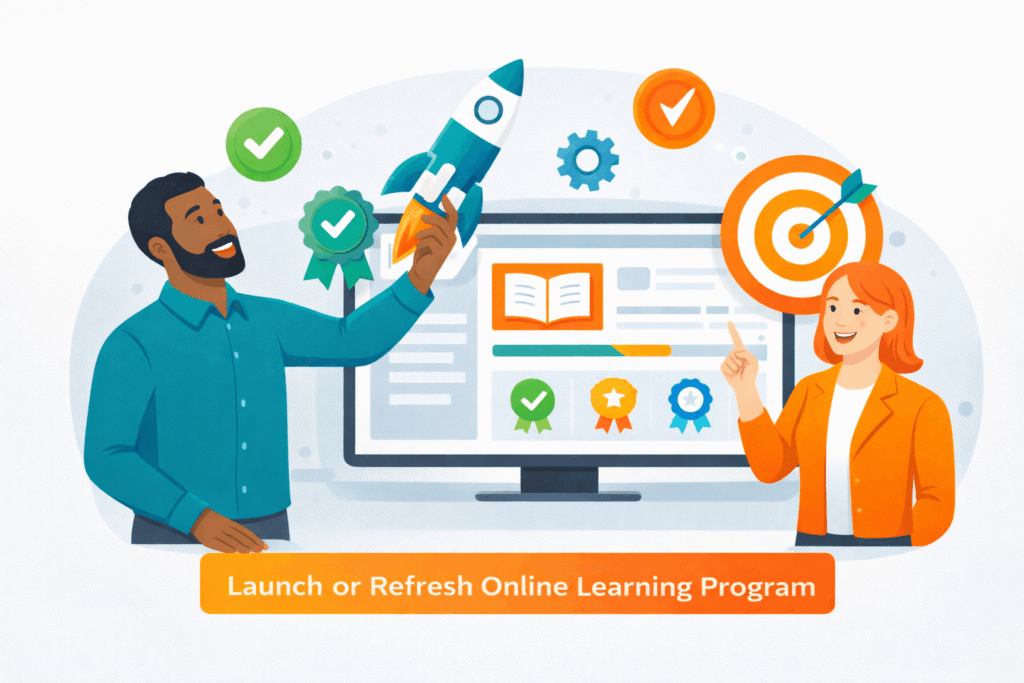
When it’s time to refresh or launch a new online learning program, set aside time to clarify the program’s goals and positioning within your wider educational ecosystem. This will help you decide what types of online learning you want to prioritize, identify missed opportunities, and ensure you’re providing a continuous learning journey for members who engage.
You may also want to pilot an initial program – like a certificate program – to identify what works best for your members and what you can improve before you roll out a new format across your programs.
Here’s a checklist to help you.
- Define competencies and what mastery looks like.
- Break content into micro-modules and map to a learning pathway.
- Ask yourself, what courses would a beginner, intermediate, and advanced learner need?
- Ensure the pathway includes two to three live cohort touchpoints and a private cohort community.
- Decide what learner milestones to recognize/celebrate (e.g. finishing a “Basics of XYZ” certificate or an “Advanced XYZ” credential)
- Set up your learner dashboard so participants can track course completion, milestones, and earn badges.
- Automate and personalize reminders for learners’ “next step” based on past actions, interests, and other member data.
Final Thoughts
The core formats of individual, group, and blended learning are still correct, but your association’s job in 2026 is to stitch them together into learning ecosystems that show progress, reward skill, and guide career outcomes. When your LMS, community, and member data are tightly integrated, you move from selling courses to building members’ careers, and that is the kind of member value that drives engagement and retention.