



Managing Product Feedback in a Community: A Guide for Product Managers
Your online community is a direct line to what your customers want most from your product. Its where they share ideas, give feedback, and voice the challenges theyre facinginsights you can use to shape your roadmap.
But without a clear process, capturing and organizing that feedback can feel like searching for a needle in a haystack. Posts get buried, threads veer off-topic, and youre left wading through countless comments, hoping you didnt miss anything important. For product managers, this is time you simply dont have.
A structured approach changes everything. It turns your community into a reliable feedback hub, one that saves you time and ensures the best insights rise to the top.
Heres how to design a feedback system that streamlines the process, helps you prioritize input, and turns customer insights into better products.
1. Centralize Your Ideation Process
To get the best ideas from your community, you need to make it easy for both you and your members. A well-organized, centralized ideation space ensures that great ideas dont get buried in endless threads or overlooked entirely.
Heres what a centralized ideation process should deliver:
- Visibility: Everyone knows where to go to share and review ideas.
- Clarity: You can easily track when a new idea is posted.
- Engagement: Members can find, discuss, and build on each others suggestions.
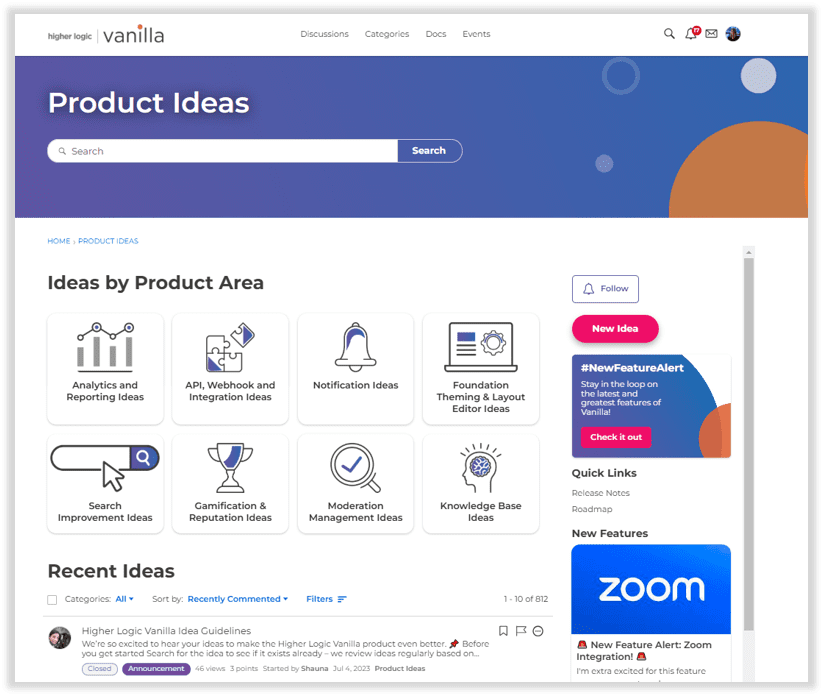
The key is creating a dedicated space within your community specifically for idea submissions. For example, Higher Logic Vanillas Success Community organizes product ideas by categories like “Analytics” or “Search Improvements,” keeping ideas grouped by relevance.
2. Allocate the Right Resources
The resources you dedicate to evaluating community ideas should match both the potential payoff of implementing a great idea and the size of your community relative to your team. Striking this balance is key.
The goal is to avoid over-investing or under-investing. While this might sound tricky, its a process you can refine over time. Start small, evaluate what works, and adjust until you find the right rhythm for your team and community.
One often-overlooked resource? Your community members themselves. Theyre the only resource you dont need to “assign.” By giving members tools like upvoting and commenting, you empower them to surface the best ideas for you.
3. Promote Great Ideas
When you spot an idea with real potential, dont let it get lost as new ideas flow in. Promoting top ideas ensures they get the visibility they deserve and invites further feedback from your community to refine them.
One effective way to highlight great ideas is by incorporating gamification into your community. For example, use leaders to showcase users with the most popular ideas, keeping their contributions front and center on the ideation page. This also encourages healthy competition among members. When an idea gets implemented, consider sending a small thank-you gift, like branded swag, to show your appreciation.
4. Direct the Conversation When Needed
As a product manager, dont be afraid to jump in and get your hands dirty. Join conversations and ask leading questions to guide discussions when necessary.
Seeding a conversation has its pros and cons, each with valid points. Ultimately, your approach should align with the goals of your ideation processdeciding when to lead and when to step back.
When you seed a conversation with leading questions, youre guiding members in the direction you want them to explore. This approach is especially useful when addressing specific business challenges. Start with open-ended questions or share an ideation framework to help participants understand the objectives and whats expected.
However, there are times when its better to step back and let the community take the reins. This strategy works best when youre seeking innovative, exploratory ideas and fresh perspectives.
Unlike seeding, which can constrain creativity by setting boundaries, letting your community lead opens the door to limitless possibilities. While you may encounter some unconventional or outlandish suggestions, youll also uncover brilliant, unexpected ideas.
5. Introduce the Best Ideas
Once youve gathered ideas, its time to bring your engineers into the conversationtheyre the ones who will ultimately bring these concepts to life. As a product manager, you likely have a good sense of which ideas hold the most potential. Now, its about tapping into your teams technical expertise to assess feasibility, estimate implementation timelines, and identify whether adjustments to existing features might be required.
This collaboration with your engineers is essential before presenting the top ideas to the executive team for approval. Theyll provide the insights you need to ensure your pitch is realistic and actionable.
Not every innovative idea will make it to production, and thats okay. Even great ideas that dont move forward can spark new concepts that do. The ideation process isnt just about finding the next big thingits about creating a space for your team to explore, refine, and uncover opportunities that help shape the future of your product.