


What Is a Customer Community? Examples & How to Build One

When customers feel truly connected to a brand, they want to engage with it outside of annual sales conversations and generic LinkedIn posts. Customers who are passionate about your products want to learn how to make the most of them, discuss challenges with their peers, provide real-time feedback, and feel like they’re part of an exclusive club.
This is where customer communities come in. If you give your customers a dedicated space to engage with your brand and each other, you’ll develop a stronger, more involved customer base while providing them with valuable resources and opportunities. Everybody wins!
In this guide, we’ll cover everything you need to know about building an effective customer community, including:
- What is a Customer Community?
- Do I Already Have a Customer Community to Build On?
- Customer Community Benefits
- 3 Customer Community Examples & Why They Work
- How to Launch a Customer Community for Your Business
Let’s explore the basics so you can start improving your company’s marketing, customer service, and brand loyalty with a thriving community.
Ready to launch a thriving, high-ROI customer community?
Discover the latest trends in our free guide for companies.
What Is a Customer Community?
A customer community is an online hub where customers can access support resources, provide product feedback, participate in discussion forums, and interact more deeply with your brand. Whether they’re hosted via branded websites or public social media platforms, the goal of customer communities is to strengthen relationships between businesses and their customers by empowering them to engage in new ways.
Any business can create a customer community to boost engagement and brand loyalty, but they’re especially beneficial for B2B and B2C companies.
Functions of Online Customer Communities
Customer communities can take many forms, depending on your audience and highest-priority goals. Here’s a quick breakdown of the most common functions of customer communities:
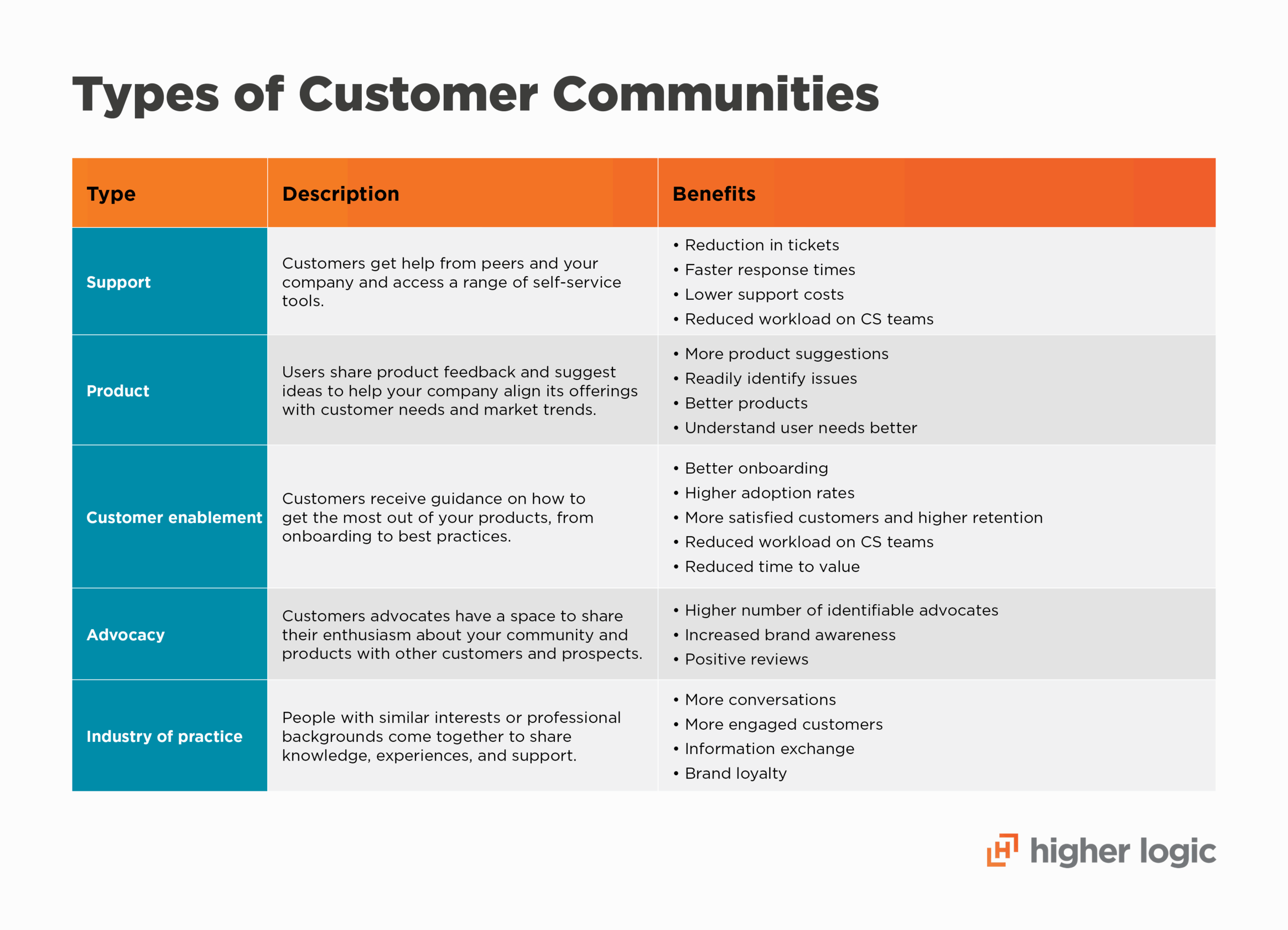
- Support: Customers can get help and access tech support from their peers, your company, and a range of self-service resources. These communities help you reduce support tickets and their associated costs while enabling faster solutions for customers.
- Product: Here, users share product feedback and suggest ideas that could help your company better align its offerings with customer needs and market trends. You’ll source more product ideas, identify common issues, and ultimately improve your company’s products based on real user experiences.
- Customer enablement: These communities provide guidance on how to get the most out of your products, from onboarding to ongoing best practices. Your community can be a major value-add for customers—leading to better onboarding experiences, increased customer satisfaction, and higher product adoption rates.
- Advocacy: Customers who are champions of your brand can access a space to network and share their enthusiasm about your community and products with other advocates. Boost brand awareness and strengthen relationships by empowering these customers to participate in your marketing.
- Industry of practice: In communities of practice, people with similar interests or professional backgrounds come together to share knowledge, experiences, and support. This leads to increased customer engagement and brand loyalty while facilitating industry-specific information exchange.
The type of community you choose and its core use cases often correlate with your business’s maturity level. Many customer communities initially focus on support, enablement, or product-related discussions. As they mature, they can expand to encompass more complex functions such as advocacy and specialized interest groups.
Do I Already Have a Customer Community to Build On?
Many companies show early signs of a customer community, even if they haven’t formalized one yet. This can be a great foundation for a formal, branded online community—if you know how to jumpstart it.
Most organizations have ways to talk to customers, like email, social media, or support portals. But customers also need a place to talk to each other, and sometimes they create one organically. Maybe a handful of customers are chatting on Reddit or a Slack group. Maybe they consistently reply to your LinkedIn posts or tag each other in the comments. These moments might not feel like “community,” but they’re strong signals that your customers want to connect, learn from one another, and share what they know.
If your customers are already organizing on their own, even informally, that’s energy worth investing in. Purpose-built community software gives you the structure to support those conversations long-term with moderation, member roles, integrated data, and tools that scale as your customer base grows. With a comprehensive solution, you can avoid relying on algorithms, access specialized features, and easily compile data about customers’ activity.
So, if you have a baseline community already, we highly recommend using the rest of this guide to develop it further.
Customer Community Benefits
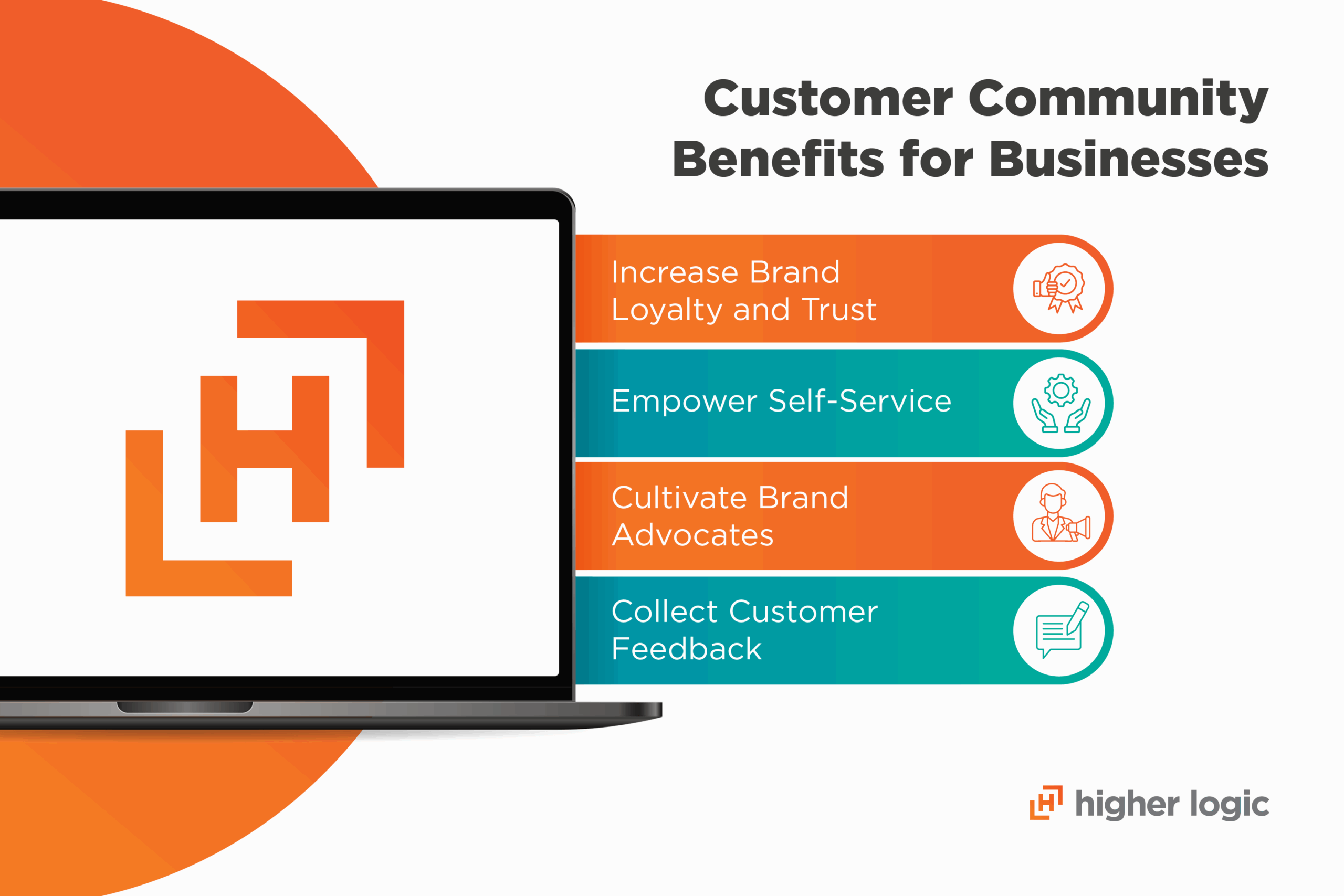
Launching a full-featured, branded customer community comes with impactful business benefits. A strong community helps you:
Increase Brand Loyalty and Trust
Online communities help build trust by providing a positive and helpful experience for your users. If customers know they have a place they can reliably go to connect with subject matter experts, get timely help, and learn new things, they’re much more likely to remain loyal to your brand and stick around as a customer.
Empower Self-Service
Customers want quick answers, and they want to know how others facing similar challenges are solving for a given problem. Communities allow them to connect with others who have real-world experience in doing the thing they are trying to do, and empower users to help one another. A customer community can help your users save time (and reduce ticket submissions in the process) by providing self-help resources and connecting users to one another.
Cultivate Brand Advocates
As your community matures, you can identify and nurture active users into advocates. Engaged, knowledgeable community members who love your brand and naturally welcome prospects and new members can be further engaged to participate in sales references, marketing activities, speaking opportunities, and more. Your customer community is a critical tool for finding and engaging customer advocates, with impacts stretching across the business.
Collect Customer Feedback
Product communities provide an easy, secure way for your company to gather user feedback and engage customers in your development process. They’re a great way to identify beta testers and focus groups, and give your product managers direct access to the people whose opinions matter most—your customers. With a bird’s-eye view of customer opinions, you can aggregate feedback and ideas and gain critical customer insights.
3 Customer Community Examples and Why They Work
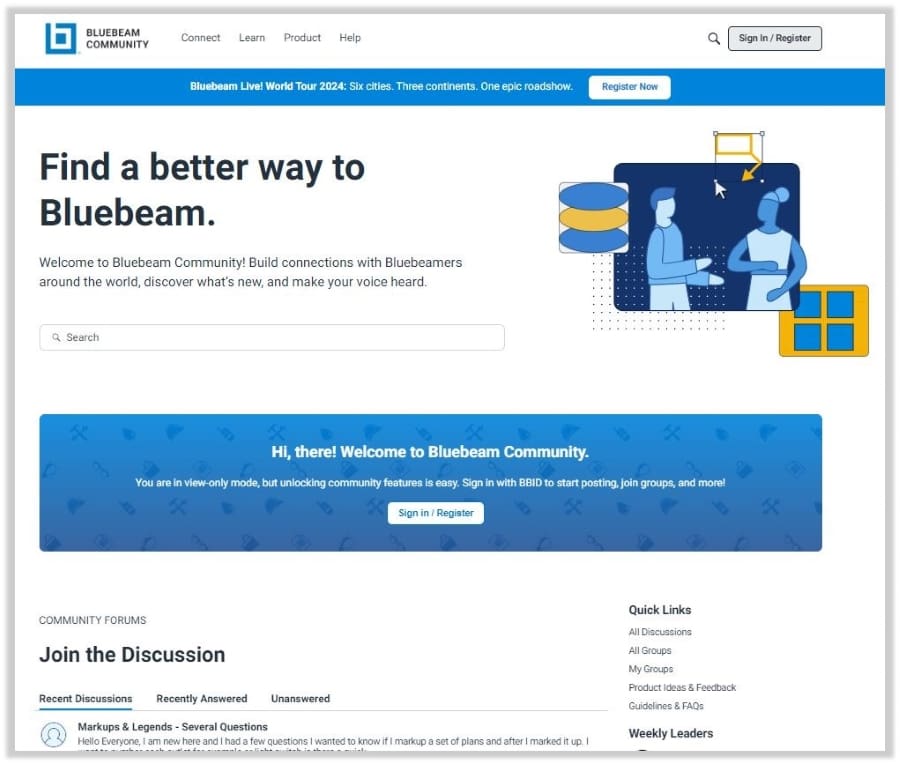
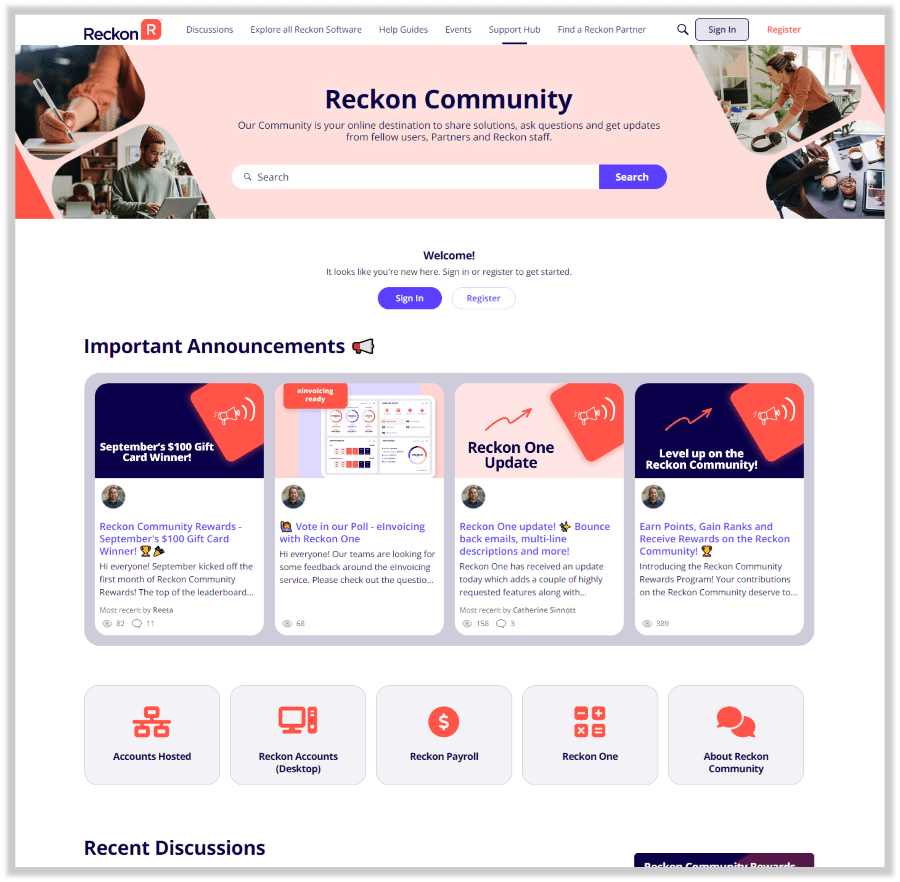
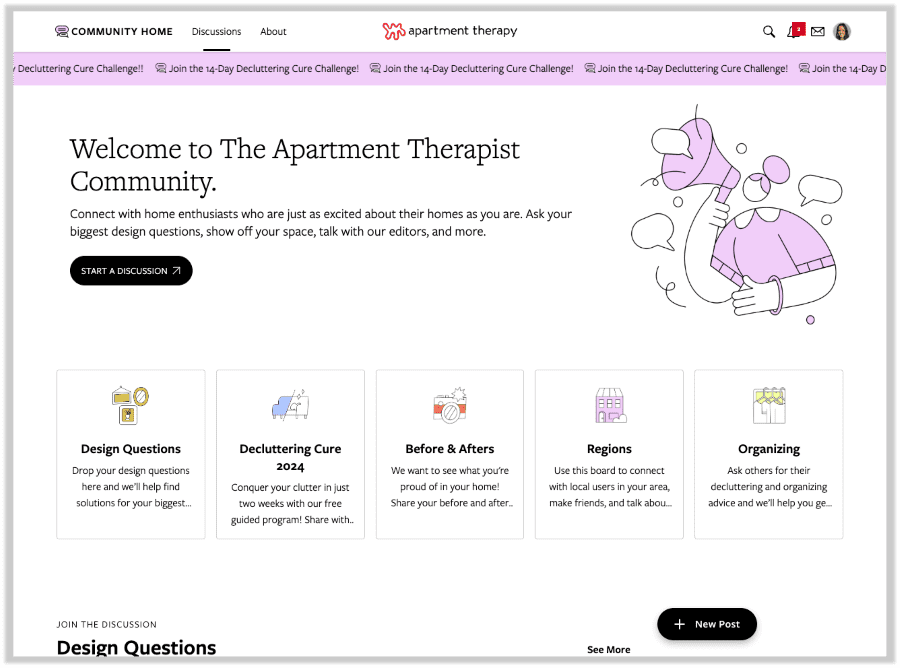
What does a successful customer community look like in practice? It can vary widely, but we’ve pulled three examples from the Higher Logic customer showcase to give you some inspiration:
Bluebeam
Reckon
Apartment Therapy
What’s Great About These Communities
Each of the above examples is powered by Higher Logic Vanilla, our online community platform specialized for B2B and B2C businesses. With flexible theming, deep customization capabilities, and built-in tools for Q&A, gamification, ideation, and moderation—along with support from our own customer community—these companies created branded, high-impact online communities with thousands of engaged members.
Here are some of the key elements that make these customer communities so successful:
- Customer-driven culture: Each of our customer community examples includes specialized widgets, buttons, and links that address their customers’ unique needs. They also empower users to take the lead with gamification features like badges and leaderboards.
- Dedicated space for knowledge sharing: These communities provide discussion forums, user groups, and self-help resources, making customer support easy to access and communal.
- Product feedback hubs: Each online community includes a place where users can submit feedback or feature requests. Then, other members can explore these posts, add their own comments, and engage with product managers about their ideas.
- Featured content: Your community’s homepage is high-value real estate—make sure to use it well by featuring the most useful, commonly accessed information and user pathways, like these examples do.
- Clean, professional branding: These websites are clearly branded to the business, with URLs, logos, visual designs, and language that align with their branding. At a glance, any user can see that the community is a trusted, official resource supported by the company.
Get inspired by top customer communities powered by Higher Logic.
Discover more examples in our customer showcase.
How to Launch a Customer Community for Your Business
Are you ready to build or relaunch an online community for your brand? By planning ahead with this framework, you’re more likely to be aligned with your stakeholders, catch any potential issues early, and get users participating quickly.
1. Define the Goals of Your Online Customer Community
Start by defining the goals for your community at each level: organizationally, departmentally, and for end users. What does each group want to get out of an online community? Ask yourself these questions to get a clear picture of what different stakeholders are trying to achieve:
- What do your customers want, and what will they benefit most from? Talk to customers who you want engaged in this community, and find out what they need and want most in connecting with one another and your company.
- What are your business objectives? Are you looking to reduce support costs? Increase retention? Engage current users in product ideation? Maybe all of the above and more. Understand your stakeholders’ priorities, determine the ideal business impact of a community, and look for the intersections between what customers need and want.
- What kind of return on investment (ROI) does leadership want? Consider your company’s long-term objectives and immediate priorities, including financial targets, market expansion plans, or efficiency improvements, and how your community can support these.
- What community activities will most benefit your customers? Identify the gaps in your customer journey and think creatively about how your community can fill them.
Do some additional brainstorming, prioritizing, and consensus-building to determine how to build a community that supports all of the needs you identified. Then, outline specific goals like increasing customer success efficiency or incorporating more customers into the product ideation process to guide your community creation.
As your community grows, your goals might change. That’s okay! Don’t try to pursue every goal you could aim for all at once—just let your goals evolve naturally as the community matures.
2. Determine Your Community’s Primary Functions
Your goals should inform what kinds of content and programs you’ll start with. Refer to the different functions of a community listed above, and consider the following questions:
- What is the biggest priority for your company? For your customers?
- How can you align those organizational, departmental, and end users’ goals?
- Do you want your community to appeal to a variety of customer personas, and if so, which ones will you target?
- How can you ensure that consumers, contributors, and creators all have a place in your community and actively receive value from it?
- How can you make your community the hub of your customer journey?
- What will make customers want to stick around and use your online community to its fullest potential?
It’s best to start a new community with just a couple of the functions we discussed earlier and expand from there as your community matures. Expanding the scope of a community should be a strategic decision down the line, based on your community’s readiness and user base strength. Start simple and leave room for your community to grow over time.
3. Outline Community Benefits and Guidelines
What’s in it for users if they join your customer community? Compile a few core reasons to join your community that tap into what customers are looking for. For example, if you’re creating a support community and you know potential members want to solve their problems quickly, emphasize that the community will help customers get fast answers.
Provide these benefits to your marketing and sales teams so they can highlight the online community in their prospect-facing resources. You should also connect with your implementation team and customer success managers so they can accurately explain these benefits when they introduce the community during onboarding.
Then, determine what guidelines community members should follow. This might include rules for posting appropriate content or steps users can take to report anything offensive.
4. Plan How You’ll Invite Users and Promote Your Community
You’ll want to work with your marketing and communications teams to develop a plan for how you will invite users to your community and who you should invite first. Then, plan the messaging, emails, and cross-channel promotions you’ll use to bring people into your community and get them excited to join.
5. Launch Your Community With the Right Software
With your goals, benefits, and guidelines solidified, it’s time to launch your online community and start engaging members!
To streamline the process, choose an online community platform with built-in customization and engagement tools. For instance, gamification features such as ranks or leaderboards will motivate customers to get more involved. The more you can encourage customers to talk to each other and answer each other’s questions, the more they’ll develop the confidence they need to eventually become advocates.
Higher Logic Vanilla is an all-in-one online community platform designed to meet your business needs. Our solution offers easy site branding and customization tools—and that’s just the beginning!
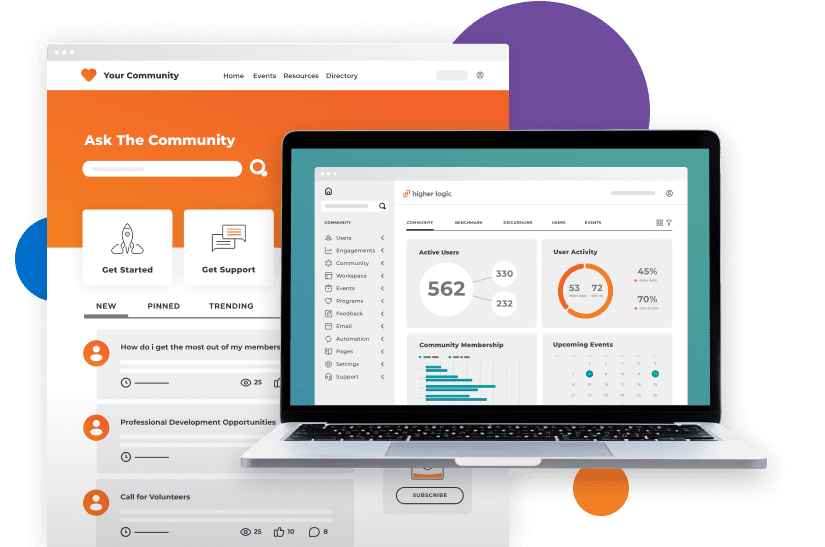
Launch a professional, full-featured community with Higher Logic Vanilla.
Reach out to our team to start your journey.
6. Promote and Incentivize Engagement
Finally, start getting customers signed up and ready to interact with your online community. Create a plan for community promotion, encouraging participation, and member retention. Try these strategies to keep customers engaged:
- Share content with users via recurring newsletters or an email digest to inspire them to return.
- Send welcome emails that include value statements and the first steps they can take in the community.
- Automate “We miss you!” messages to remind disengaged community members to come back.
- Create a content calendar for community engagement posts and activities.
- Integrate your community with other sites in your tech stack, like learning management or ticketing systems.
- If your marketing and customer success teams already send regular emails or newsletters, provide them with links to great community content they could incorporate.
- Identify which customers are not yet in the community and individually invite them to join.
Pro Tip: Don’t exhaust yourself or your resources right after launch. It’s tempting to try everything at once, but hold back some of your engagement ideas to sustain excitement. Keep excess ideas in your content calendar to make sure you’ve got something great every month, every quarter, and every year. This will help keep your community successful for the long term.
Jumpstart Your Customer Community’s Success With Higher Logic
By brushing up on the basics and creating an initial plan, you’ve already taken a huge step forward on your journey to customer community success. But remember, we’re here to help! Contact the Higher Logic team to learn more about how our software can launch your new community’s success.
Looking for more resources to help you along in your online community journey? Check out these blogs:
- 15 Standout Online Community Software Solutions for 2025. Explore the top community software providers to choose the one that’s right for you.
- Should Your Online Community Be Open or Closed? When launching your community, you may decide to make content public or exclusive to registered members. Use this guide to evaluate your options.
- 3 Steps to Design a Community Engagement Plan. Once your new community is up and running, these steps will help you keep members active.
Give your customers the online community they deserve.
Higher Logic Vanilla makes it easy to launch engaging, helpful communities your customers will love.
