


20 Tools for Scaling Customer Advocacy: Software Reviews

Customer advocacy is a powerful way to grow your business by turning loyal customers into active champions for your brand. Advocacy can take many forms, including referrals, reviews, case studies, event speaking, and peer recommendations, but scaling those efforts requires the right mix of tools.
Customer advocacy rarely lives in a single platform. While dedicated advocacy management software can help you run structured programs, many organizations rely on a broader tech stack that includes communities, loyalty and incentive systems, and feedback intelligence tools to identify and activate advocates at scale.
In this guide, we’ll review 20 platforms that support advocacy strategies, from purpose-built advocacy management solutions to complementary tools that help cultivate engagement and amplify customer voices. We’ll cover:
Ready to make the move to new customer advocacy or community software?
Explore our software migration guide.
Customer Advocacy Platform FAQs
What is customer advocacy software?
Traditional, core customer advocacy platforms are centralized solutions designed to help businesses identify, track, manage, and recognize their most loyal and vocal customers.
These solutions help you manage the full lifecycle of customer advocates, from identification to testimonial collection to recognition and rewards. Many customer advocacy software solutions include capabilities such as gamification, social proof collection, content creation, and performance reporting.
What are the benefits of customer advocacy software?
Customer advocacy software empowers organizations to systematically identify and engage customers who are willing to promote and recommend their brand. These platforms help teams centralize advocate data, automate outreach and reward workflows, coordinate reference and testimonial requests, and prevent overuse of key champions.
Beyond organization and efficiency, advocacy software makes it possible to scale structured advocacy programs across regions, segments, or product lines. It also provides visibility into participation, engagement, and program performance so you can measure its impact on pipeline, revenue, and growth.
What does customer advocacy software typically include?
Customer advocacy software is typically used to manage structured advocacy programs. These platforms help teams recruit and organize advocates, coordinate reference and testimonial requests, automate rewards, and measure program impact. For organizations running formal advocacy initiatives, this software often serves as the central system for program management and reporting.
At the same time, advocacy behaviors often emerge across other parts of the customer experience, which requires a broader tech stack. Referrals, reviews, community participation, loyalty engagement, and customer feedback all contribute to advocacy outcomes. To encourage and track these behaviors, many organizations rely on additional platforms.
As a result, customer advocacy software is often only one component of a broader strategy. It provides program structure and accountability, while other systems, like customer community software, support engagement, amplification, and customer relationship development across the journey.
Can customer advocacy platforms integrate with other tools?
Yes, many software solutions that power customer advocacy can integrate with your CRM, marketing automation tools, online communities, sales enablement platforms, and content management systems (CMSs). These integrations allow teams to sync advocate data, automate workflows, connect advocacy activity to pipeline and revenue reporting, and surface customer stories across marketing and sales channels.
How does customer advocacy software track engagement?
Engagement tracking varies by platform and program design. Dedicated customer advocacy software typically tracks structured advocacy activities such as reference participation, testimonial submissions, referral conversions, and reward redemption. These systems often tie advocacy actions to pipeline or revenue metrics to measure program impact.
Other platforms may track different types of engagement signals. For example, community platforms like Higher Logic Vanilla can analyze participation levels, contribution rates, and sentiment trends to identify highly engaged customers. Loyalty systems track participation in incentive programs, while feedback tools monitor satisfaction and Net Promoter Scores.
Together, these insights help organizations understand both formal advocacy activity and the broader engagement patterns that influence customer-led growth.
Top Core Customer Advocacy Platforms
When customer experience (CX) professionals say “customer advocacy software,” they’re typically referring to all-in-one solutions that power advocate identification, testimonial collection, reward programs, social proof content creation, and more.
If you’re looking for a core advocacy management solution, check out these popular options:
- SlapFive combines customer programs, content, campaigns, advocacy, and references into a single solution. You can nominate and target potential advocates with recruiting campaigns, collect testimonials in a variety of formats, and recognize their contributions.
- Champion uses AI to empower customer-led marketing and business growth. You can generate a pipeline of potential advocates, connect leads to relevant references automatically, and track advocacy actions by ROI and lifetime value (LTV).
- Deeto prioritizes listening to and learning from your customers throughout the full lifecycle. It enables you to activate advocates with automated workflows and capture the customer voice from conversations, feedback, and cross-channel engagement.
- Peerbound is an AI-driven customer advocacy solution that listens to your customer voice data and automatically extracts positive reviews and stories. You get a 24/7 advocate identification tool that consolidates and compiles case studies you can use for marketing in minutes.
- UserEvidence enables you to manage your advocates, customer references, and social proof metrics from a centralized solution. Collect “evidence” assets and match them with potential buyers, all while engaging your customer advocates in an exclusive community.
- Base highlights its ability to automatically turn customer data into advocacy using AI Agents. Its brand advocacy software can surface references, track rewards, run email campaigns, and build a custom advocacy scoring model for your business.
The Best Platforms for Building Customer Advocacy: Reviewed
We’ve compiled a list of platforms that businesses leverage to source references and testimonials, engage customer advocates, and reward loyal customers. Check out our full reviews below.
Higher Logic Vanilla
Type of advocacy tool: Customer community software
Best for: Cultivating and engaging customer advocates through community
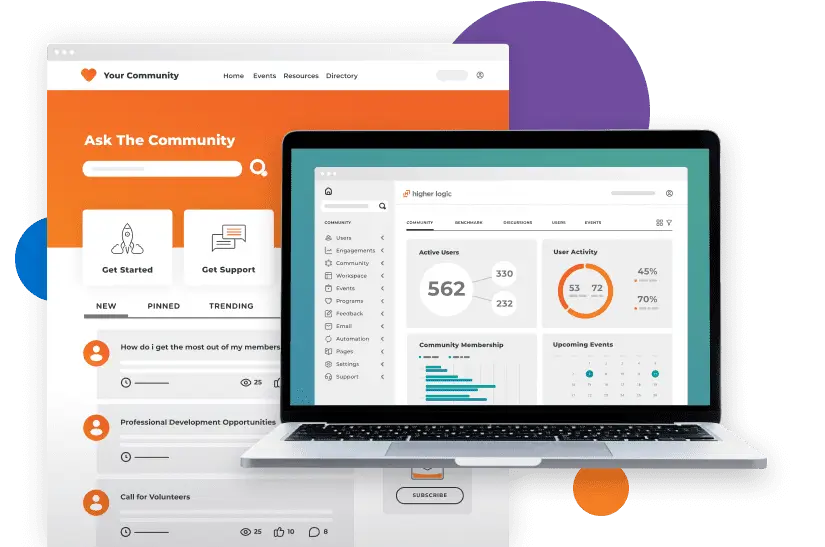
Higher Logic Vanilla is a trusted community platform that enables businesses to host vibrant, branded online communities where customers (and advocates!) can discuss, learn about, and engage with their brands and other users. Strong communities inspire advocacy, and Higher Logic is the best customer community software on the market.
By facilitating product discussions and analyzing community data, you can identify potential advocates and recognize their support through gamification. Plus, you can source testimonials organically from discussion boards or ask customers to share quotes, reviews, and recommendations. Ultimately, Higher Logic Vanilla communities can feed into many of your customer advocacy activities.
Designed for B2B and B2C brands of all sizes and powered by real community experts, our hyper-focused community platform is an unbeatable addition to any customer advocacy software stack.
Discover how Higher Logic communities drive customer advocacy.
Standout Features
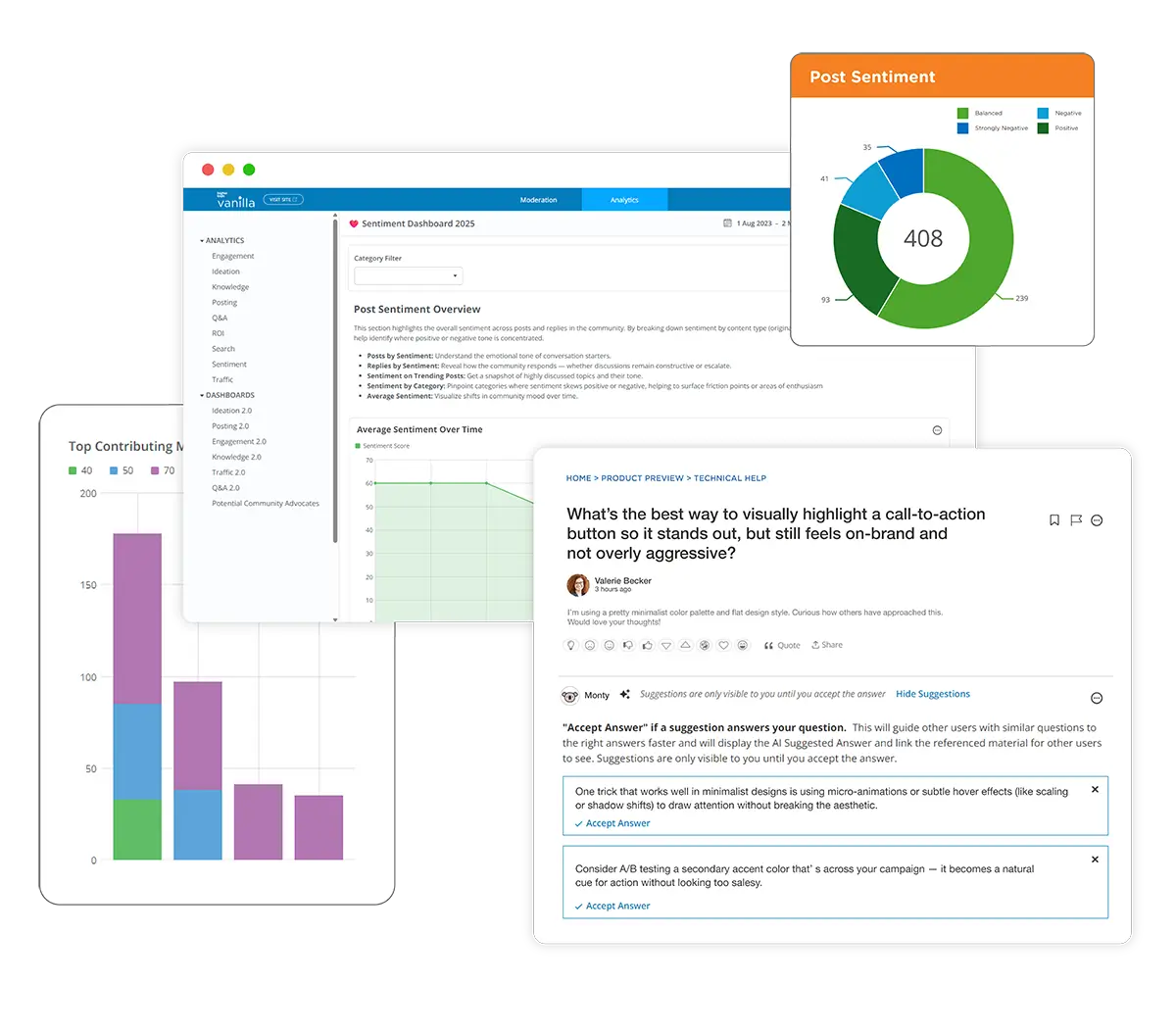
Some of our core functionalities and AI-powered features for customer advocacy are:
- Sentiment and engagement analysis to help identify potential advocates who are especially active in your community
- Community analytics dashboards where you can view engagement by user type, contribution rate, and sentiment trends to identify clients that may make good case studies
- Gamification that serves as a core driver for advocacy programs and enables visible recognition loops, including points, badges, ranks, and leaderboards
- Private advocacy or champion groups, with options for early access or beta areas using role-based permissions
- Content embedding to easily surface advocacy content (testimonials, discussions, etc.) for your marketing sites, product pages, or newsletter
- Event hosting and promotion tools that encourage customer advocates to engage with your brand
- Integrations with several CRMs, email marketing platforms, customer advocacy tools, social media platforms, and events providers
- Salesforce integration that feeds community engagement activities into accounts and contacts records within Salesforce, extending engagement data while maintaining a single source of truth
- Zapier triggers that can automatically notify your marketing team and add announcements to your newsletter when customers earn new community badges
- Surveys and ideation features for customer advocates and other community members to give feedback
- SEO and public access options to showcase top discussions, testimonials, or community stories to external audiences
Pricing
Explore our packages to choose the right fit for your business. For detailed pricing information, contact our team.
Scale customer advocacy with the #1 community software: Higher Logic Vanilla.
Sendoso
Type of advocacy tool: Customer reward platform
Best for: Rewarding customer advocates with personalized gifts
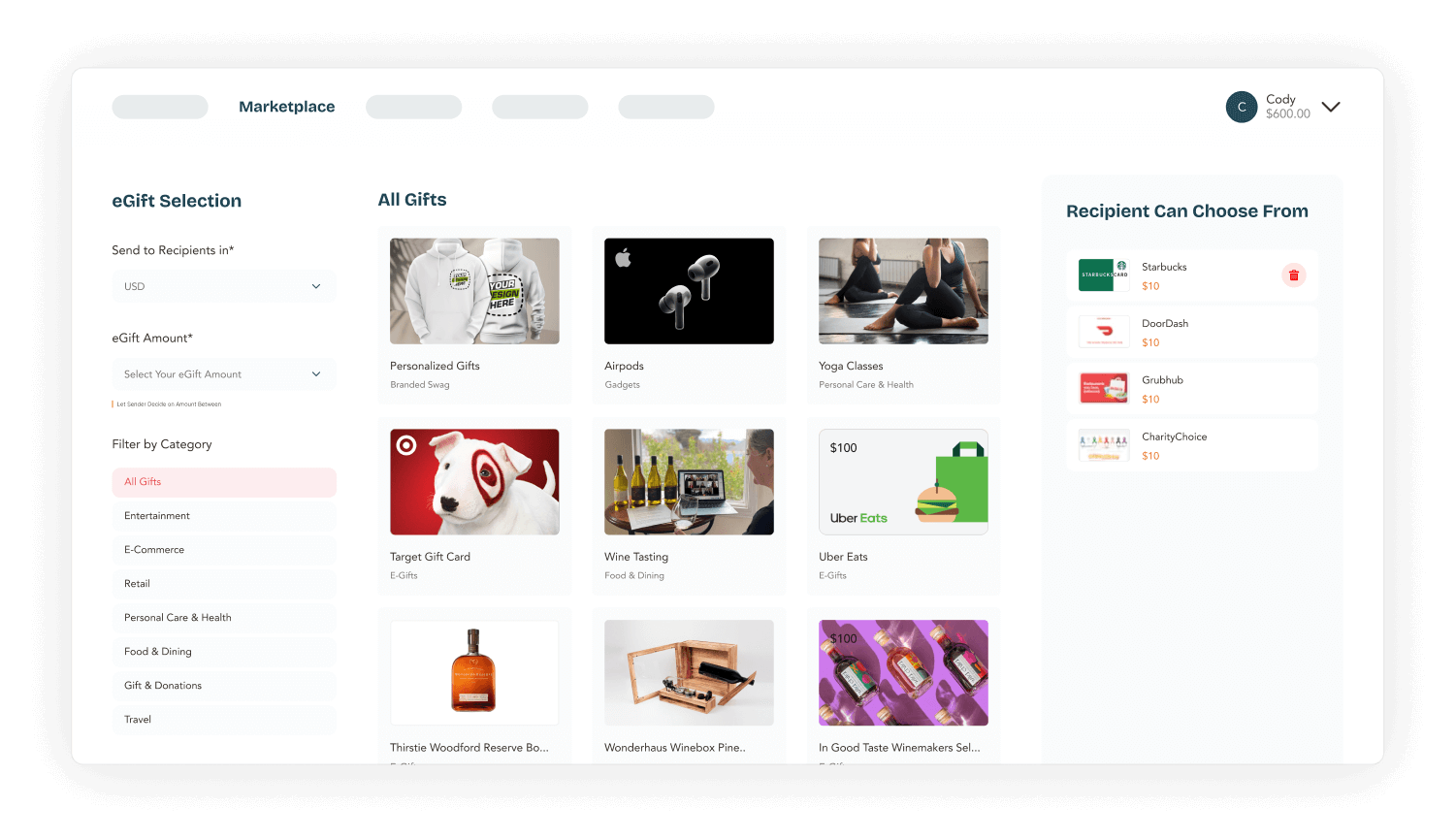
Many customer advocacy and referral platforms enable you to reward advocates with discounts, payouts, or gift cards, but few facilitate personalized gifting. Sendoso, however, is a specialized gifting and fulfillment tool that customer advocacy managers can use to send engaging rewards. It uses AI tools to recommend personalized gifts and automate customer gifting campaigns.
Some of Sendoso’s standout features include:
- SmartSuite that identifies emotionally intelligent, personalized gift recommendations
- Custom, professional gift fulfillment services
- Unlimited 1:1 and bulk sending
- Integration with Higher Logic Vanilla for community-based rewards
Pricing: Contact for pricing.
ReferenceEdge
Type of advocacy tool: Customer reference management
Best for: Salesforce users
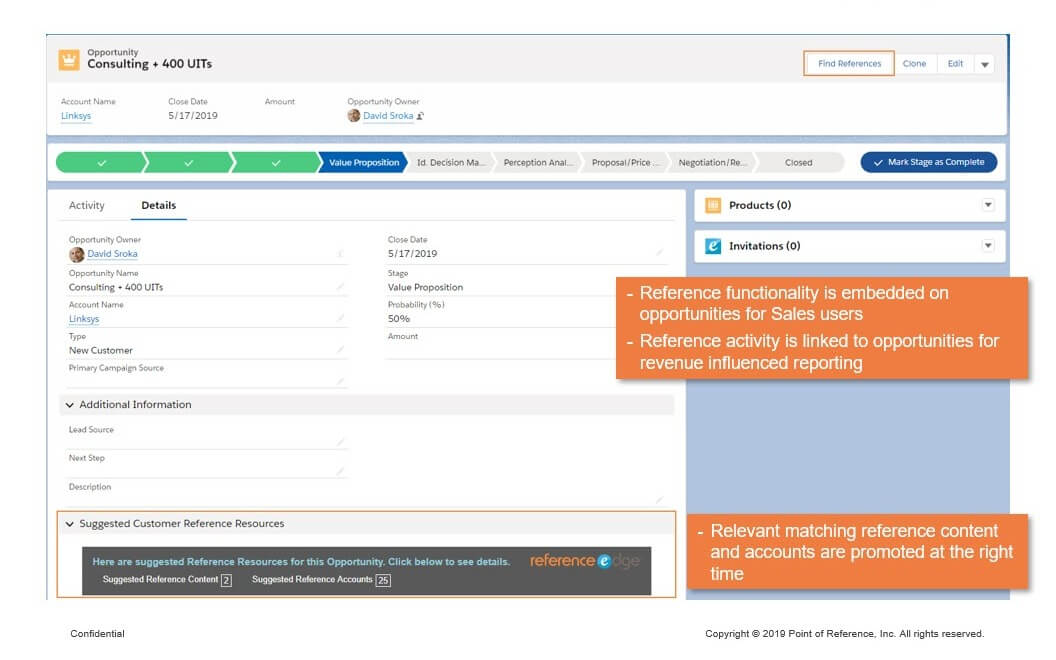
ReferenceEdge by Point of Reference is a Salesforce-native advocacy and marketing platform designed to help Salesforce users centralize their customer reviews, testimonials, and other reference data. This tool uses AI to accelerate customer advocate discovery and automate request campaigns within Salesforce.
A few key features for advocacy include:
- Reference Lead Finder and Nomination tools to identify advocates
- AI-powered Advocacy Gap Predictor to find opportunities for customer advocates
- Advocate gamification with reward points
- Centralized customer advocacy and testimonial tracking in Salesforce
Pricing: Contact for pricing.
HeyOrca
Type of advocacy tool: Testimonial sourcing tool
Best for: Social media monitoring
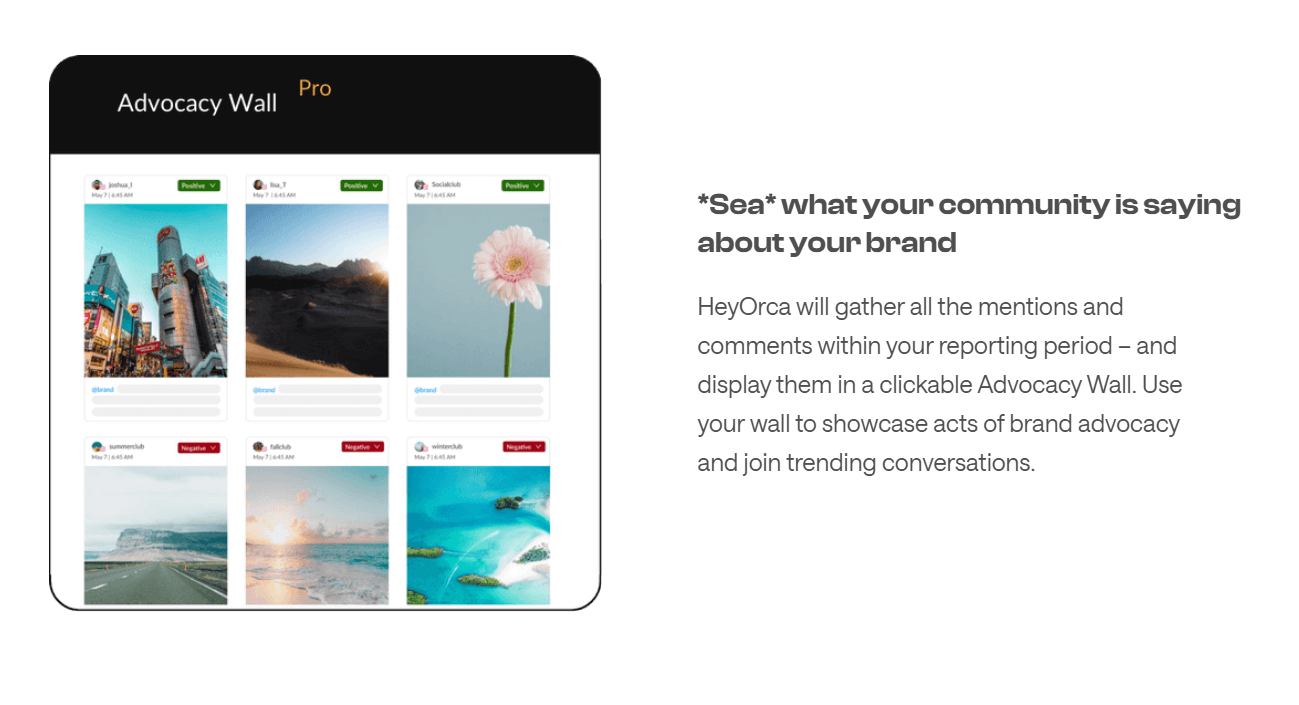
HeyOrca specializes in social media management for brands, but its Pro plan includes several social listening tools that can help further customer advocacy on social media. Along with managing cross-channel posts and community engagement, HeyOrca allows you to identify potential advocates on social media and track how customers talk about your business.
Its main features for scaling advocacy are:
- Brand monitoring report to identify new advocates and track actions
- Top community member identification
- Community advocacy wall that creates a gallery of brand mentions and user-generated content
- Trending themes tracking
Pricing: Starts at $149 per month for social listening.
Yotpo
Type of advocacy tool: Testimonial sourcing and customer loyalty platform
Best for: Customer loyalty programs
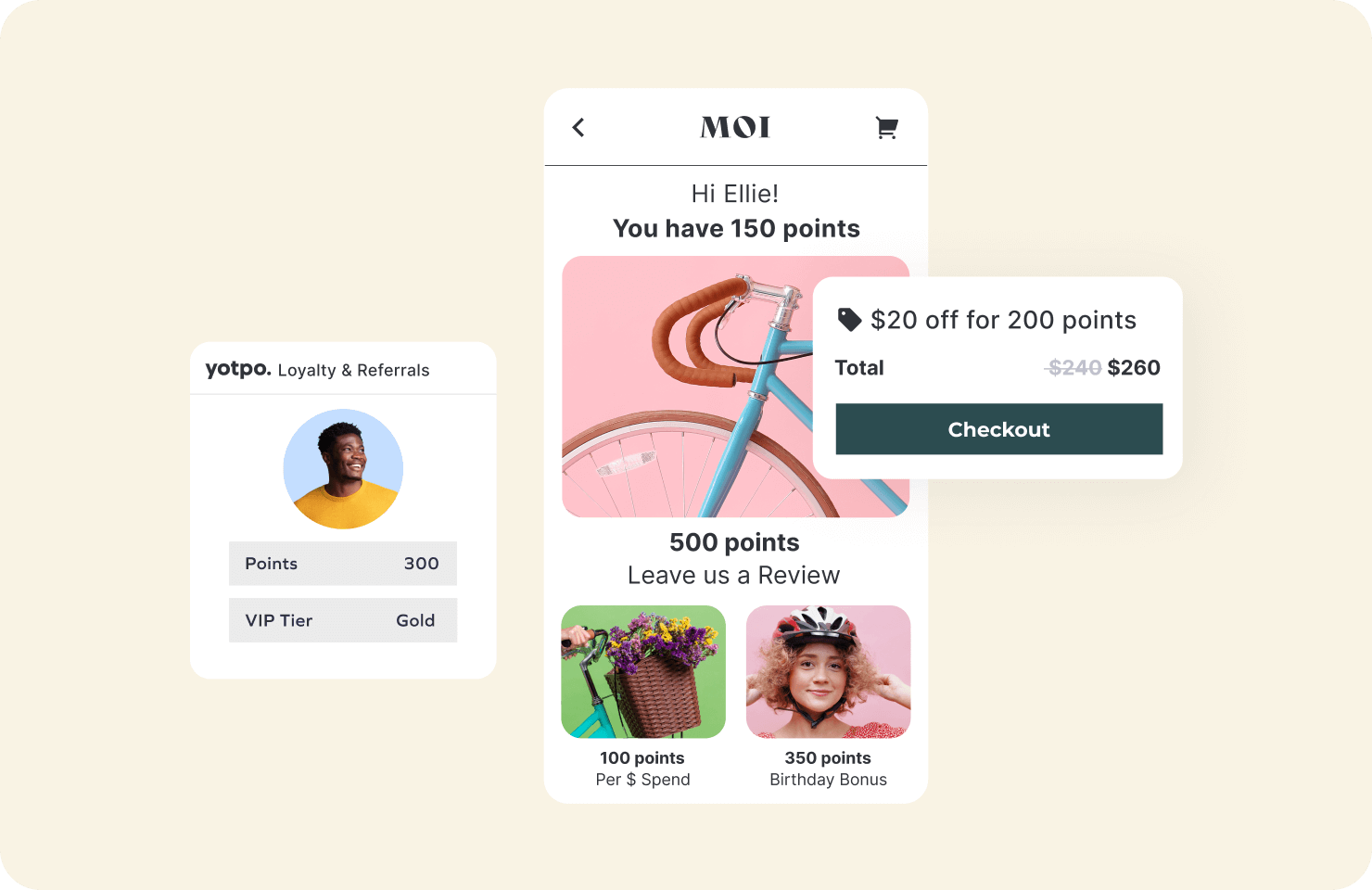
Yotpo enables you to collect reviews and customer testimonials, analyze and summarize them with AI, and reward customer advocates who contribute. Create point-based loyalty programs that encourage customers to provide testimonials and referrals, and compile user-generated content to engage prospective customers.
Some of Yotpo’s top features include:
- Automatic review requests and reminders
- On-site testimonial display widgets with AI summaries and smart sorting
- User-generated content curation and sharing
- Review moderation with tags, comments, and sentiment checks
Pricing: Starts at $89 per month.
Referral Factory
Type of advocacy tool: Referral platform
Best for: Fast, AI-powered referral programs
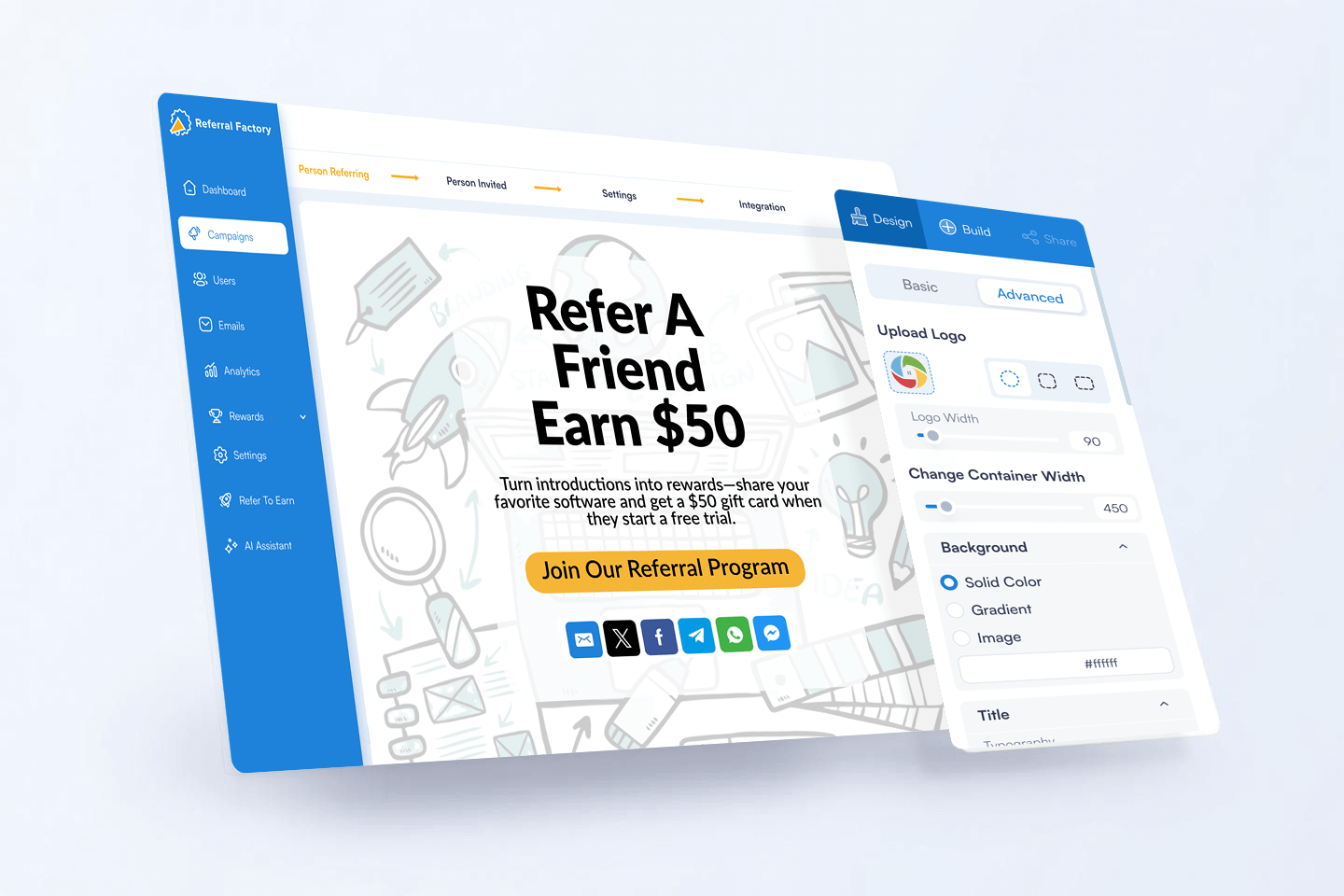
If you’re looking for a basic solution to power your referral program, Referral Factory can help you build a custom program quickly. It offers unique referral links, customer rewards, and referral tracking. Plus, it integrates with several CRMs, payment gateways, and other automation tools.
Here are a few of its top features:
- Customizable referral campaign creation
- Drag-and-drop email editor for referral notifications
- Personalized referral links and QR codes with dynamic content
- Referral analytics and leaderboards
Pricing: Starts at $76 per month.
Snoball
Type of advocacy tool: Referral platform
Best for: B2B companies with high ticket volumes
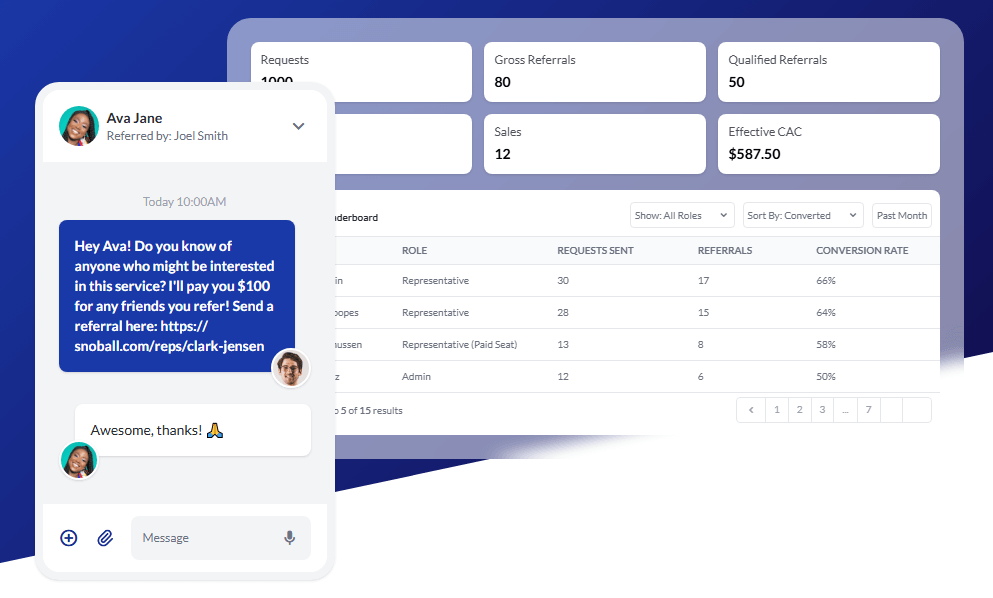
Snoball facilitates brand referrals, reputation marketing, and video testimonials. Its platform integrates with your CRM for easy, automated referral and endorsement outreach, and it helps generate marketing assets from reviews for use in sales conversations.
Some of Snoball’s standout features include:
- Automated referral campaigns
- Review widgets and digital social proof badges for your website
- Embeddable marketing assets that feature customer testimonials
- Video testimonial collection and sharing
Pricing: Contact for pricing.
Mention Me
Type of advocacy tool: Referral platform
Best for: Global eCommerce businesses
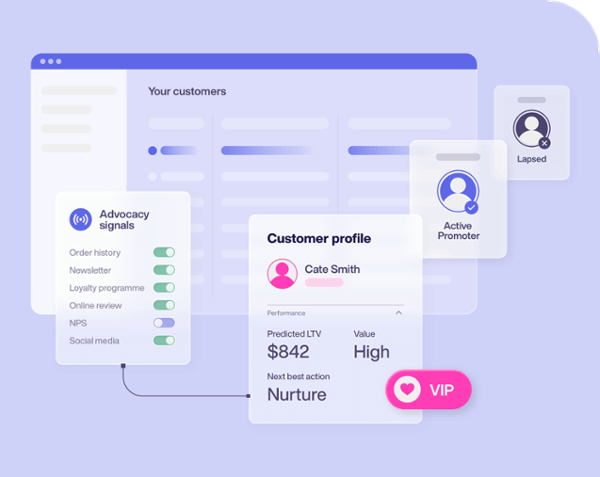
Both a referral platform and a micro-influencer platform, Mention Me leverages AI and predictive segmentation to help you identify and target the right customer advocates for referrals. With insights and metrics, it uncovers “hidden VIPs,” drives referrals, and rewards those who bring in the most revenue.
Mention Me’s customer advocacy features include:
- Name Share recommendations for word-of-mouth marketing
- Custom referral campaigns with audience testing
- Predictive segmentation and “Propensity to Refer” scoring
- Extended customer revenue tracking for advocates
Pricing: Contact for pricing.
Extole
Type of advocacy tool: Referral platform
Best for: Enterprise businesses with high-volume referral programs
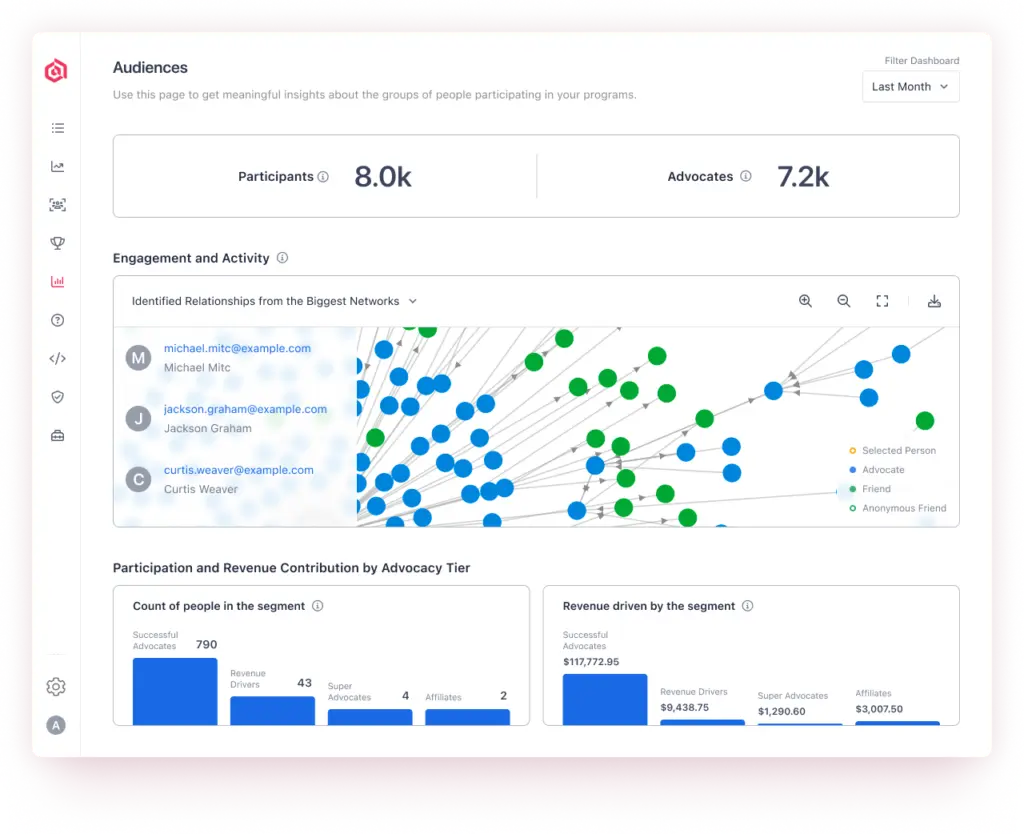
Extole offers an automated referral platform that leads customer advocates through referral journeys, from initial requests to rewards. It emphasizes reducing customer acquisition costs through easy, impactful referral programs.
A few of Extole’s core advocacy features include:
- Drag-and-drop Flow Builder for referral campaigns
- Customizable rewards for advocates who successfully refer others
- Real-time analytics of referrals and customer lifetime value
- Mobile-optimized referral and reward experiences
Pricing: Contact for custom pricing.
NiceJob
Type of advocacy tool: Testimonial sourcing tool
Best for: Small business owners and local service providers
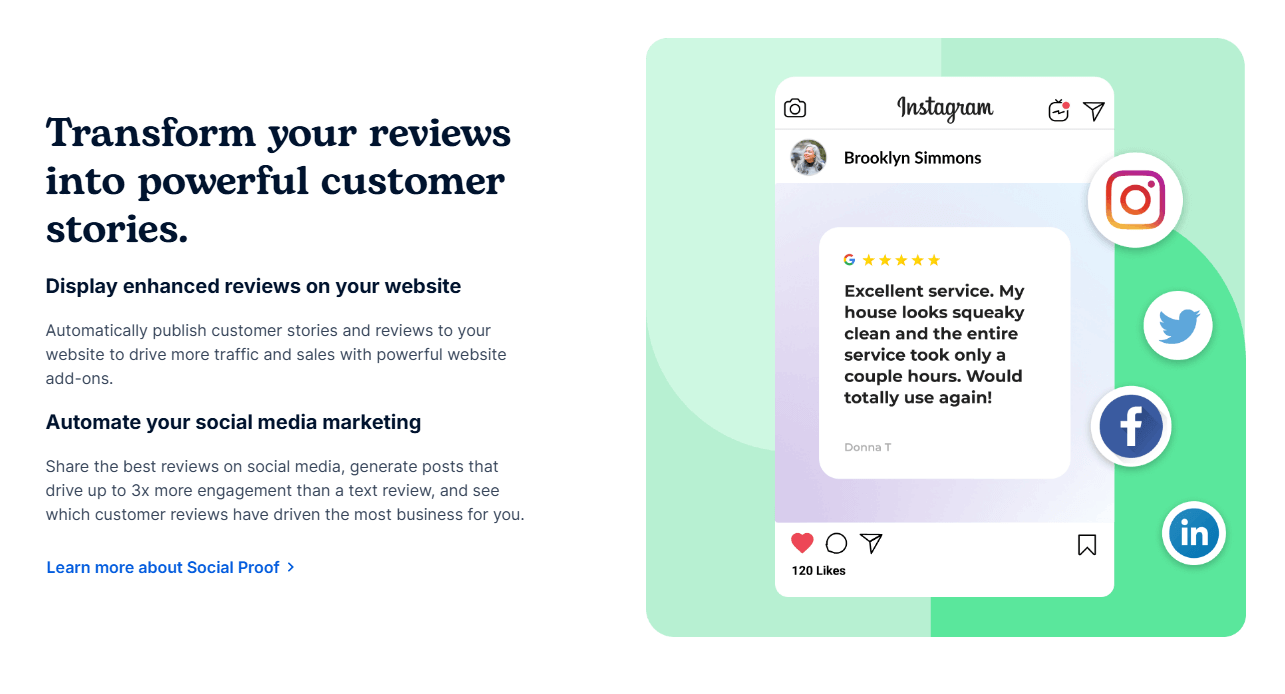
NiceJob is a tool designed for small business owners that turns reviews into reputation marketing materials. Automate review sharing, referral invites, and responses to customer testimonials. It also provides social proof widgets you can add to your website to boost credibility.
Some of NiceJob’s features for customer advocacy include:
- Automated review generation campaigns with social sharing
- A made-for-you microsite that centralizes all of your customer reviews
- Trust badges and other embeddable social proof widgets
Pricing: Starts at $75 per month.
CustomerGauge

Type of advocacy tool: Testimonial sourcing and customer management tool
Best for: B2B account-based companies that use the Net Promoter Score
For account-based businesses, CustomerGauge can help you understand customer satisfaction, predict churn, and source positive testimonials. The platform leverages AI to interview clients and surface insights, allowing you to identify potential customer advocates.
While CustomerGauge is mainly used for relationship management and retention, it also includes several features for boosting customer advocacy, like:
- Customer surveys with embedded review requests
- AI-powered sentiment analysis
- In-app surveys triggered based on customer behavior
- AI-powered conversational interviews to capture feedback
Pricing: Contact for pricing details.
ExpertVoice
Type of advocacy tool: Testimonial sourcing tool
Best for: Sourcing reviews from niche industry experts
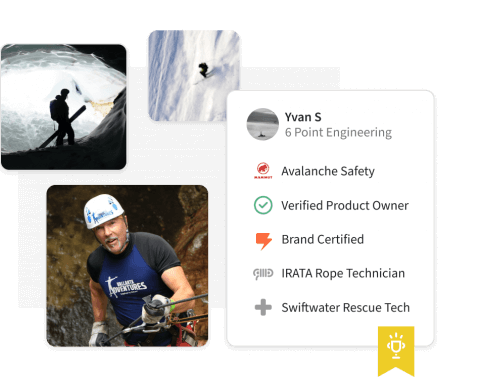
ExpertVoice is both a reward-based community for industry experts and a tool for businesses to earn reviews and testimonials from trusted, niche experts. With this platform, you can source, manage, and share reviews from professionals to boost your products’ credibility. Activate customers with unique expertise and encourage them to share their testimonials as social proof.
Key ExpertVoice features include:
- Access to a community of over 850,000 vetted industry experts
- Seeding, survey, and product sampling campaigns
- User-generated content syndication
- Custom analytics and reporting dashboards
Pricing: Contact for pricing details.
Cello
Type of advocacy tool: Referral platform
Best for: B2B SaaS companies
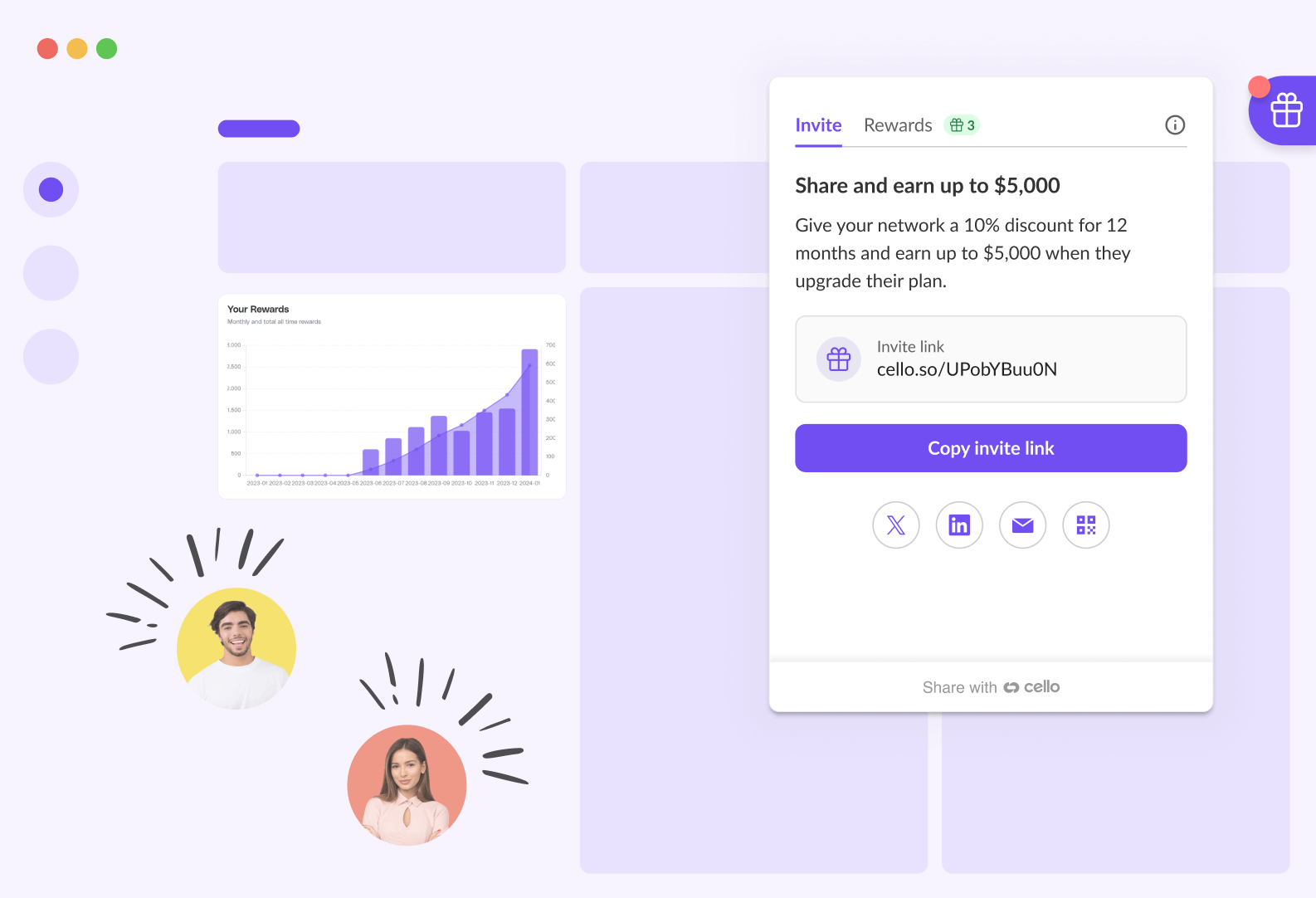
Cello’s user referral software helps SaaS businesses leverage word-of-mouth marketing through integrated referral programs. This tool allows you to request referrals from your website, personalize notifications and updates, and pay out rewards to customer advocates.
Some of its standout features include:
- Personalized referral invite links
- Custom recurring rewards for advocates
- Automatic referral payouts
- AI-powered recommendations for program improvements
Pricing: Starts at $200 monthly.
How to Choose Your Customer Advocacy Software Stack
With so many solutions available, it can be hard to make a choice. Use these steps to start building a customer advocacy software stack that supports your unique business goals.
Identify Your Advocacy Needs
First, determine what you need your customer advocacy software stack to accomplish. Do you already know who your loyal customers are and just want them to refer their peers? Or, are you looking for a tool that simplifies advocate recognition and rewards? What about a solution for engaging customer advocates online through gamification?
If you’re starting a customer advocacy program from scratch, you may need an all-in-one solution. Otherwise, identify your top priorities and use them to assess different types of advocacy tools.
Consider Feature Sets
With your needs and goals in mind, consider the core feature sets of various platforms you could use to drive customer advocacy. Does one meet your needs better than another?
For example, traditional customer advocacy platforms typically include the following features:
- Advocate identification
- Advocate management and communication
- Advocacy tracking and gamification
- Recognition and reward automation
- Testimonial collection
- Social proof and content creation
- Social proof content management and analysis
On the other hand, referral platforms offer more specialized, automated referral campaigns, while online community solutions allow you to organically identify active community members and nurture them as advocates.
Build on Your Foundation Over Time
As your program scales, you may realize that one customer advocacy solution isn’t enough. Don’t be afraid to reevaluate and build out your tech stack as your needs change.
Each time you consider adding to your tech stack, verify that the new software is:
- Scalable enough to meet your current and future needs
- Customizable for your brand, advocacy use cases, etc.
- Cost-effective based on the other advocacy tools in your tech stack
- Able to integrate with your core customer advocacy software and other solutions
- Secure and private to protect customer data
Additionally, research each solution’s technical support options to ensure you can access help when needed. Ideally, the support team should be able to help integrate their product with the rest of your tech stack to build a seamless, powerful customer advocacy experience.
Create and reward advocates with an engaging customer community.
Growing Your Customer Base with Advocacy Tools
No matter which platforms you add to your company’s tech stack, customer advocacy software and complementary tools for driving advocacy will help you turn loyal customers into long-term brand advocates. Over time, you’ll empower customers to share their stories, resulting in a stronger, larger customer base for your business.
For more insight, check out these additional resources:
- Customer Advocacy Software for Marketing | Higher Logic. Learn how Higher Logic Vanilla’s customer communities can help you scale your advocacy efforts.
- Why Vanilla | Higher Logic. Not sure how an online community can fit into your customer advocacy strategy? Explore the unique benefits of Higher Logic Vanilla.
- 15 Standout Online Community Software Solutions for 2026. Discover more solutions for hosting an online community that naturally develops customer advocates for your brand.
Identify, empower, and engage advocates with a customer community.
Higher Logic Vanilla enables you to build branded communities that drive brand loyalty and customer engagement.