
Answers to Common Questions About Opens, Clicks, and Engagement

Email is still the primary communication channel for associations, but it’s getting harder to measure, optimize, and explain.
If you’ve already reviewed our breakdown of the key findings in the 2025–2026 Association Email Benchmark Report, you’ve seen some of the key highlights from the data. This article builds on those insights by answering the most common questions association professionals are asking about what those metrics actually mean in practice.
During our recent webinar on the 2025–2026 Association Email Benchmark Report, one thing became clear: association professionals aren’t just asking what the benchmarks are. They’re asking what those numbers actually mean and how to adjust.
Between AI-driven inboxes, privacy changes, and evolving member expectations, traditional email metrics don’t behave the way they used to. And that’s creating confusion around how to evaluate performance and make strategic decisions.
This follow-up blog answers the most common questions we saw in the webinar chat and Q&A—grounded in benchmark data and real-world association experience—to help you interpret your email metrics with more clarity and confidence.
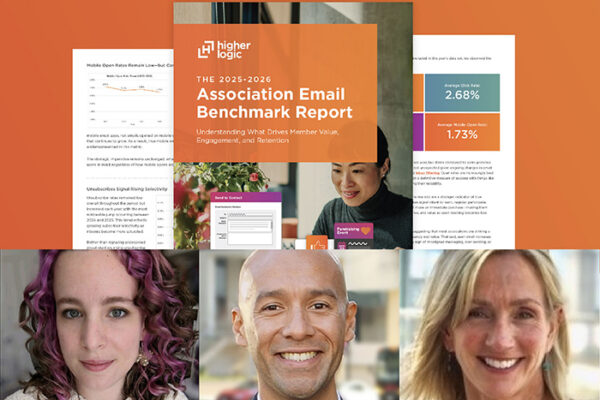
Watch the Webinar
Get tips from experts on how to apply what you learn from email benchmark data to improve your email strategy.
Are Email Metrics Still Reliable? What Associations Need to Know
If there was one theme that came up repeatedly, it’s this: trust in email metrics is eroding.
“The Apple MPP issue and email bots really make analytics hard.”
“We don’t trust the open and click rates because of bots”
That skepticism is justified.
Open tracking has been significantly impacted by privacy protections and automated behaviors. Apple Mail Privacy Protection and similar features can artificially inflate opens, while bots and security scanners can trigger both opens and clicks without human intent.
The benchmark report reinforces this shift:
- Open rates are now best viewed as directional, not definitive
- Click rates are a more reliable indicator of real engagement
This doesn’t mean metrics are useless. It means they need to be interpreted differently.
What’s changed:
Email analytics used to approximate human behavior. Now, they reflect a mix of human and automated activity.
What this means for associations:
You can still use metrics, but you need to focus on patterns, trends, and downstream actions rather than treating any single number as absolute truth.
Should We Stop Reporting on Open Rates?
Few topics sparked more debate.
“I have tried to get our stakeholders and marketing team members to stop asking or looking at open rates.”
“Open rate sometimes feels like it may not be useful to measure…”
At the same time, many teams still rely on open rates for reporting.
Both perspectives are valid. Like we shared in the benchmark report, open rates are still useful—but only in context:
- They help identify directional trends over time
- They should not be used as a primary success metric
The underlying issue is stakeholder expectation. Open rates are familiar, easy to understand, and historically central to email reporting.
For many association teams, this creates tension: marketing teams understand the limitations of open data, while leadership still expects it in reports.
This is as much a data problem as an interpretation and communication problem. The shift doesn’t have to be eliminating open rates – it can be more helpful to reframe them.
Instead of asking:
- “Is this open rate good?”
Ask:
- “Is this trending up or down for this audience?”
- “What changed in this campaign compared to others?”
Then pair that with stronger metrics like clicks, conversions, and engagement behaviors.
Why Do My Click Metrics Not Match What I’m Seeing?
While clicks are more reliable than opens, they’re not immune to issues. Often, inconsistent click performance comes down to filtering and tracking improvements.
As platforms work to remove bot activity, historical comparisons can look uneven. In some cases, click rates may appear to drop, not because engagement declined, but because reporting became more accurate.
Taking this in the context of broader association trends, our benchmark report saw that click rates have increased over time, even as inboxes became more crowded
That’s a strong signal that when members do engage, they’re doing so intentionally.
Key takeaway:
Clicks are still your best indicator of interest—but consistency depends on:
- Filtering accuracy
- Reporting methodology
- Platform differences
Focus less on exact numbers and more on relative performance across campaigns (e.g. did email perform better than this other email instead of trying to hit a specific number.
How Higher Logic Helps
As reporting becomes more nuanced, tools like Engagement Scoring can help you look beyond single metrics. By assigning scores based on opens, clicks, and behaviors, you can identify high-intent audiences and compare performance more meaningfully across segments.
How Is AI Changing Email Engagement and Reporting?
And what should we do about it?
AI is starting to influence both how emails are consumed and how they’re measured.
Questions that came up in the webinar included:
“How are you combating AI clicking the links within the messages?”
“Did the benchmark report analyze how AI email summaries affect email engagement, etc?”
Two major shifts are happening:
1. AI is interacting with emails
Security tools and AI assistants may scan or “click” links automatically, creating noise in your data.
2. AI is summarizing emails
Inbox providers increasingly generate summaries, reducing the need for users to open emails at all.
This changes the role of email itself.
The implication for associations:
It’s a little uncomfortable to make this adjustment, but your emails might not get opened and read in their entirety in the future. Someone may simply read an AI summary. In that reality, email doesn’t ONLY need to drive an open or click to deliver value. It needs to:
- Communicate clearly in previews
- Surface key information quickly
- Drive action when relevant
This makes subject lines, preheaders, and content structure more important than ever.
Why Does Mobile Engagement Look So Low for Associations?
And can we trust that data?
This question came up repeatedly, and the answer is nuanced.
“Why is mobile so low? I thought it was higher in general”
In the benchmark report, we flagged that mobile open rates appear low, but are likely underreported. This is because:
- Tracking only captures activity in native mobile apps
- If someone opens an email in a browser on mobile or in an aggregate inbox, it might not be counted as a mobile open
In other words, mobile usage is higher than the data suggests.
There’s also an association-specific factor:
- Professional audiences, like those many associations work with, often use desktop devices to read professional emails (vs. checking personal email on their phone)
- Many members engage with emails during work hours
What this means:
Even if your mobile numbers look low, you should still design for mobile. It will never hurt performance and can only help. Clear hierarchy, readable text, and simple layouts improve engagement across all devices—not just phones.
Are We Sending Too Many Emails—or Just the Wrong Ones?
Another consistent theme: volume fatigue.
“We just have so many emails going out.”
“Low engagement due to lack of segmentation is a major concern”
The benchmark data reinforces what many already suspect:
- Sending more emails does not drive better engagement
- Relevance matters more than volume
In fact:
- Smaller, targeted lists consistently outperform large sends
- Segmentation and personalization drive higher engagement rates
The shift here is strategic:
Instead of asking:
- “How many emails should we send?”
Ask:
- “Who actually needs this message?”
Associations that segment by behavior, role, or interest reduce noise—and improve both engagement and retention. During the webinar, presenters Sherilyn Stack and David Jovel also shared practical approaches like targeting based on email clicks, website activity, and member lifecycle stage, reinforcing that even simple behavioral segmentation can make a meaningful difference.
How Higher Logic Helps
Higher Logic Thrive Marketing makes segmentation easier to operationalize. You can build Compound Target Groups to combine multiple criteria (e.g., engagement + lifecycle + interests) into one audience, and use Web Tracking to create segments based on real on-site behavior—so your follow-ups reflect what members are actually doing, not just who they are.
Should We Stick to Consistent Send Times—or Optimize Every Send?
This question gets at a tension many teams feel: should you rely on historical “best send times,” or aim for consistency so your audience knows when to expect your emails?
The answer is: both approaches can work—but they solve different problems.
From the benchmark data, timing does influence performance, but it’s not the biggest driver of results. Midweek sends (Tuesday–Thursday) tend to perform slightly better, but the differences are often modest compared to factors like relevance and targeting.
Consistency, however, plays a different role. In the webinar, we talked about how consistent send patterns—especially for things like newsletters—can help build familiarity and trust. When members recognize your email and expect it at a certain time, they’re more likely to engage over the long term.
At the same time, optimizing send times based on behavior (like send-time optimization tools or A/B testing different times) can help improve short-term performance.
What this means in practice:
- Use consistency for recurring communications (newsletters, regular updates)
- Use optimization and testing for campaigns where timing may impact action (events, deadlines, promotions)
- Prioritize relevance over timing—a well-targeted email at the “wrong” time will still outperform a generic one sent at the “perfect” time
What’s Actually Still Working in Association Email Right Now?
Despite all the changes, many fundamentals still matter.
From the data and discussion:
- Shorter subject lines perform better (especially under 40 characters)
- Preheaders influence open behavior and should be intentional
- Clear CTAs drive action more than format alone
What’s changing:
- Design must account for AI summaries and scanning behavior
- Clarity matters more than creativity
- Intent matters more than impressions
How Higher Logic Helps
To scale relevance without creating dozens of separate emails, use Story-Level Targeting (dynamic content) in Higher Logic Thrive Marketing. This allows you to show different content blocks to different audience segments within a single send—so new members, prospects, and renewing members each see messaging tailored to them.
How Do Benchmarks Vary by Association Type?
Another key question: how do you know how much to follow benchmarks vs. checking your own data?
In the benchmark report itself, we emphasized that benchmarks give context. They shouldn’t necessarily be considered targets. Performance varies by audience, industry, and list size (and we have graphs in the report breaking down some of the segments).
You should also look at your own benchmarks, i.e. the performance you’ve seen with your own audience over time.
You can take ideas from benchmark reports like this one, and test them with your own audience via A/B testing to see if things like shorter subject lines, more targeted lists, or different styles of CTA work better for you.
It can be important, too, to communicate this to leadership. Benchmark averages provide a baseline but your most meaningful comparisons are:
- Against your own historical performance
- Across your own audience segments
How Do You Approach Marketing Recruitment Campaigns?
This was one of the trickier questions that came up—and it’s tricky for a reason: email is rarely the starting point for recruitment.
Unlike member communications, member acquisition and recruitment campaigns often begin before you have someone’s email address. That means your strategy needs to focus first on earning permission to communicate.
From the webinar discussion and common association practices, a few approaches stand out:
1. Lead with value, not promotion
People are far more likely to share their contact information if they get something useful in return. This could be:
- Industry newsletters or curated updates
- Educational resources or guides
- Event previews or recordings
The goal is to create an entry point that feels helpful—not transactional.
2. Use email as a nurture channel, not the first touch
Once someone opts in, email becomes incredibly powerful for reinforcing value. You can:
- Share relevant content based on their interests
- Highlight member benefits through real examples
- Invite them to events or communities that demonstrate value firsthand
3. Pair email with other channels
Recruitment works best when email is part of a broader strategy that may include:
- Social media
- Paid advertising
- Website conversion points
These channels help you reach new audiences, while email helps you build the relationship over time.
4. Segment early—even for prospects
The same principles apply to prospects as members. If you can capture even a small amount of data (interest area, role, content preferences), you can begin tailoring follow-up emails and improving conversion rates.
The key takeaway:
Email is one of the most effective tools for converting prospects—but only after you’ve given them a reason to raise their hand.
How to Talk About These Metrics Internally
I know from experience that one of the biggest challenges association marketers deal with isn’t just improving email performance, it’s explaining it.
As metrics become less reliable at the surface level, marketing teams are increasingly responsible for translating what’s actually happening into something stakeholders can understand and act on.
That means shifting internal conversations from:
- “What’s our open rate?”
To: “Are members taking meaningful action?” - “Did this email perform well?”
To: “Did this drive registrations, engagement, or member value?”
The benchmark data supports this shift. Email success is increasingly tied to:
- Clicks and conversions
- Behavioral signals
- Audience-level trends over time
Final Thoughts on Common Association Email Questions
Email isn’t getting less effective, it’s getting more selective. Members are still engaging. They’re just choosing what to engage with more carefully.
For associations, this is a signal to make time and invest in segmentation and personalization. Marketing automation and AI tools can help you do that (with campaigns based on behavioral triggers, timing, and more) – but ultimately it’s human marketers who have to sit down and decide when and where to apply these tools.
The more your email strategy reflects real member needs and behavior, the more your emails will actually perform.
Related Resources
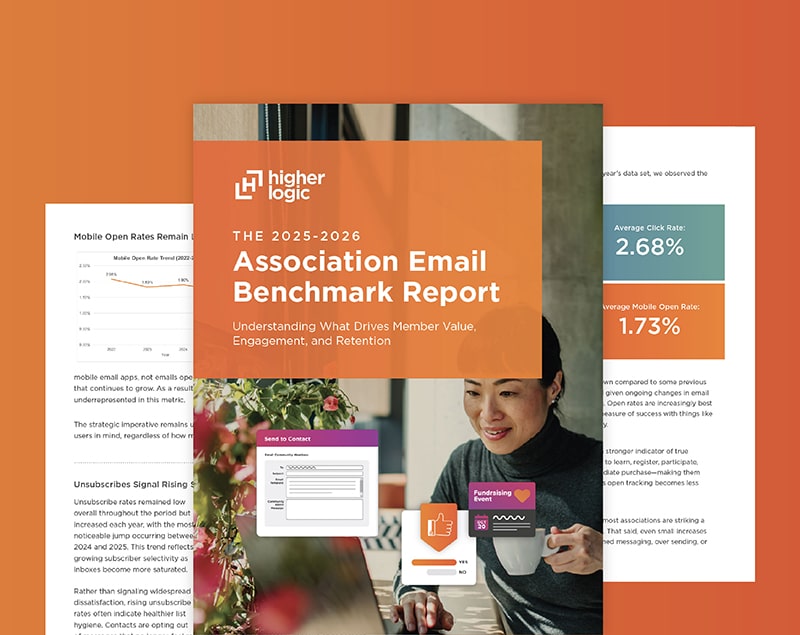
2025-2026 Association Email Benchmark Report
Explore the latest email performance benchmarks specifically for associations: open, click & unsubscribe rates, ideal subject lines, automation impact, segmentation...
Read More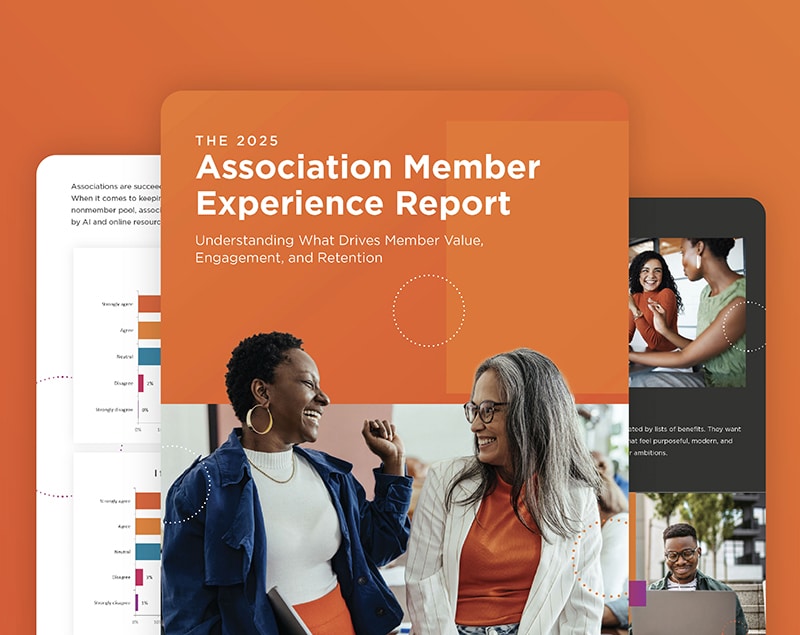
2025 Association Member Experience Report
The 2025 Association Member Experience Report explores what members need and want, based on survey responses from over 400 current...
Read More
10 Ideas to Segment and Personalize Your Email Marketing
To truly harness the potential of your email marketing, you have to segment and personalize. Explore 10 ideas to help...
Read MoreNeed Help Improving Your Emails?
Get help from industry experts who specialize in helping associations achieve their goals – fast! Whether you need strategic guidance or tactical help, the Higher Logic Thrive Services team can help you get things checked off your to-do list.