

What is Email Deliverability, Why Does it Matter, and How Can You Improve Yours?
Understanding Email Deliverability
Making sure your members open and engage with your emails requires you to balance a lot of factors. One of the first things you need to do is make sure your messages reach your recipients’ inboxes. That’s where email deliverability comes in.
Your email deliverability rate measures how many of your messages are actually delivered to your members, compared to how many you sent – and how many, instead, end up getting flagged as spam or blocked by email servers. A high deliverability rate indicates that your emails are well-received and landing in the inbox, while a low deliverability rate suggests potential issues with your email deliverability.
In this article, we’ll dig deeper into what email deliverability entails, the factors that influence it, and the strategies you can employ to improve your email deliverability. We’ll also touch on common pitfalls to avoid and future trends.
Why is Email Deliverability Important?
Even though it’s an often overlooked metric, email deliverability has an immense impact on the success of your email marketing campaigns. It directly impacts the effectiveness of your communication with your target audience.
Why is email deliverability so important? Because when your emails make it to the inbox, they’re more likely to be opened, read, and prompt the desired action from your recipients. On the other hand, if your emails end up in the spam folder or get blocked by the recipient’s email provider, all your efforts in creating engaging content are wasted.
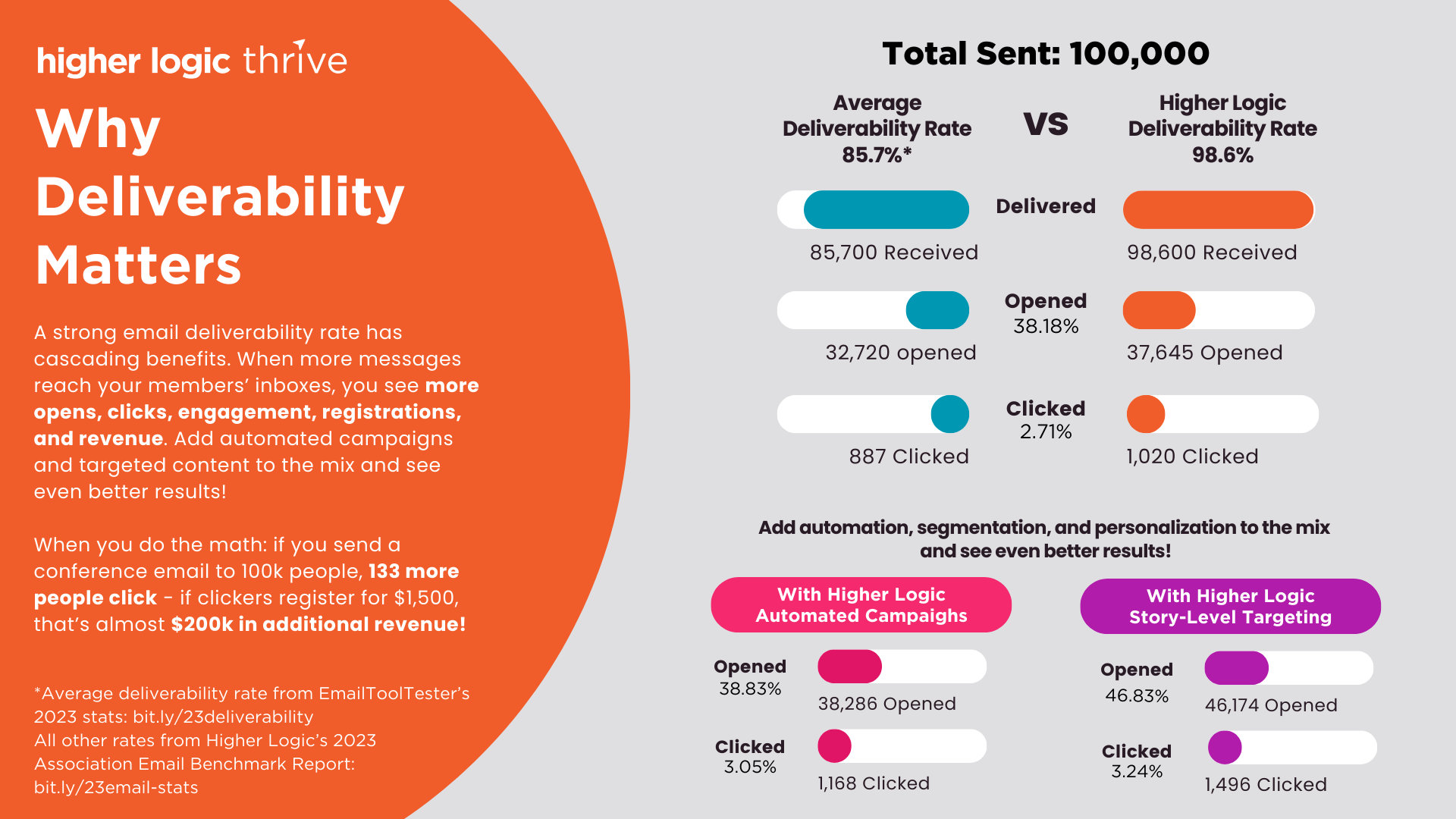
Even worse, repeatedly having your emails marked as spam is bad for your sender reputation, which will only continue to decrease the chances of your emails reaching inboxes.
What Key Factors Impact Email Deliverability?
Several elements play a role in optimizing your email deliverability rate, thus improving the overall performance and efficacy of your email marketing initiatives. These include sender reputation, email authentication protocols like SPF, DKIM, and DMARC, and content quality. Awareness of these factors and attention to optimization help you maintain high email deliverability rates and ensure your messages reach the right people.
Sender Reputation
Your sender reputation is what email clients and inbox providers use to decide whether your emails land in someone’s inbox or get relegated to the spam folder. Sender reputation is determined by factors like engagement metrics, complaint rates, proper authentication, consistent sending practices, high-quality content, list hygiene, and responsiveness to ISP feedback. Each provider calculates and maintains reputation scores for senders utilizing the above signals and their algorithms. The higher your reputation, the better your chances of reaching your members’ inboxes.
Sender reputation is tracked at both the IP and Domain level. IP reputation is tied to the IP address used to send emails (a string of numbers separated by periods, like 123.456.1.23) and Domain reputation is tracked back to your DKIM-authenticated business email domain (e.g. higherlogic.com). Following email best practices like sending emails to engaged subscribers, avoiding spam traps and complaints, and regularly monitoring your email performance can help maintain a strong sender reputation.
Your sender reputation can also be impacted by the Email Service Provider (ESP)/marketing platform you use. Because your reputation is primarily tied to your sending domain and IP address, which are often managed by your ESP, if the ESP has a poor reputation due to other users’ practices it can negatively affect your deliverability even if you are sending high-quality emails yourself. That’s why choosing a reputable ESP/marketing platform, like Higher Logic which has an industry-leading 99% deliverability rate and guides customers through strong sending practices, like email authentication, is important.
Authentication Protocols
Authentication protocols like DKIM (DomainKeys Identified Mail), SPF (Sender Policy Framework), and Domain-based Message Authentication, Reporting & Conformance (DMARC) are crucial for email deliverability, especially with the latest requirements from Gmail and Yahoo. These protocols help validate the sender and protect against spoofing and phishing attacks. Proper implementation and configuration of these protocols can boost your email deliverability and foster trust with ISPs and email recipients.
Email Content
The content of your emails also greatly impacts deliverability. ISPs and email clients scrutinize your emails’ content to assess their relevance and authenticity. This scrutiny includes the domains you link to in your message. Including a blocklisted link in your message could result in being routed to the spam folder or your message being rejected.
Crafting engaging and relevant content that resonates with your subscribers can improve email deliverability. Avoid triggering spam filters by steering clear of spam trigger words, excessive capitalization, and misleading subject lines.

Industry-Leading Deliverability Makes a Difference
Higher Logic Thrive Marketing (aka Informz) has an industry-leading email deliverability rate of 99% (compared to an average of 85.7% according to Email Tool Tester). This is, in part, because we encourage and enforce email best practices that lead to high sender reputations – including facilitating customers setting up email authentication. Add to this that most of our customers are associations, who are very unlikely to purchase disreputable email lists and are typically sending highly relevant content to members who are explicitly interested in that content. Messages sent by associations are, therefore, less likely to be reported as spam, leading to better email deliverability for individual customers and the IP reputation of shared Higher Logic IP addresses.
How to Improve Email Deliverability
Following email deliverability best practices helps get your emails to your recipient’s inbox and avoid damaging your sender score and email deliverability. Here are some strategies to improve email deliverability:
- Keep your email list clean: Regularly prune your email list by removing inactive or invalid email addresses. This not only improves deliverability rates but also reduces the risk of triggering a spam trap or having your emails marked as spam.
- Optimize email content and design: Craft engaging and relevant email content that resonates with your audience. A clear and concise subject line, personalizing the email where possible, and optimizing the email design for readability across various devices can go a long way in improving email deliverability.
- Segment your audience for better deliverability: Segmentation of your email list enables you to send targeted messages to distinct groups of recipients. Tailoring your emails to the interests and preferences of different segments can enhance engagement rates and deliverability.
By adopting these strategies, you can improve your email deliverability, enhance open rates, and maximize the effectiveness of your email marketing.
What Hurts Email Deliverability?
Addressing and troubleshooting common deliverability issues can significantly improve your email’s chances of reaching the recipient’s inbox. Here are some tips to help you avoid these pitfalls:
Avoiding the spam folder: Staying out of the spam folder is a common challenge in email deliverability. Here are some best practices to help you:
- Choose a reputable email service provider (ESP), like Higher Logic Thrive Marketing, that adheres to industry standards.
- Personalize your emails and avoid spam trigger words or excessive capitalization.
- Always obtain explicit permission from recipients before sending them emails.
- Regularly clean your email list to remove invalid or inactive email addresses.
Managing email bounces and blacklisting: Bounced emails are those that are undeliverable. Here are a few tips to minimize bounce rates and avoid blacklisting:
- Use a double opt-in process to verify email addresses.
- Monitor your email delivery reports to promptly identify bounce issues.
- Swiftly remove bounced email addresses from your list.
Handling complaints and unsubscribe requests: Complaints and unsubscribe requests can negatively impact your email deliverability. Here’s how to manage them effectively:
- Include a clear and visible unsubscribe link in all your emails.
- Monitor and process unsubscribe requests promptly.
- Provide excellent customer service and promptly resolve any complaints received.

Monitoring and Tracking Email Deliverability
Regularly monitoring your email deliverability rate is critical for associations that rely on email marketing campaigns to engage with their members. Keeping track of your deliverability rate enables you to spot trends and make adjustments if you see your deliverability taking a downturn.
Higher Logic Thrive Marketing (aka Informz) allows you to do a Virtual Inbox Test to check how your emails will appear in different email clients and against spam filters. Furthermore, there are inbox placement testing tools online to determine if your emails are delivered to the inbox or landing in a promotions or spam folder.
Reviewing your email bounce rates is another important aspect of monitoring email deliverability. Bounce rates are kind of like the opposite of your deliverability rate, measuring the percentage of emails that fail to reach the recipient’s inbox. In Higher Logic Thrive Marketing you can explore the types of bounces you’re seeing and act accordingly.
Additionally, analyzing overall email metrics provides valuable insights into the effectiveness of your email campaigns. Metrics such as open rates, click rates, and unsubscribe rates help you gauge how well your audience is engaging with your emails. This data can guide you in optimizing your email content and targeting strategies to improve email performance and deliverability.
How is AI Changing Email Deliverability and Performance?
As with many things, AI is having an impact on email performance and deliverability too.
Mailbox providers like Gmail and Yahoo are increasingly using AI-driven filtering systems that evaluate far more than traditional spam triggers. These systems analyze engagement signals, sender behavior, content relevance, and recipient interactions in real time to decide whether your message reaches the inbox or gets filtered out.
At the same time, AI-generated email content is flooding inboxes, raising the bar for what counts as “valuable” and making it harder for generic or low-engagement messages to land successfully.
So what does that mean for you?
The way inboxes work might be changing, but in some ways what you need to do is not. AI is simply making it even more important to observe email best practices.
- Prioritize engagement over volume: AI filters reward emails (and senders who send emails) that people open, click, reply to, and keep—and penalize those that get ignored or marked as spam.
- Segment and personalize more deeply: Broad, one-size-fits-all sends are increasingly flagged as low value. Relevance is now a core deliverability factor.
- Focus on sender reputation holistically: AI evaluates patterns over time, including complaint rates, consistency, and list quality—not just individual campaigns.
- Use AI to your advantage: AI-powered tools can help test subject lines, analyze spam risk, and optimize send times so you’re not guessing.
- Continuously monitor and adapt: Because AI systems learn and evolve, deliverability is no longer static. Ongoing testing and optimization are essential.
The bottom line: the fundamentals of deliverability haven’t changed, but AI is enforcing them more intelligently and more strictly than ever before. Marketers who focus on relevance, trust, and engagement will be the ones who consistently reach the inbox.
Confidently send the right message to the right person at the right time with Higher Logic Thrive Marketing’s industry-leading 99% deliverability rate and marketing automation tools. Save time with easy-to-use pre-built email templates. Easily refine your targeting to make messages feel personal. Gain insight from engagement scoring, reporting, and web tracking so you can refine your offerings and prove ROI.