
Email Optimization for Associations

Principles for Improving Engagement Without Chasing the Wrong Metrics
Email remains one of the most effective engagement channels for associations—but optimizing email using generic marketing advice often leads teams to focus on the wrong metrics. Association audiences behave differently than B2C or corporate subscribers, and traditional measures like open rates are becoming less reliable indicators of success.
This page outlines a set of email optimization principles designed specifically for associations. Rather than prescribing one-off tactics, these principles help marketing, communications, and engagement teams make smarter decisions about what’s worth optimizing, what’s worth testing, and how to define success in today’s inbox environment.
This framework is designed to complement the Association Email Benchmark Report and support long-term engagement across events, education, community, and the full member lifecycle.
What Is Email Optimization for Associations?
Email optimization for associations is the practice of improving email performance by aligning message relevance, timing, targeting, design, and measurement with member behavior and expectations—rather than maximizing send volume or chasing individual metrics like open rates.
Unlike commercial email programs, association email optimization prioritizes:
- Long-term engagement over short-term attention
- Trust and permission-based communication
- Participation across events, education, and community—not just clicks
This approach reflects how members actually engage with association communications and how success should be measured today.
Email Optimization Principles at a Glance
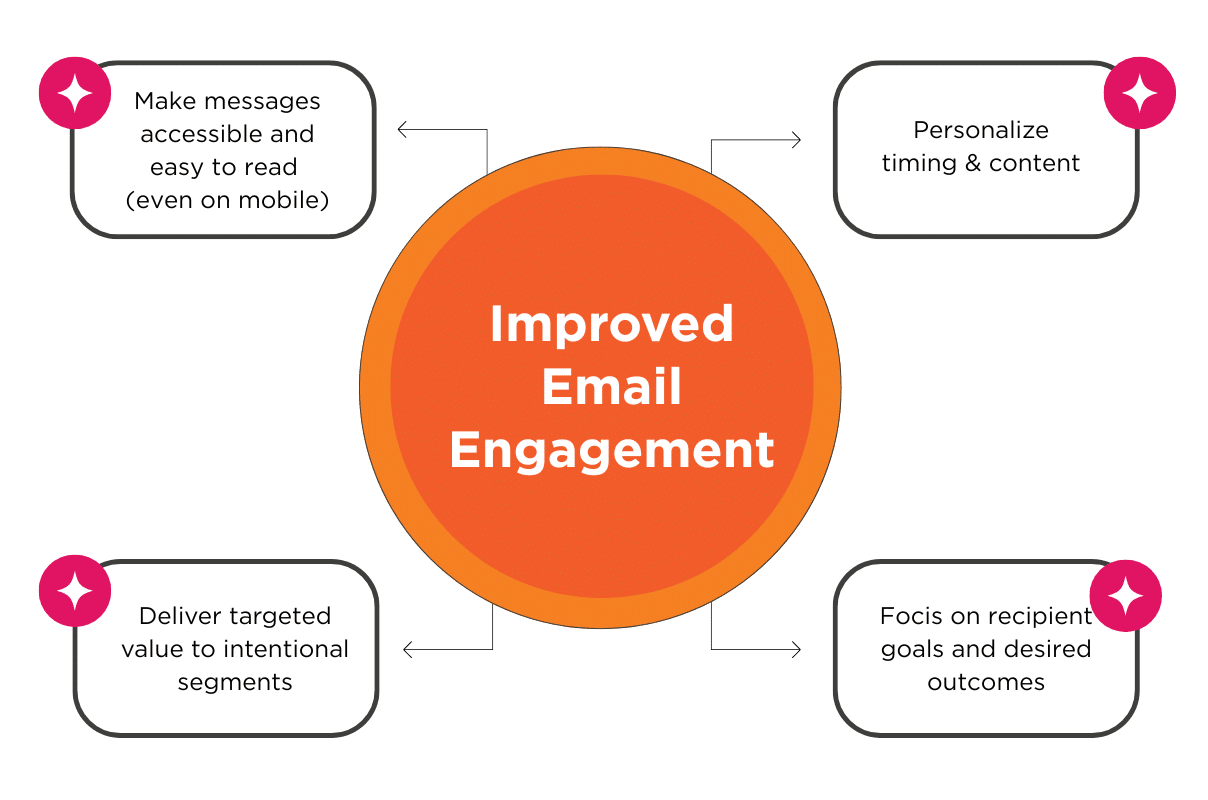
Associations improve email engagement most effectively when they:
- Optimize for intent and downstream action, not just opens
- Prioritize relevance over volume
- Use segmentation and automation to improve timing
- Design emails for scanability, accessibility, and mobile use
- Treat unsubscribes as signals to refine messaging, not failures
How to Use These Email Optimization Principles
These principles are meant to guide decisions—not serve as rigid rules. Not every principle applies to every message.
This framework is especially useful when:
- Open rates fluctuate and leadership asks “what changed?”
- You’re deciding whether to segment, automate, or simplify a campaign
- You want to improve engagement without increasing email volume
- You need to explain email performance in a more meaningful way internally
Principle 1: Optimize for Intent, Not Just Attention
Open rates are increasingly distorted by privacy protections and inbox filtering. While they can still indicate directional trends, they no longer reliably show whether an email achieved its purpose.
For associations, meaningful engagement often occurs after the open:
- Event registrations
- Education enrollments
- Community participation
- Content consumption
What to do
- Use open rates directionally, not as primary KPIs
- Evaluate clicks, conversions, and downstream actions
- Recognize that not every email is meant to drive a click
When this principle matters most
- Event promotion and reminders
- Education and certification outreach
- Renewal and lifecycle communications
Learn why opens are less reliable >
Principle 2: Relevance Scales Better Than Volume
Sending more email does not produce better engagement. As inboxes grow more crowded, audiences become more selective.
Association email benchmarks consistently show:
- Smaller, targeted sends outperform broad blasts
- Engagement improves when content reflects member interests and roles
What to do
- Reduce default full-list sends
- Segment based on interests, behavior, or engagement history
- Treat segmentation as a strategic decision—not just a technical feature
Explore 10 ideas to segment & personalize >
Principle 3: Make Subject Lines Clear Before Making Them Clever
Subject lines compete for attention in crowded inboxes—often on mobile devices with limited visible space.
What works
- Short, focused subject lines that communicate one clear value
- Curiosity grounded in relevance, not clickbait
What to do
- Test subject lines under 40 characters for important sends
- Use preheader text to add context instead of length
- Avoid trying to explain everything upfront
Clarity consistently outperforms cleverness in association email programs.
Principle 4: Design for Scan-ability, Accessibility, and Mobile by Default
Most emails are scanned—not read—and often on small screens. Accessible design improves usability for everyone, not just those with disabilities.
What supports engagement
- Simple layouts with clear hierarchy
- Readable font sizes and strong contrast
- Lightweight designs that load quickly
What to do
- Use single-column layouts whenever possible
- Place the primary call to action early
- Treat accessibility best practices as performance enhancers
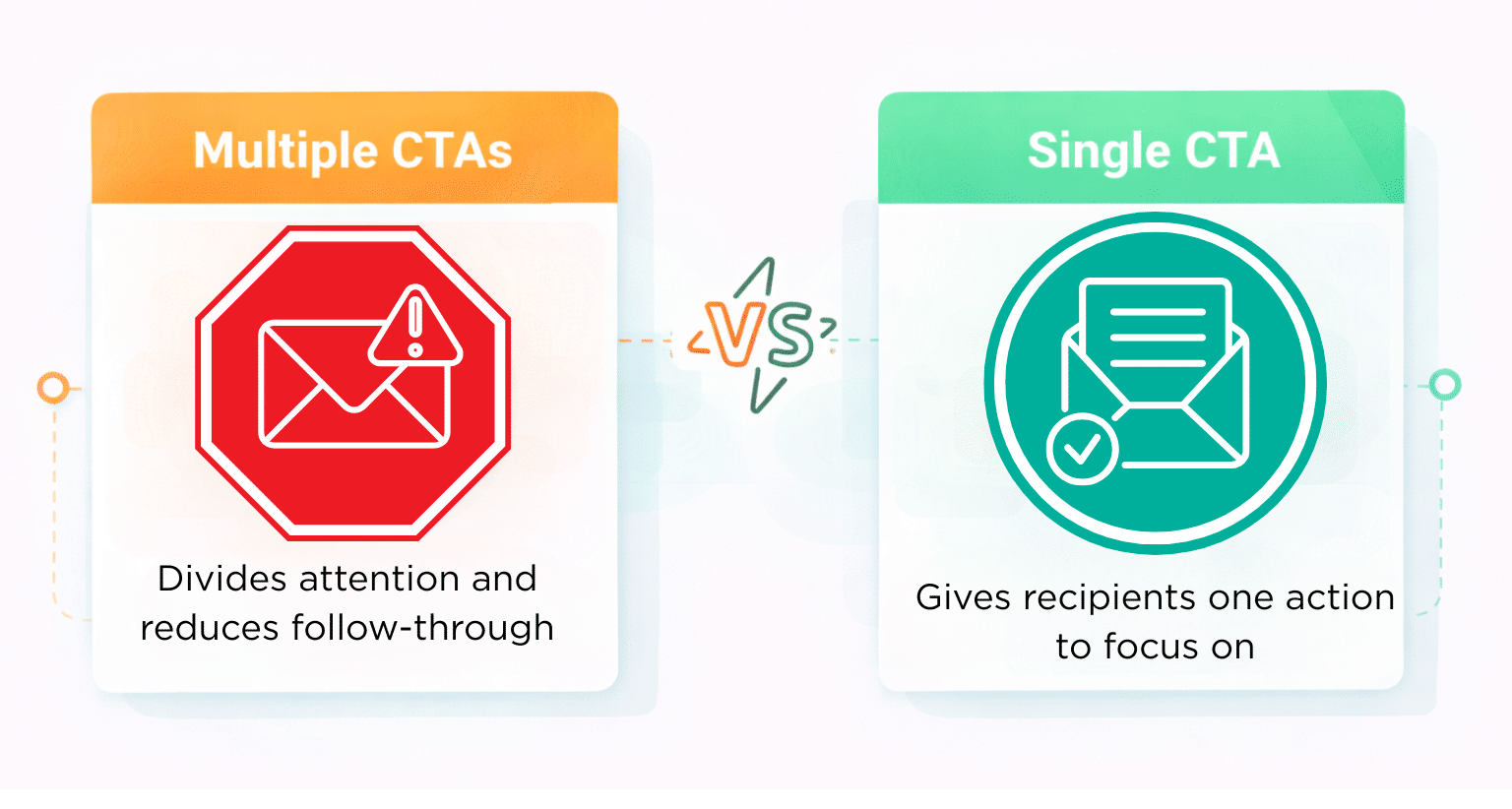
Principle 5: Fewer Calls to Action Lead to More Action
Too many calls to action divide attention and reduce follow-through.
What to do
- Identify the one primary action each email should drive
- Use clear, action-oriented CTA language
- Reserve multiple CTAs for newsletters or calendar-style emails
This principle often results in simpler emails—and stronger results.
Principle 6: Automate Where Timing Matters Most
Automation improves performance by aligning messages with member intent, not just efficiency.
High-impact automation use cases
- Onboarding and welcome sequences
- Event reminders and follow-ups
- Renewal and lifecycle communications
- Behavior-triggered outreach
What to do
- Replace recurring one-off sends with automated journeys
- Trigger messages based on behavior, not just dates
- Accept slightly higher unsubscribes in exchange for higher relevance
Check out our Marketing Automation Success Kit for more tips >
Principle 7: Personalization Should Reflect Behavior, Not Just Identity
Personalization that feels superficial can erode trust. Personalization based on behavior builds it.
What to personalize
- Content based on engagement history
- Recommendations tied to event or community participation
- Lifecycle-stage messaging
What to do
- Use dynamic content instead of creating dozens of emails
- Segment based on what members do, not just who they are
- Let engagement guide future messaging
Principle 8: Test What’s Worth Testing
Testing everything dilutes insight. Make sure when you run A/B tests you’re focusing on one comparison at a time. And remember to test only things you’ll act on.
High-value tests
- Subject line framing or length
- CTA wording and placement
- Send timing for high-impact messages
- Segmentation logic
What to do
- Test one variable at a time
- Avoid testing low-impact elements just to “optimize”
- Use results to inform future decisions, not just declare winners
Principle 9: Use Engagement Signals to Refine, Not Retreat
Unsubscribes and disengagement are signals—not failures.
What to do
- Treat unsubscribes as feedback on relevance
- Use engagement trends to refine targeting
- Focus on serving the audience that remains engaged
How Associations Should Measure Email Success Today
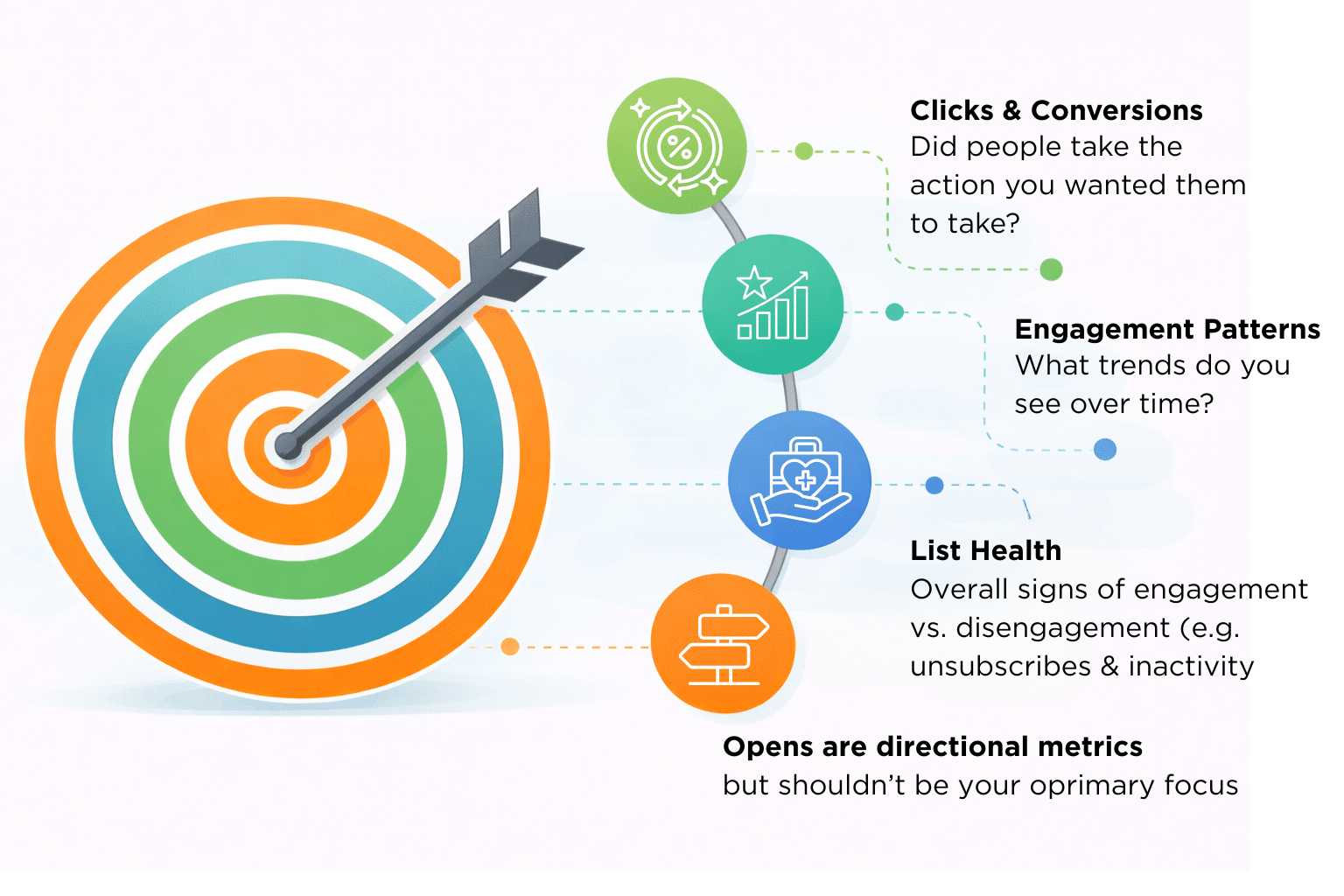
Effective email measurement focuses on trends over time, not just individual sends.
Key signals include:
- Click behavior and downstream actions
- Engagement patterns across campaigns
- List health indicators such as unsubscribe and inactivity trends
Open rates should be treated as directional indicators, not definitive measures of success, due to privacy protections and inbox filtering.
A Note on Privacy, Trust & Data Responsibility
Privacy regulations and inbox protections continue to evolve and optimization increasingly depends on first-party and zero-party data—information members intentionally share with you and give you permission to use.
Final Thought: Optimization Is About Alignment, Not Perfection
Email optimization isn’t about squeezing incremental gains from every send. It’s about aligning content, timing, and targeting with real member needs—and measuring success in ways that reflect engagement, trust, and long-term value.
When associations optimize for relevance and intent, performance follows naturally.
Related Resources

Implementing a Marketing Automation Strategy
A good marketing automation strategy is not just about setting up automated emails and leaving them alone. Even though it...
Read More
Common Marketing Automation Mistakes (And How to Fix Them)
Are you making some common marketing automation mistakes. We’ve got solutions to help you recover and get back on track.
Read More
Higher Logic Thrive Marketing Makes Optimization Easy
Higher Logic Thrive Marketing is designed to help associations improve their email outcomes. With built-in automated campaigns, AI assistance, and in-depth reporting, you can easily act on best practices and measure what’s working.
Schedule a demo to check it out.