Bringing Learning and Community Together: Integrating Your LMS with Your Online Community

Executive Summary: Integrating an LMS with an online community unifies education and engagement, reducing friction and boosting participation and social learning. Key elements include SSO, consistent branding/navigation, shared profiles and data, and community-embedded access to learning content. This integration increases visibility of programs, improves completion and repeat participation, enables recognition and gamification, and drives non-dues revenue. It supports individual, group, and blended learning models, making integration a strategic advantage for associations.
Many associations invest in professional development, continuing education, and an online community. But if the tools you’re using to manage those programs (e.g. an LMS and community platform) operate independently, you’re leaving opportunities on the table.
Members go one place to take courses and another to connect with peers, creating a fragmented experience that limits engagement and learning impact.
Integrating your LMS and online community brings these experiences together. For associations, this approach strengthens member engagement, supports social learning, and creates new opportunities to grow non-dues revenue – all while delivering a more intuitive experience for learners.
What Does LMS and Community Integration Mean?
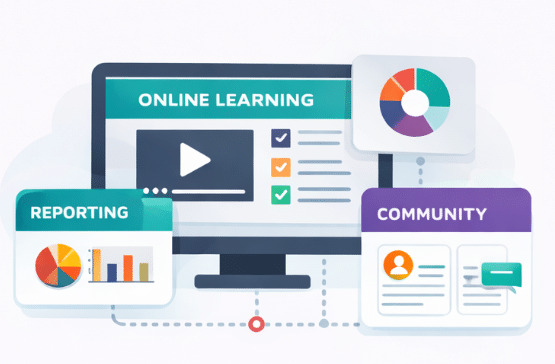
In an association context, LMS and online community integration means connecting your learning management system (LMS) and your online community, so they function as a unified ecosystem.
This typically includes:
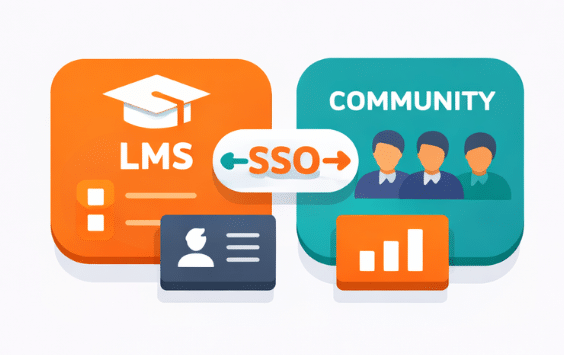
- Single sign-on (SSO) across learning and community platforms
- Consistent branding and navigation
- Shared member profiles and activity data
- Learning content that’s visible and accessible from within the community
Some association-focused platforms, like Higher Logic Thrive Learn, are designed to work natively with online communities, making it easier to connect learning, discussion, and engagement without complex workarounds.
How LMS Integration Improves Member Engagement and Social Learning
A Seamless Member Experience
When members don’t have to manage multiple logins or interfaces, they’re more likely to participate. Integration removes friction and allows members to move naturally between education and community – an important driver of ongoing member engagement.
Members who use the online community are, thus, more likely to see your professional development and continuing education opportunities – and vice versa, your program participants are more likely to engage in your online community. A win-win!
Learning That Continues Beyond the Course
Courses are more impactful when learners can discuss, reflect, and apply what they’ve learned. An integrated online community supports social learning by giving members a place to:
- Ask follow-up questions
- Share insights and real-world examples
- Learn from peers facing similar challenges
In platforms like Higher Logic Thrive Learn, this kind of community-supported learning helps turn education into an ongoing experience rather than a single event.
Peer-to-Peer Support That Reinforces Learning
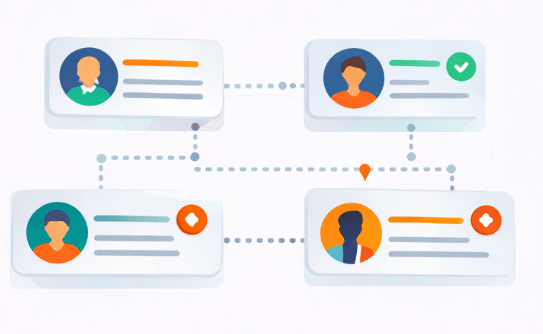
Online communities create space for informal learning – the kind that happens when members exchange ideas, troubleshoot problems, and mentor one another. When this happens alongside formal education, learning becomes more relevant, practical, and valuable.
How LMS Integration Supports Non-Dues Revenue Growth
Increased Visibility for Education Programs
When courses, certificates, and learning paths are surfaced within your online community, members are more likely to discover and participate in them. Education stays visible in the same space members already use to connect and collaborate.
This increased awareness directly supports non-dues revenue by driving participation in paid education programs.

Higher Completion and Repeat Participation
Community discussion, peer encouragement, and recognition all help learners stay motivated. Integrated systems support higher completion rates and make it more likely members will return for additional courses or credentials.
For associations using platforms like Higher Logic Thrive Learn, this creates a stronger long-term education strategy rather than a series of disconnected offerings.
Recognition and Motivation Through Gamification
Integration also enables associations to recognize learning achievements within the community. Badges, ribbons, or automated recognition posts highlight member progress and reinforce a culture of continuous professional development.
Learning Models That Work Best with LMS and Community Integration
An integrated LMS and online community supports multiple learning models, including:
- Individual learning: Self-paced courses enhanced by community Q&A
- Group learning: Cohort-based programs with built-in discussion
- Blended learning: A mix of live events, on-demand content, and ongoing engagement
Association-focused learning platforms like Higher Logic Thrive Learn are built to support these models while keeping the member experience connected and cohesive.
Final Thoughts: Integration as a Strategic Advantage
Integrating your LMS and online community isn’t just a technical decision, it’s a strategic one. Associations that connect learning and engagement deliver more value to members, strengthen education outcomes, and create sustainable paths to non-dues revenue.
As expectations for digital experiences continue to rise, platforms that unify learning and community help associations meet members where they are and support learning that lasts.