
13 Member Engagement Ideas to Improve Your Strategy

For associations, societies, and institutes, member engagement is the fuel that powers your work. But no matter how much you value your members, keeping them actively engaged requires ongoing, proactive processes to share relevant connections, content, and benefits—at the right times and in the right ways.
If you’re struggling to find the perfect balance, you’ve come to the right place! We’ll explore the basic building blocks of any robust member engagement strategy and several ideas for renewing your approach by covering:
- The Framework: Member Engagement Basics
- The Characteristics: Marks of a Great Member Engagement Strategy
- The Plan: 13 Member Engagement Ideas & Strategies
Remember that your members joined your organization for a reason. Tap into their motivations and remind them of your association’s value as you develop your engagement strategy.
Find out how members really want to engage with associations.
Get the latest insights in our 2024 Member Experience Report.
The Framework: Member Engagement Basics
Before you start dissecting your strategy or creating one from scratch, brush up on the basic tenets of member engagement by reviewing these frequently asked questions.
What Is Member Engagement?
Member engagement refers to how involved members are with your association’s offerings and the efforts, communications, and activities you use to engage them.
Highly engaged members stay up to date on your association’s offerings and participate in them often, whether by networking with other members, attending events, or reading your publications. They believe in the value of your association and are more likely to keep renewing their membership year after year.
What Is the Member Journey?
The member journey details how members move through your association, from their initial discovery to their eventual renewal(s) or lapse. To successfully engage your members, you need to understand how they experience and interact with your association at different points in their individual journeys.
Meet the Member Engagement Ladder, which demonstrates the ideal member journey and what they do during each step:
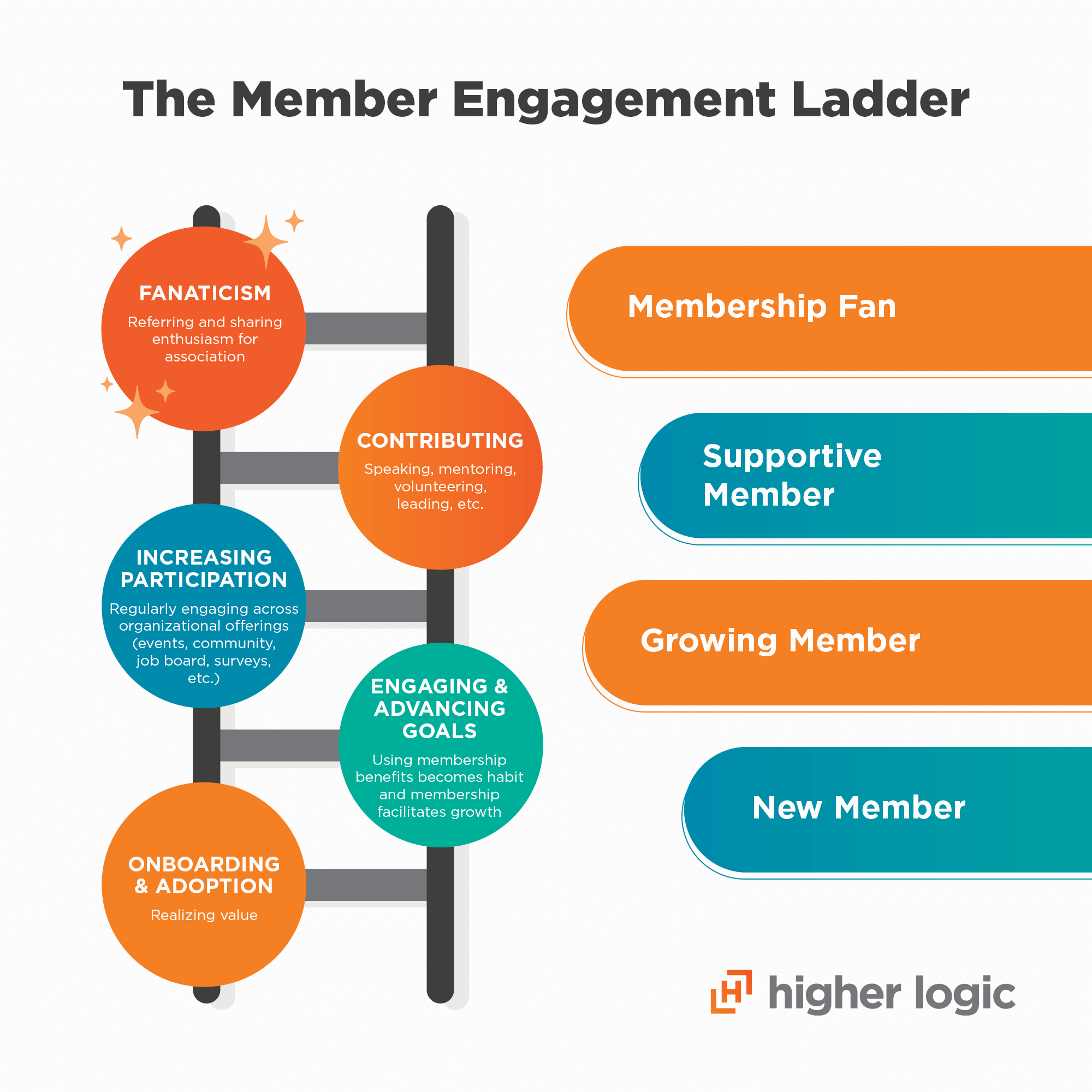
- New member: As brand-new members go through the onboarding and adoption phase, they learn about your offerings and start to realize the value of membership.
- Growing member: Once using their membership benefits becomes a habit, members start engaging more and advancing their personal goals. Over time, these members increase their participation by regularly engaging with offerings like events, surveys, and your online community.
- Supportive member: At this stage, members start actively contributing to your association’s events and offerings, making your benefits even more valuable for themselves and others. They might speak at an event, mentor another member, or volunteer.
- Membership fan: Finally, highly engaged members become fanatics, sharing their enthusiasm for your association publicly and referring others to join. They become advocates for your organization and help it grow.
Granted, not every member will follow this path. But if you can set up a solid strategy for encouraging these behaviors, you can shepherd members up the engagement ladder by deepening your relationships one step at a time.
Keep in mind that the member journey is a process—members don’t tend to move from the bottom of the ladder to the top in one giant leap. Communicate with your members proactively based on where they are in their journeys, aiming to move them from one step to the next until they reach the top.
Why Is Member Engagement Important?
Strong member engagement benefits various aspects of your association, including:
- Member satisfaction and retention: Members who actively take advantage of their benefits are more likely to see the value in long-term membership and keep renewing.
- New member acquisition: When members reach the fanaticism level of the member engagement ladder, they act as ambassadors for your brand. By sharing their enthusiasm and referring others, highly engaged members help your association grow.
- Advocacy support: An engaged member base also means more potential advocates for your cause. You’ll have the strength in numbers to push through legislative wins and gain more volunteers for your programs.
- Non-dues revenue: Engagement naturally leads to an increase in event attendance and support for other revenue streams. For instance, engaged members might purchase merchandise, register for a conference, or even donate on top of their annual membership fee.
If the benefits alone don’t convince you of its importance, remember that a lack of engagement has consequences, too. Our 2024 Member Experience Report found that members cite not feeling engaged or not getting enough value as the main reasons they consider leaving associations.
How Do You Measure Membership Engagement?
“Engagement” can feel nebulous, but the most important thing to keep in mind is what it means to you and your members. Since there are different types and degrees of engagement, you can measure it in several ways. You might keep tabs on retention rates, email newsletter open rates, discussion activity in your online community, or various other metrics.
Beyond general goals for your member engagement strategy, you can also set smaller goals to measure the success of individual projects. For instance, let’s say you’re hosting a webinar series. You might track key performance indicators (KPIs) like:
- Number of registrants
- How many members attended versus how many members didn’t
- Click-through rates of your emails
- Number of requests for the recording
- Number of questions asked during the webinar
Measuring these KPIs will give you a big picture to work with as you tweak and refine your strategies.
Looking for ways to improve your email metrics?
Download our free Association Email Benchmark Report to discover valuable benchmarks and insights.
The Characteristics: Marks of a Great Member Engagement Strategy
Now that we’ve covered the foundation of member engagement, let’s clarify what a successful strategy looks like and the components that make it work.
Member-Centric
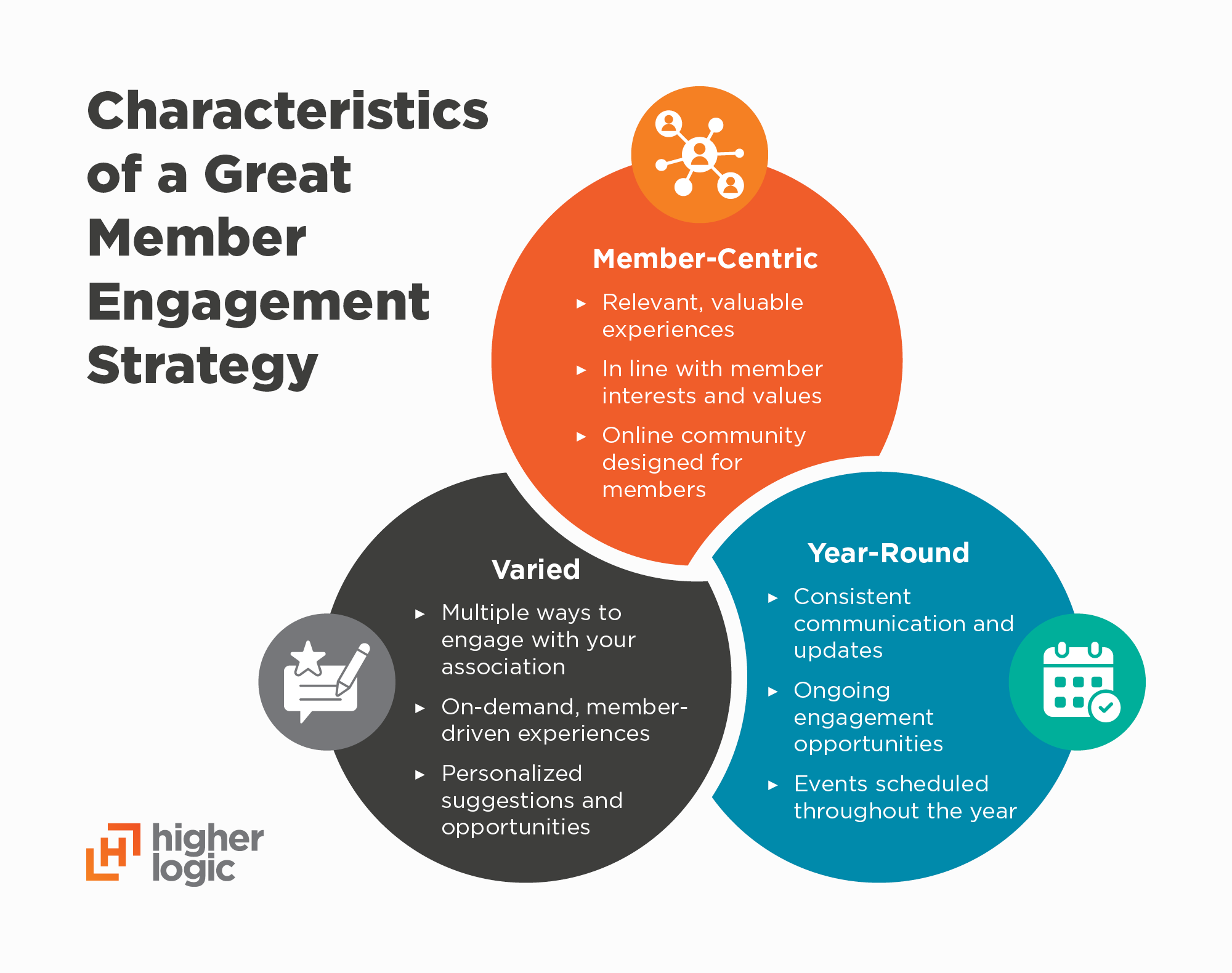
You can provide high-quality content all day long, but it won’t help you much unless members feel that it’s highly relevant and timely. This can be challenging, considering your members are at different career stages and have varied needs. Fortunately, you can take steps to create a more member-centric engagement strategy that resonates with your members.
Empathy plays a significant role here, so think about engagement from your members’ perspectives. What benefits are convenient for them and fit seamlessly into their day-to-day lives? What might energize their desire for connection?
According to our latest report, the top benefits members generally love the most are:
- Email newsletters or digests
- Member discounts
- Private online communities
- Virtual education opportunities
However, 52% of members also say they wish their association would ask for their input more. Don’t hesitate to ask your members directly about their interests with surveys so you can create truly member-centric opportunities.
Year-Round
Your member engagement strategy should be in action beyond just your annual conference. Consider it from members’ perspectives. If they’re not involved all year, they may get your renewal letter and start wondering, “Why should I keep spending this money? Am I getting my money’s worth?”
Show members how valuable their membership is year-round with consistent communication, ongoing engagement activities, and events scheduled throughout the year.
Every time you plan a new initiative, ask yourself: How will this strategy result in members staying engaged and continuing to get value from our organization long-term? How will this initiative be maintained, and who will be responsible for maintaining it?
Varied
Although a business-as-usual approach may feel comfortable, it can limit your organization’s ability to thrive. To add depth to the engagement experience and align with different members’ preferences, give your members multiple ways to stay engaged.
For instance, you might offer opportunities for them to:
- Connect in your online member community
- Attend a casual virtual event with other members around a topic of interest
- Receive personal phone calls from leadership
- Participate in on-demand experiences like webinars or online courses
- Access personalized engagement suggestions within your online community
Members need the energizing connectedness of member groups and the wealth of information and support these communities can bring. The more varied opportunities and formats you offer, the more well-rounded their experiences will be. As member needs change over time, adapt your strategy and reevaluate efforts to improve engagement.
The Plan: 13 Member Engagement Ideas & Strategies
Now, let’s get practical. What are the key tactics to include in your strategy? Use this framework to build out, validate, and measure your organization’s member engagement strategy.
1. Analyze Member Engagement Data
The best engagement strategies are grounded in member data. The information you already have on how members engage with your association is the most reliable source for what will interest them in the future.
Your technology will be a great help here. If you have a marketing automation platform, you can easily harness that data through website tracking and robust email metrics. If you have an online community platform, that’s another source of invaluable engagement data at your fingertips.
Use your organization’s tech stack to analyze data like:
- Email open, click-through, and conversion rates
- Monthly logins to your online community
- Frequently viewed resources
- Website pages that get the most traffic
- Most popular discussion topics
- Direct feedback from member surveys
- Number of members who complete online courses
- Percentage of members who volunteer
Schedule time every quarter to review these metrics and adjust your engagement strategy based on the data. Use analytics reports to see how much progress you’ve made toward your goals and where your greatest opportunities are. Your members are constantly generating valuable behavioral data just waiting to be applied to your strategy—take advantage of it!
2. Segment Members By Interests
71% of association members agree that a personalized member experience is important to them. This goes beyond using their preferred names in email greetings—you need to communicate with members in ways that resonate with their individual interests and engagement patterns. And to do that, you need information.
Use the data from the last section, along with details in your AMS, to group members based on their similarities. This might mean segmenting by:
- Interests: Industry-specific topics, career fields, specialities, networking, conferences
- Member journey stage: New members, growing members, supportive members, and membership fans
- Demographics: Age, location, job type, career stage, education, etc.
- Engagement history: Types of content they’ve engaged with, communication preferences, volunteer activity
These segments will help you create and curate more tailored content for members in each group. For instance, you might offer speaking opportunities to membership fans with plenty of career experience, send educational resources to newer members, and advertise open positions in the field to job-seekers.
3. Create Personas for Target Members
Visualize your ideal member or differentiate between types of members with personas. Creating well-developed personas for target members helps you better understand their behaviors, wants, needs, and types of content you’re competing with for their attention.
To create a persona, clarify who you’re targeting and the composite characteristics and behaviors for each group. Use your data to refine your personas and build out imaginary member profiles complete with demographics, interests, and motivations for engaging with your association.
In particular, pay attention to members’ pain points. If your association can’t help solve your members’ most important problems, then they won’t have a reason to engage or maintain their membership status. Consider each persona’s most urgent and pervasive challenges based on behavioral data and community discussions. How can your organization help solve them?
4. Launch an Online Member Community
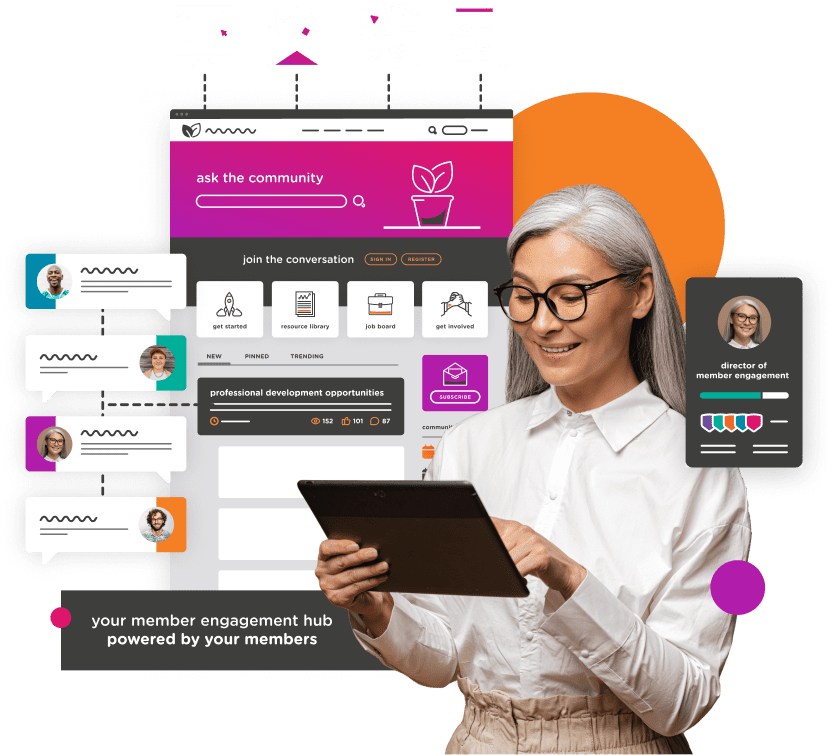
One of the best ways to deliver value to members and engage them long-term is through an online community. They’re highly convenient, flexible, and centralized—members can easily access all their favorite benefits from one engagement platform at any time.
Excited to network with other members? Log in to the community. Looking for the latest industry news and research? You can find it in the online community. Want to take a certification course or just discuss a problem with like-minded members? Use the online community!
When you use a full-featured platform like Higher Logic Thrive, you can build a professional, branded community that houses everything members need to stay engaged.
To connect with your community members, you can use tools like built-in automation rules to engage them at scale with less manual labor.
For example, if you allow nonmembers to access your online community, you could use an automation rule to send them an invitation to join. The National Association of School Nurses tried this automation rule. They targeted the rule to online community users who had never joined the association but had logged into the website and completed at least 10% of their profile. For this campaign, NASN reached 4,051 people. Of those recipients, 400 became members—approximately a 10% conversion rate. Pretty good results for one automated email!
Engage thousands of current and prospective members with Higher Logic Thrive.
Demo the platform to learn how it can power your strategy.
5. Create a New Member Welcome Campaign
To set the stage for engagement, you need to make a great first impression when new members sign up. This means introducing them to your organization in a digestible, thoughtful way and inviting them to participate in all you have to offer.
An automated welcome email campaign breaks up key information into bite-sized pieces so new members feel accepted but not overwhelmed. Here’s what your campaign might look like:
- New members receive an official welcome email to thank them for joining immediately after they sign up.
- Within 48 hours, they get a longer email introducing them to your organization and breaking down key member benefits.
- Within the first week, they receive detailed instructions on how to join your online community and start engaging with others.
- Over the next few weeks, you send periodic emails that highlight some of your most popular benefits, like exclusive content and member discounts.
6. Host Virtual and In-Person Events
When you think about sparking meaningful connections with members, it helps to consider the social dynamics that resonate in your own life. How do you interact with friends and family? Do you only meet with them one-on-one, or only meet with them in groups? What about in-person versus online? Chances are, you interact in all of these ways at different times.
This reflects what your members want from your association’s events, too! Don’t limit yourself to in-person events—plan a variety of in-person, online, and hybrid events where members can connect throughout the year. Then, strategically promote each event to the most relevant member segments based on their demographics and interests.
7. Build Out an Exclusive Resource Hub
Whether you have an online member community or just host resources on your website, make sure there is an accessible hub where members can access exclusive content. This might include educational guides, industry publications, job boards, or any other resources members find valuable.
Don’t just include resources created or published by your association—allow members to use their peers as resources, too. With open discussion forums, any member can log on to your online community and source real ideas and solutions based on other members’ diverse experiences.
Take a look at how the Educational Theatre Association uses forums to bring teachers together and solve problems within its online community:
8. Provide Networking Opportunities
A large portion of your association’s members likely joined for the networking potential. Think about the types of opportunities they want and how you can provide them. For example, you might:
- Host in-person and virtual networking events
- Share announcements about industry conferences
- Create a mentorship program
- Encourage members to converse in your online community
- Provide access to an exclusive membership directory
All of these opportunities can help your members meet like-minded individuals and gain professional support from others who have been in their shoes.
9. Gamify Member Engagement
Make engaging with your association more exciting with gamification. Provide small, game-like incentives for members to participate in your online community. Start with commonly successful tactics like:
- Award badges
- Earned titles, like “Community Pro” or “Budding Enthusiast”
- Participation leaderboards
- Point systems
- Progress bars
- Goals and challenges

Engaged members will enjoy showing off their personal achievements in your community, while newer members look to their badges and statuses for social proof of their trustworthiness. Plus, everyone will look forward to earning awards themselves through continued engagement! Ultimately, gamification makes interacting with your association more fun and dynamic.
10. Start a Webinar Series
Go beyond your standard one-off webinars by creating a series based around a popular theme. Instead of just signing up for one online event, members can register for a whole series of webinars at once. The common theme and regular scheduling will keep guests interested and excited for the next webinar in the series.
For instance, say that your organization brings educational administrators together, and you’ve seen several community discussions about addressing the use of AI in schools. You might create a six-month-long webinar series that features new association leaders each month discussing a different aspect of AI usage. You could even take topic requests from registrants to make the webinars even more member-centered.
11. Share User-Generated Content
Your members create plenty of their own content about your association, especially if you have an active online community. Pay attention to the members who regularly contribute and share the best content with your entire member base. For example, members might generate:
- Blog articles
- Social media posts
- Opinion videos
- Podcasts
- Conference sessions
- Insightful discussion comments
By sharing their content, you’ll remind members that their input is valuable and encourage them to keep discussing relevant topics. Plus, you’ll facilitate more knowledge-sharing throughout your member community, increasing the value of membership even further.
12. Design a Re-Engagement Email Campaign
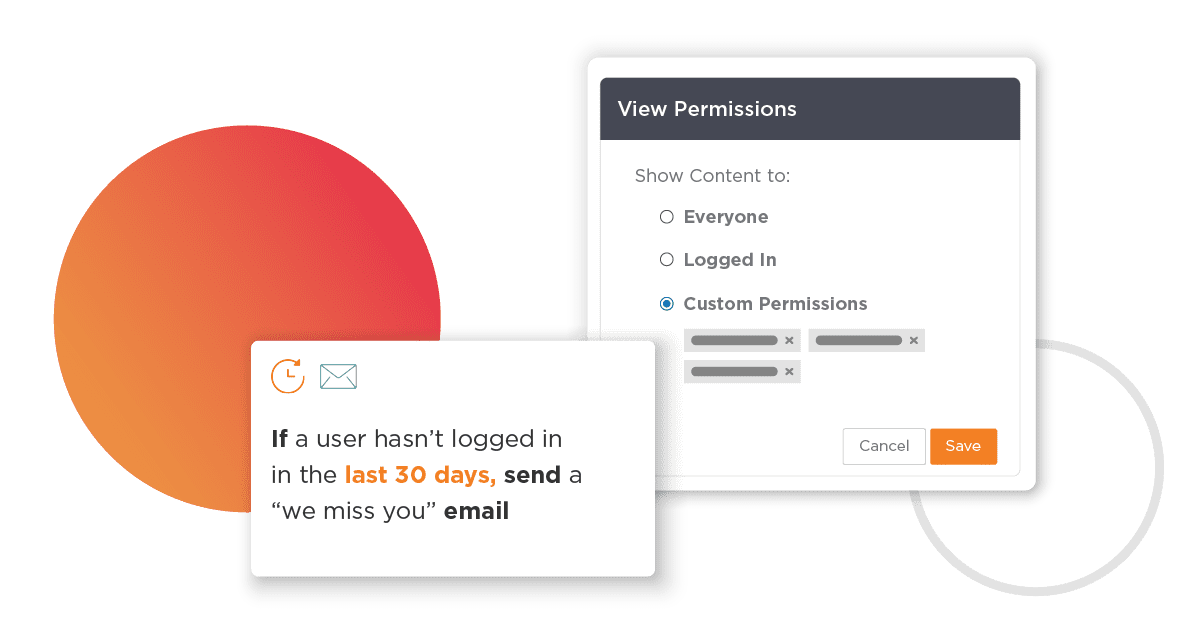
Built-in automation can also help you re-engage members who haven’t participated in a while. With the engagement scoring tools included in Higher Logic Thrive, you can easily identify disengaged members throughout the year and communicate with them in a focused, strategic way that continually conveys your association’s value.
For example, you can automatically send “We miss you!” emails to users who haven’t logged into the community in over a month. After determining which members are less engaged, you can separate and segment the disengaged members in your audience to send them more personalized messages down the line.
Re-engagement campaigns can work wonders for your association’s strategy, bringing members back into the community before they become truly at risk of lapsing.
13. Scale Your Member Community With Automation
Engaging your members can feel like a lot of time-consuming, manual work, especially if your tech stack isn’t updated or integrated. A great member engagement strategy will take work, but it should be work on the right projects—strategy improvements, building creative content, and testing what’s working and what’s not.
Instead, many association teams find themselves wasting hours fighting data and pulling manual lists, sending out one-off renewal notices, calling members to ask why they didn’t renew, and so on.
However, many organizations are achieving enviable levels of personalization through automation and integrations. These approaches make it easier for you to focus on the most important things about your member engagement strategy instead of busywork. The time you save allows your team to focus more on scaling your community and driving the most value possible for members.
Launching Your New & Improved Member Engagement Strategy
Every year brings many changes for associations, but one thing remains constant: Member engagement is a top priority. With these strategies and the right technology (especially Higher Logic’s solutions!), you’ll be ready to deliver that winning member engagement strategy to your community.
For more inspiration, check out these resources on member engagement:
- 15 Standout Online Community Software Solutions for 2025. The technology you choose to build your online community matters. Evaluate the best solutions in this guide.
- The Psychology Behind Getting Members More Involved. Dive deeper into what member involvement looks like during each stage of the member journey and how you can encourage more action.
- How to Get More Engagement in Your Online Community. Your association’s online community is one of its greatest assets. Explore more tips for boosting engagement within your online community platform.
Engage more members with the #1 online community software for associations.
Find out why more than 3,000 organizations trust Higher Logic.